10th May: National Day of Remembrance of the Slave Trade, Slavery and its Abolition
As part of the National Day of Remembrance of the Slave Trade, Slavery and its Abolition, the Villèle Historical Museum is proud to present an exhibition bringing together previously unseen works, recently acquired and only shown to the public for the first time on 20th December 2025. This exhibition also takes place in a symbolic year, 25 years after the introduction of the Taubira Law, French legislation which recognised the slave trade and slavery as crimes against humanity.
Housed on the upper floor of the former master’s house, this exhibition displays objects that bear witness to the history of slavery. These recent acquisitions enrich the museum’s collections and contribute to a better understanding of the harsh realities of yesteryear, whilst still reinforcing the institution’s commitment to remembrance.
The exhibition will enable visitors to discover, amongst others:
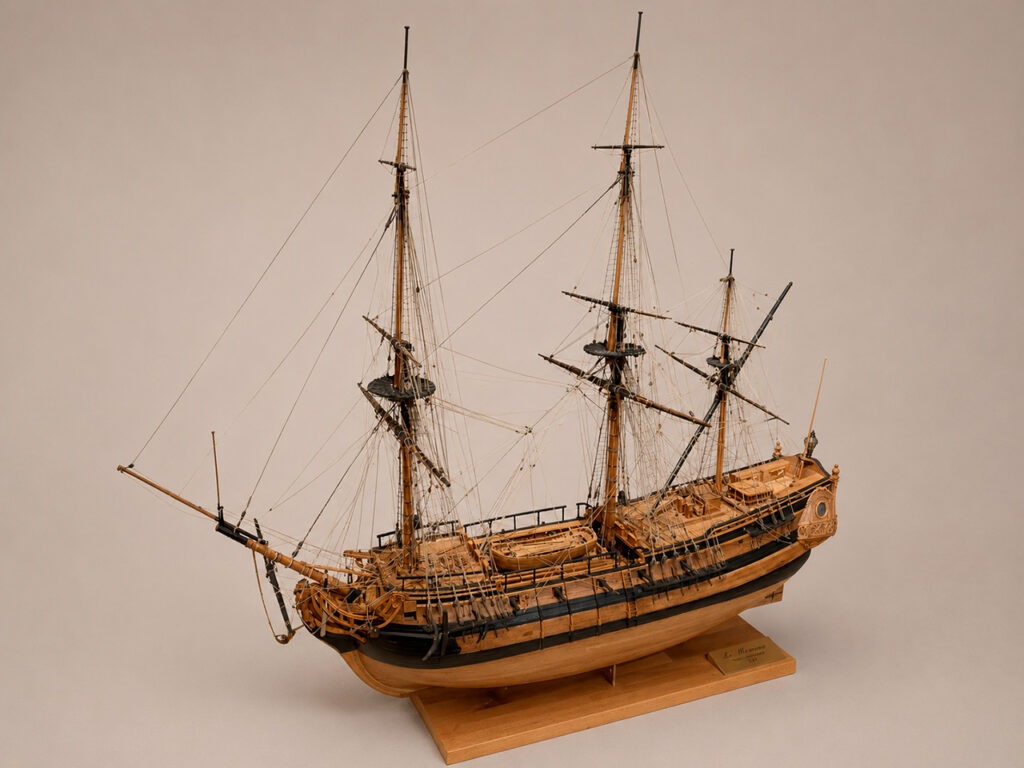
A model of the ship Le Mercure, detailing its maritime routes and conditions of the slave trade
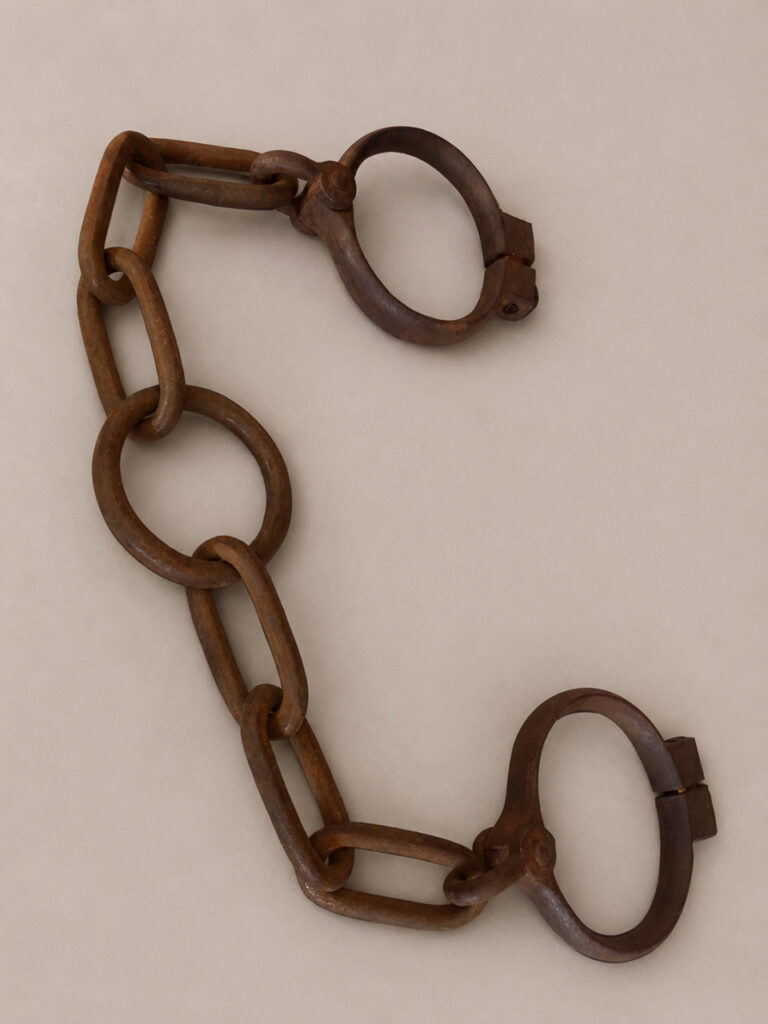
Slave shackles, physical reminders of enslavement
Weapons used in the slave trade
A sugar skimmer, an artefact of the colonial production system
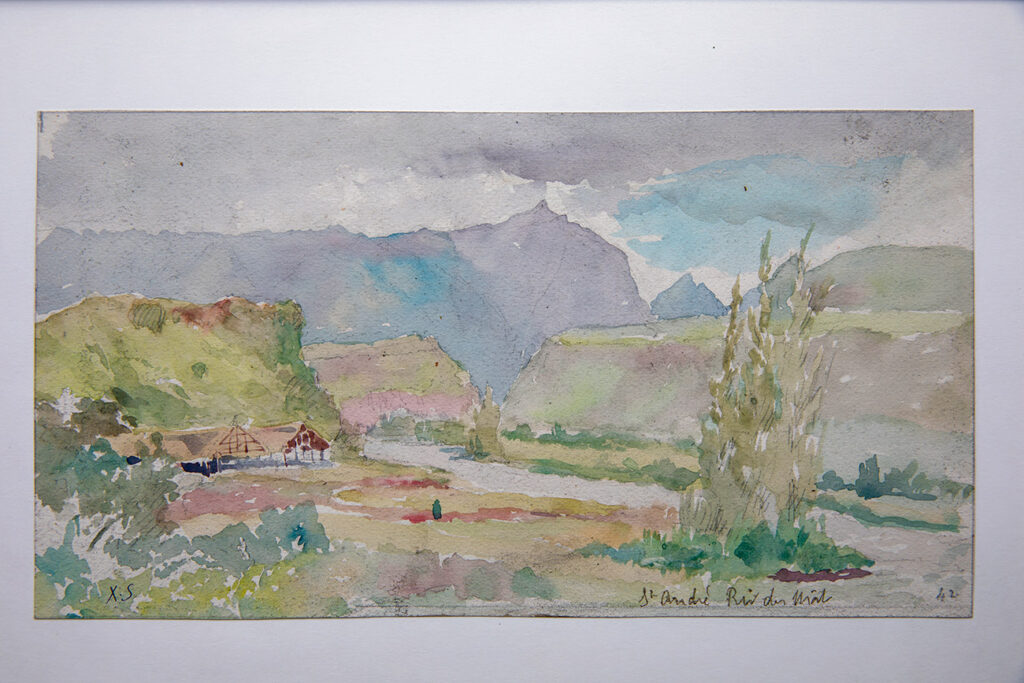
A previously unpublished watercolour depicting the Rivière du Mât plantation, painted by Xavier Le Juge de Segrais in around 19000
Through these objects, which have recently been added to the collections, this exhibition aims to highlight realities often absent from historical narratives and to encourage reflection on the legacies of slavery in contemporary society. It forms part of the Villèle Historical Museum’s commitment to fostering a dialogue between history, remembrance and citizenship, by giving full voice to the stories and traces of the past.
‘In anticipation of the museum’s completion, previously unseen material on the history of slavery’
Le Mercure
Éric L’Émaillet
2015
Pear wood, metal, cotton
The Mercure was a former ship of the French East India Company involved in the slave trade. Sailing mainly in the Indian Ocean region, it brought 26 slaves from India to Bourbon. The ship was the subject of a monographic study by Jean Boudriot, which enabled the shipyard model-maker Éric L’Émaillet to produce a faithful 1:48 scale model, using no commercially available parts. The construction work began in 2012, and took three years to complete.
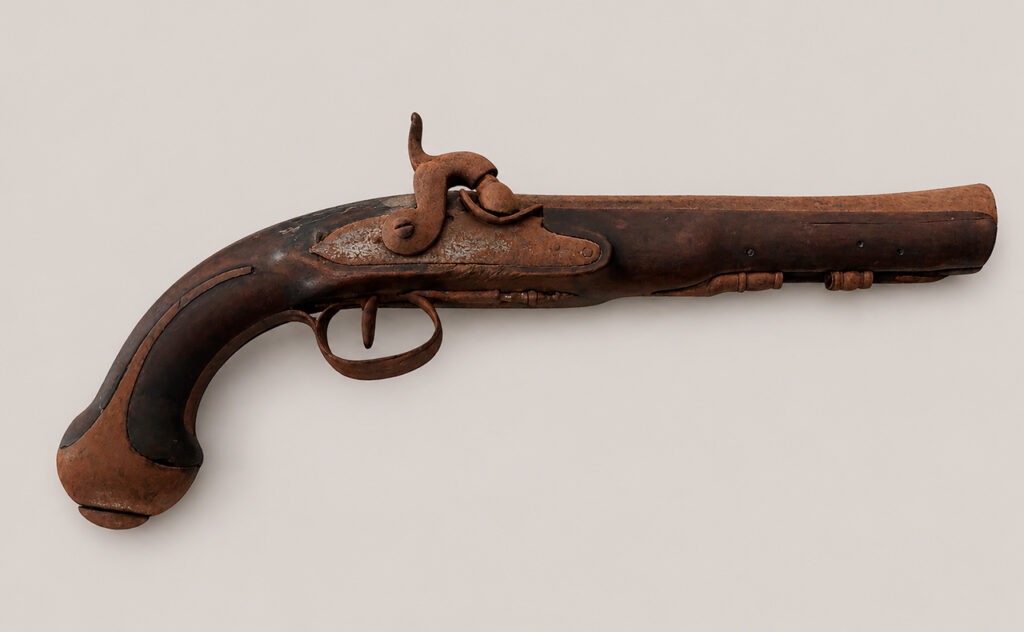
Naval blunderbuss
Late 18th century
Wood and metal
This weapon was commonly used in the navy during boarding operations, sailors’ mutinies or slave revolts that might occur on board during a slave-trading operation.
Chain for slaves’ feet
First half of the 19th century
Metal
These chains would restrict the movements of the slaves wearing them, preventing them from taking long strides that would allow them to run away. This particular chain comes from the former plantation in Le Gol, in its day one of the largest on Bourbon Island, owning up to 600 slaves prior to 1848.
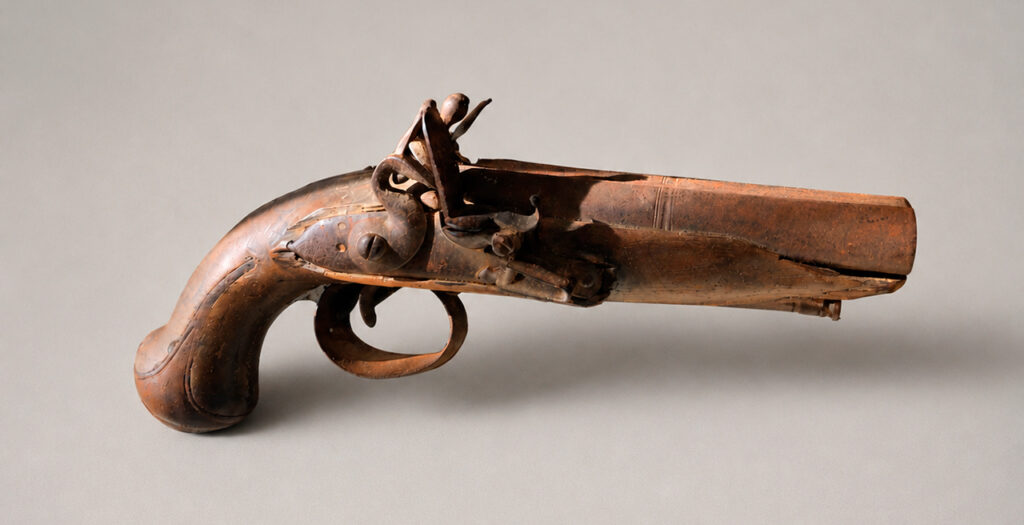
Hunting pistol, known as the Mussard
18th century, ca. 1730–1750
Wood, metal
This short double-barrelled pistol for point-blank shooting, used by slave hunters in the woods, where handling long guns was difficult due to the dense vegetation. It is known as the ‘Mussard’ (after the famous slave hunter) as it comes from the Mussard family. It is another of the museum’s most iconic objects.
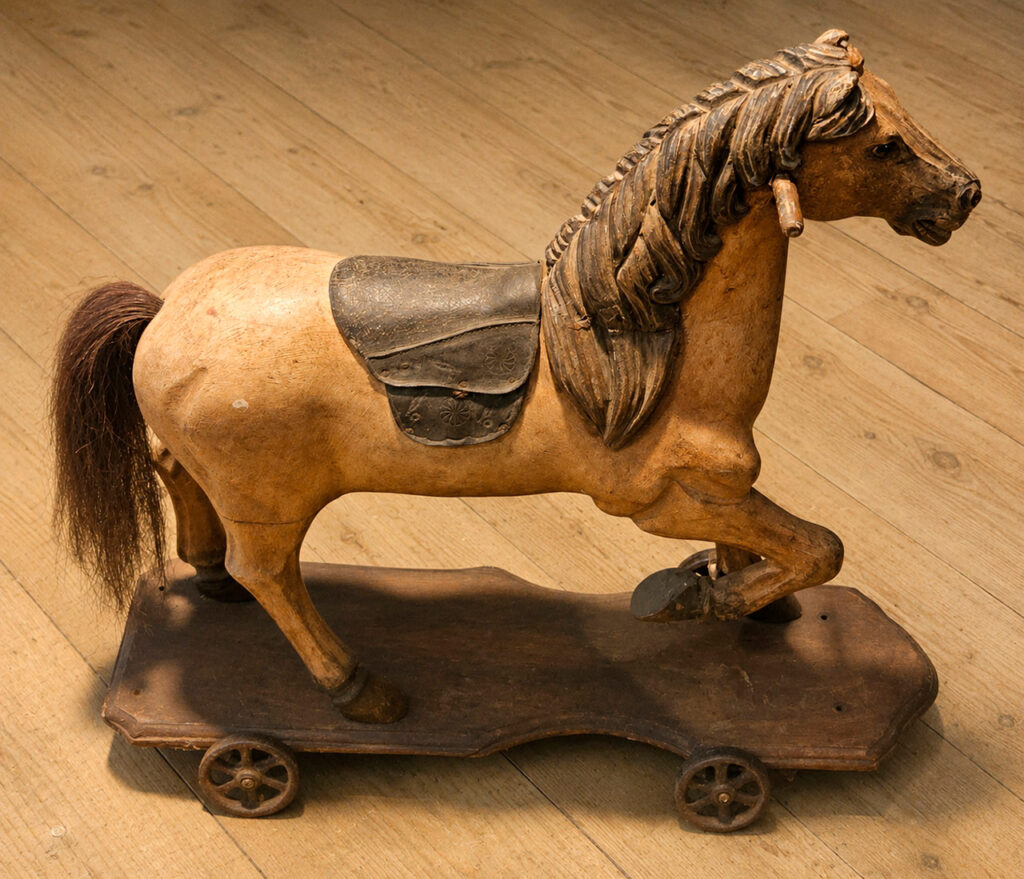
Wooden horse, children’s toy
Late 19th century
Wood, metal, leather
The wooden horse was one of the classic toys that the masters’ children would use to keep themselves entertained. Made in workshops in Mainland France, these toys were imported to meet local demand.
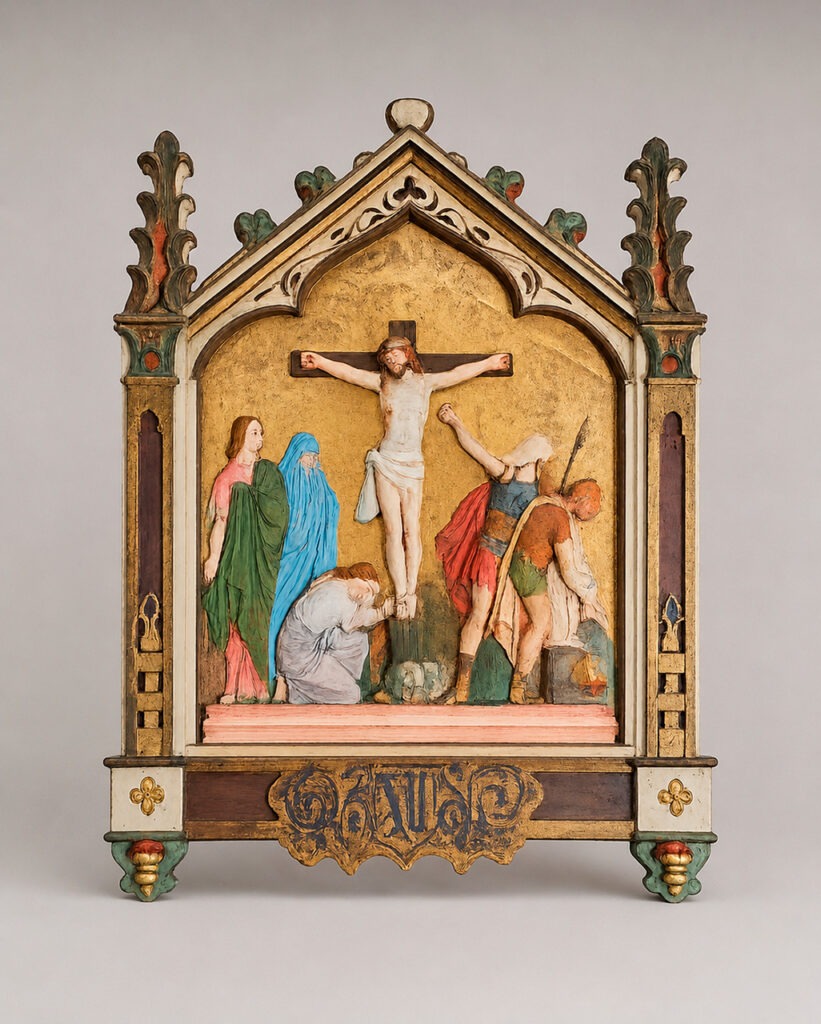
Way of the Cross
Second half of the 19th century
Painted terracotta, wooden frame
An initial Way of the Cross comprising 14 panels was installed in the chapel upon its construction in 1843, but many of the panels were damaged during the cyclone of 1858. A new Way of the Cross was then commissioned in the second half of the 19th century, but this too suffered further damage in 1932 and again in 1936, once more due to cyclones. Its condition continued to worsen until it was listed as a historic monument in 2020. Today, only 10 of the original 14 panels remain. The Way of the Cross was restored in 2024 with the support of the Foundation for the Preservation of French Art. It is the 12th station, “Jesus dies on the cross”, which is on display to the public.
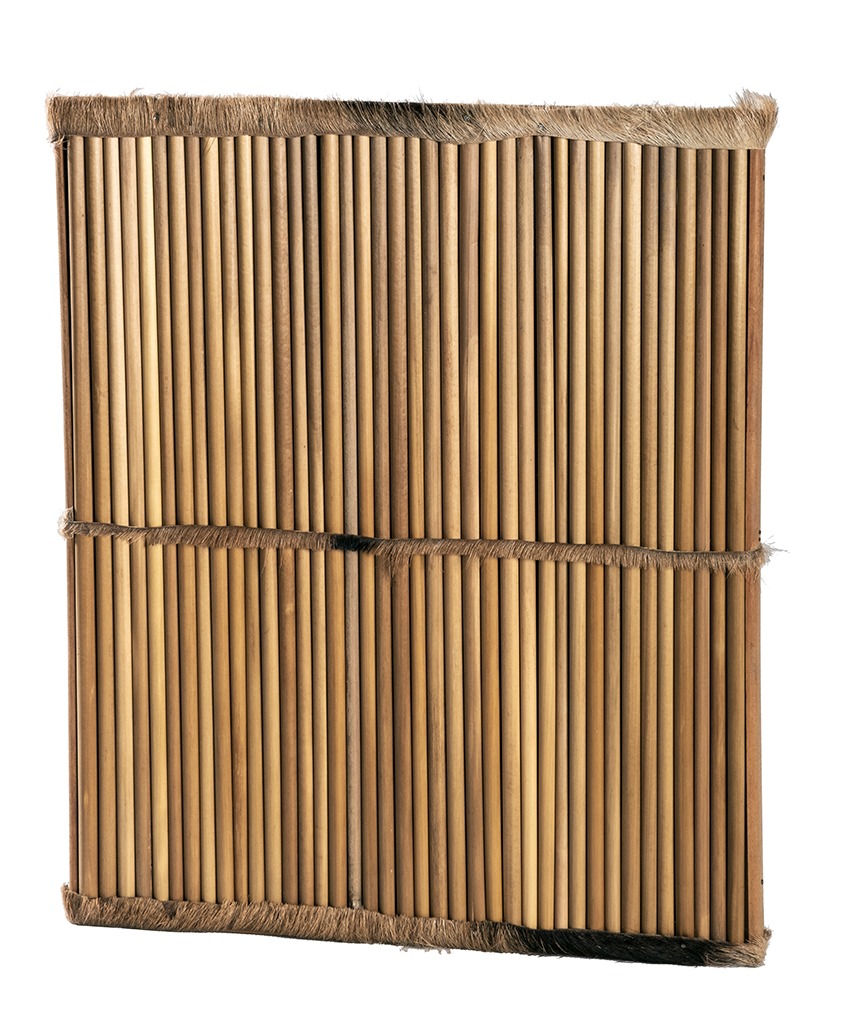
Originally from Africa, this percussion instrument is known as ‘chiquisti’ or ‘kaembe’ in the southern provinces of Mozambique, as ‘kayamba’ in Kenya and Zanzibar, and ‘raloba’ in Madagascar and ‘mkayamba’ in Anjouan or Mayotte. The earliest engravings depicting it date from 1848.
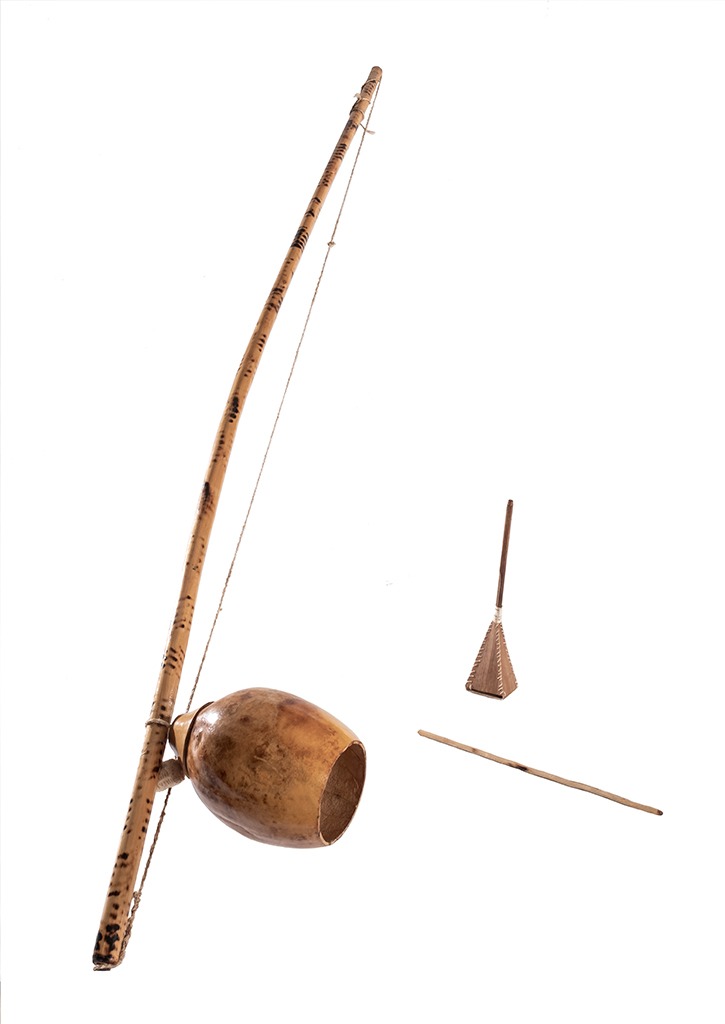
the bobre is a traditional instrument harking from the era of slavery. Originally from Africa and derived from the bow, it is made of hardwood and a hollow calabash (to make the sound resonate). It is commonly used in traditional Réunionese music and very often accompanies moringue dancers during their performances.
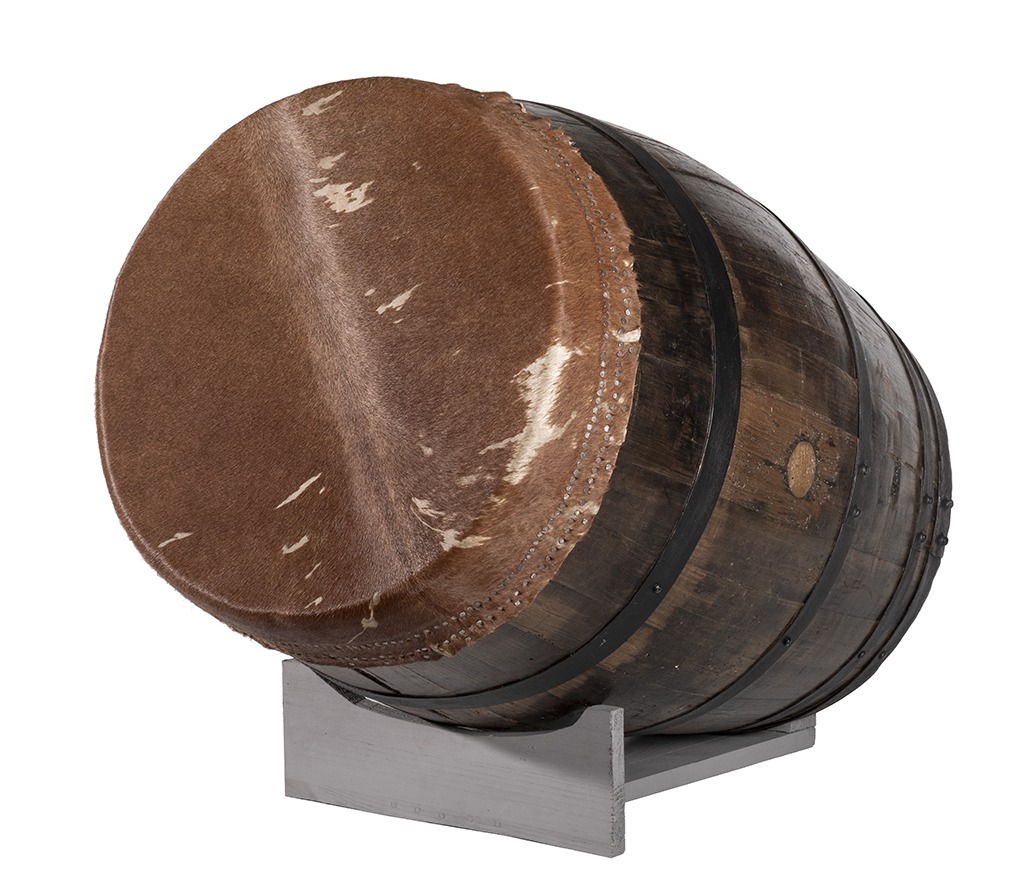
Roulèr
Stéphane Grondin
2018
Oak wood, cowhide, metal
Belonging to the membranophone family, the “roulèr” (formerly known as the “rouleur”) is a barrel-shaped tubular drum specific to Réunion, as unlike other drums in the region—which are mainly frame drums—this is the only one that rests horizontally on a support called a “santyé”. It may be a descendant of the conical drum (tambour vouve or tambour long), which has now disappeared but was once depicted in Réunion in iconography, and is related to the atabaque of Madagascar (which has survived in the Seychelles under the name tambour séga).
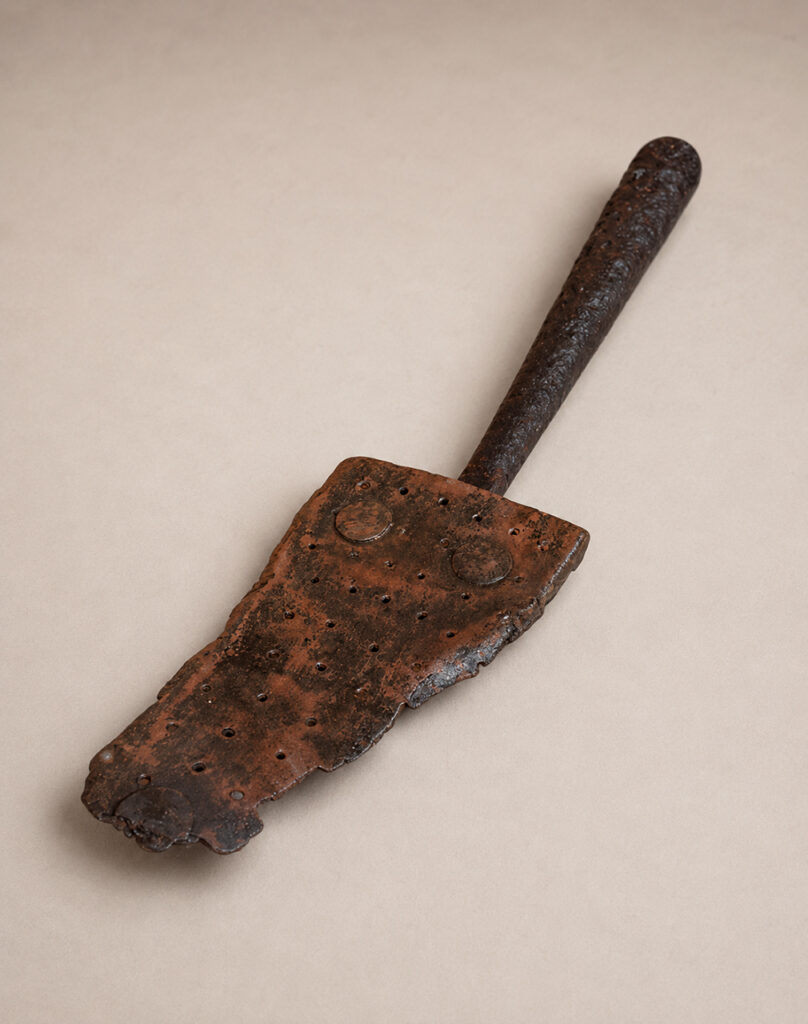
Sugar skimmer
First half of the 19th century
Metal
This tool was commonly used by slaves when producing sugar. It was a large strainer with small holes, often made of copper, fitted with a long wooden handle, which allowed the factory slaves to remove the filter cakes that formed on the surface of the boilers during the purification process. This object was found on the museum site during heritage work in the 1990s.
Wall anchors (for bars, rings)
19th century
Wrought iron
Within the estate buildings, there were numerous fixtures set directly into the rubble stone using lime and sand mortar. These wall anchors, discovered during restoration work at the Villèle site, were used to hang tools and the harnesses of working animals, and to fix bars used to enclose certain areas intended to pen in animals.
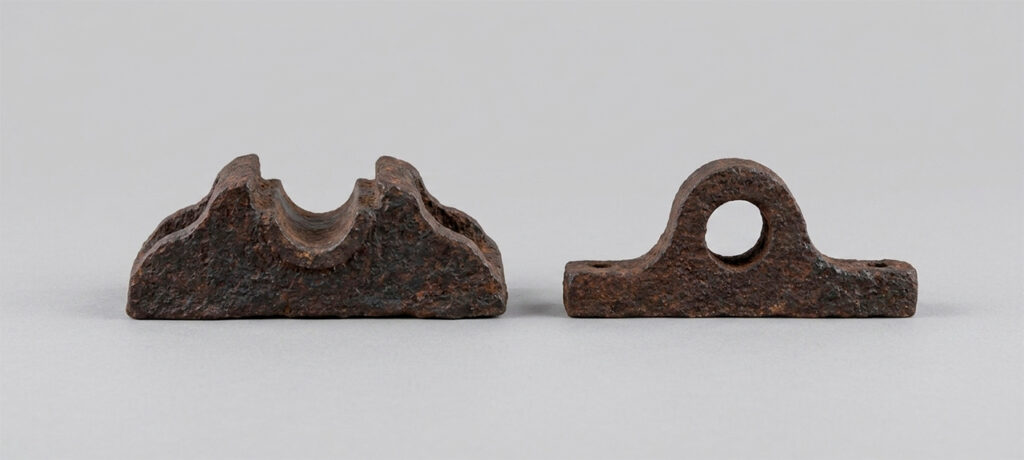
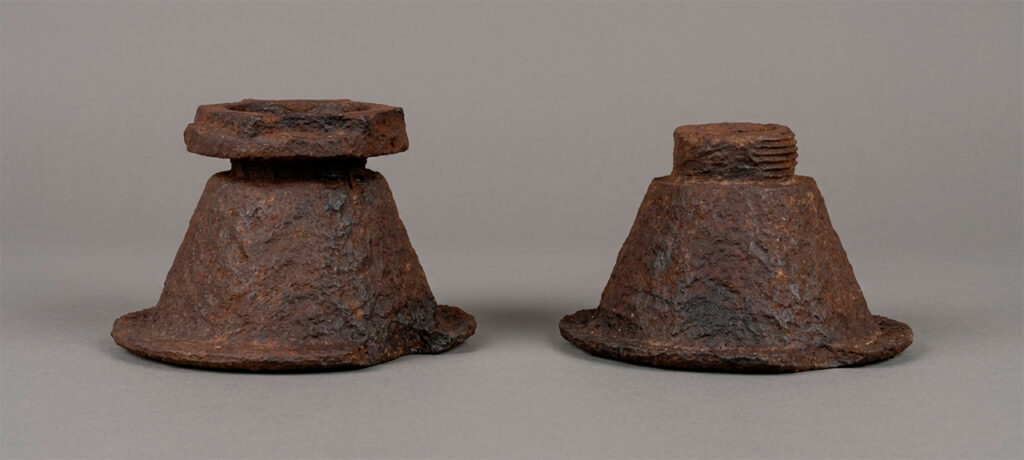
Sugar mill shaft support
19th century
Metal (cast iron and bronze)
This object was common on machines with shafts that allowed mechanical components to rotate. It was found on the site following Cyclone Garance, which stripped away the soil and revealed its existence. It came from a small machine and still has its bronze bearing – this bearing was the precursor to the ball bearings found in our modern machines. As bronze is a ‘self-lubricating’ metal, it was used to reduce friction between two moving metal parts.
Harness component
First half of the 19th century
Wrought iron
In the 19th century, people travelled on foot or by draught animal. This item, discovered on the site during a heritage restoration project in the 1990s, was part of a harness bit.
Taylor filter ferrules
First half of the 19th century (c. 1832–1848)
Iron
These metal rings are just one example of the small-scale industrial equipment associated with sugar production, discovered during a heritage restoration project carried out on the museum site in the 1930s. These ferrules come from a Taylor filter, a piece of sugar mill equipment used to filter the syrup obtained when the sugarcane juice evaporated in the mill.
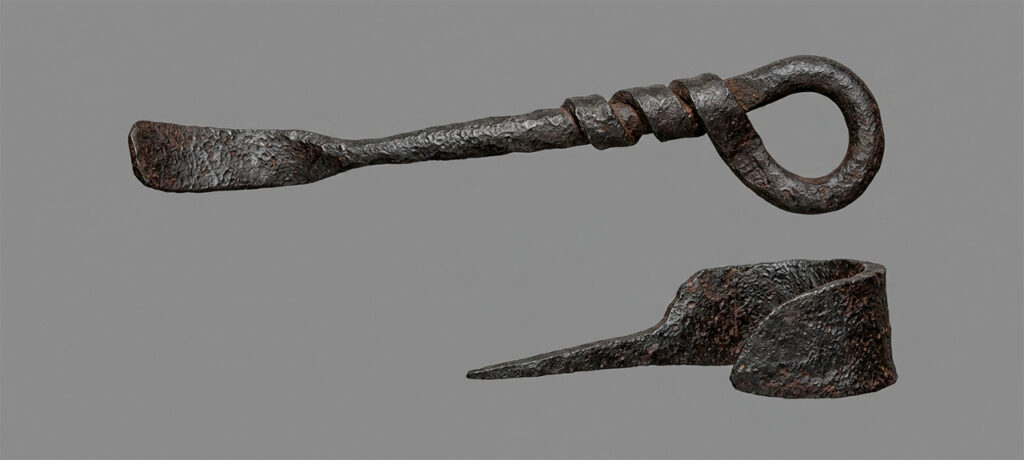
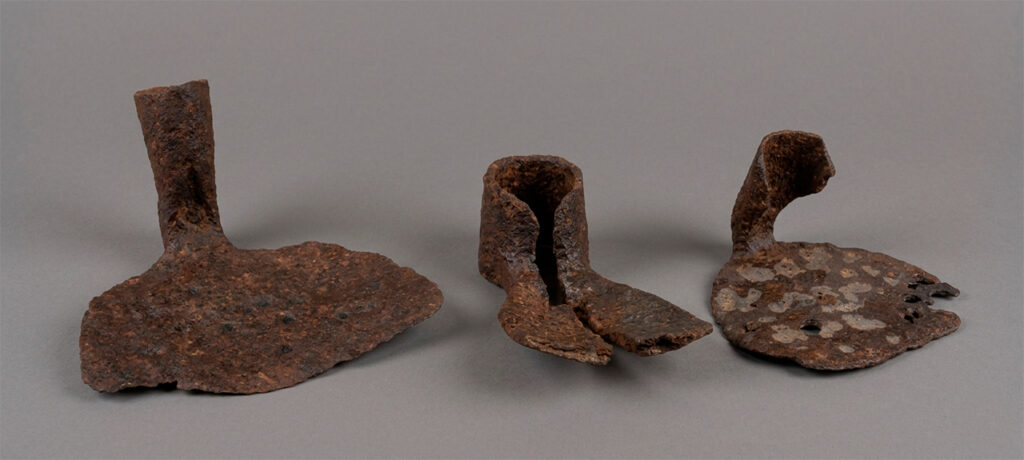
Pickaxe head
19th century
Metal (wrought iron)
This tool, which is missing its wooden handle, was used daily by the slaves known as ‘Noirs de pioche’ (field labourers), and later by the indentured ‘labourers’ during agricultural work. It was found during heritage work on the museum site, and is one of the museum’s iconic objects.
[Anse des cascades]
Adolphe d’Hastrel de Rivedoux
1837
Watercolour
In the foreground on the right, this watercolour depicts a fisherman sitting in his boat, busy mending his net. In the background on the left is a family of slaves, two of whom are sitting in front of their small hut, busy cooking, whilst a third fetches water from the waterfall. The cliff, waterfall, stream and the presence of the fisherman all point to the same conclusion: the scene is set at the foot of Anse des Cascades, in Sainte-Rose. The hut depicted is part of the camp belonging to Charles Lenoir’s plantation, well-established in this area.
Saint-André, Rivière du Mât
Xavier Le Juge de Segrais
Late 19th century
Watercolour
One of the few watercolours depicting one of the very first sugar mill estates built on Bourbon Island (1816), located near Rivière du Mât. This watercolour includes the bagasse storage sheds up on the plateau overlooking the riverbed of Rivière du Mât, from which a canal ran to provide the sugar mill with water.
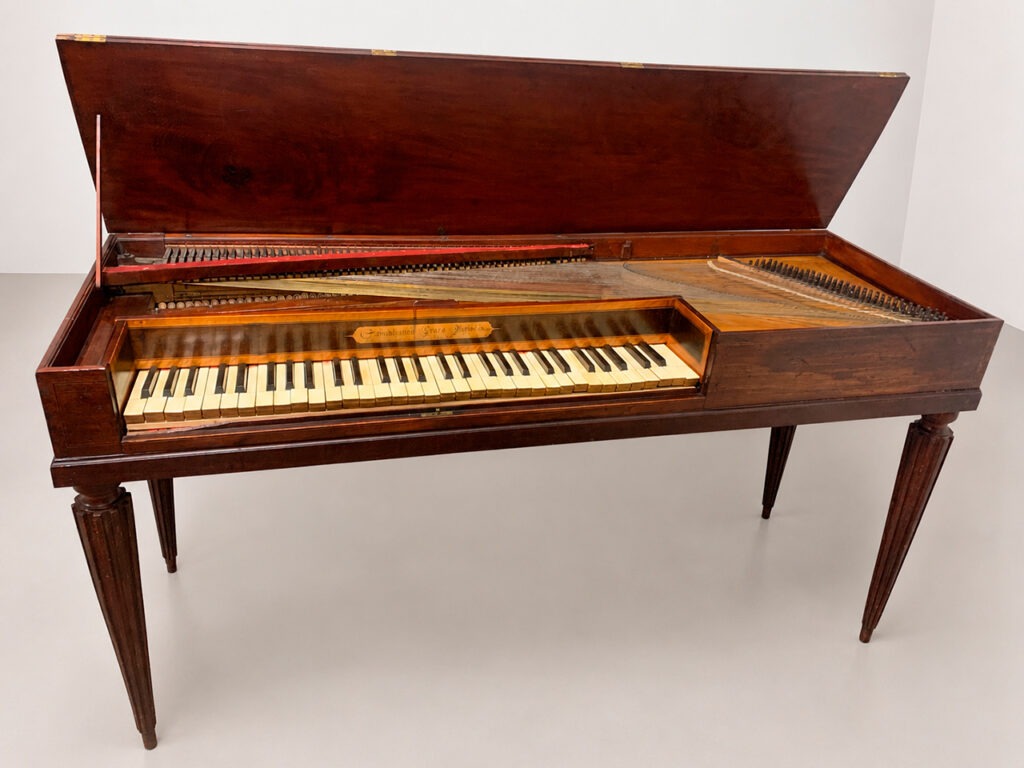
Square fortepiano
Érard
1785
Wood, ivory, metal
Érard was a French musical instrument manufacturer, best known for their pianos, but also for their harpsichords, pianofortes and harps. The inventory made after the death of Ombline Panon-Desbassayns mentions a piano by the same manufacturer, dating from the same period. Its presence testifies to the importance placed on music-making and highlights the artistic and cultural dimension of this bourgeois family. This piano will be displayed in the museum’s new exhibition layout to illustrate this aspect of their lifestyle.


![[Anse des cascades]](https://www.portail-esclavage-reunion.fr/wp-content/uploads/2026/05/anse-des-cascades-1-1024x682.jpg)