It is hard to write the history of a man who left traces, recognized and celebrated in his own time and still perceptible today, while he himself has fallen into oblivion. It is true that an individual takes on a historical character insofar as his specific activity becomes general, that is, insofar as there are general consequences resulting from his actions. However, history exists only as continuity in its traditional form. Yet historical sources concerning Joseph Desbassayns, one sugar-estate owner among others on Bourbon Island, are both few and discontinuous. Discontinuity, both a given and unthinkable, in the form of scattered events and fragmented data, was, in classical history, to be bypassed through analysis, reduced and erased, so that the continuity of events might appear. But the discontinuities that historians once had the task of eliminating from history have now become fundamental elements of historical analysis: transitional periods that connect a known situation to a new, largely unknown one. Thus opens the field of transitological analysis.
“I fear neither drought nor gales with my system.” This peremptory declaration illustrates the man, the sugar planter in question here, both regarding his agricultural skills, bold and innovative, in his character, imbued with presumption and vanity.
Joseph Desbassayns belongs to the period of transition experienced on Bourbon Island, extending broadly from the French Revolution to the abolition of slavery (1848). The island, still devoted to the production of subsistence crops, was a space losing momentum due to the end of the first French colonial empire. The island, where a peripheral form of monarchical absolutism prevailed, was being transformed into a territory at the forefront of agro-industrial progress and where the demands of profit and capitalism imposed a distant (because colonial) form of liberalism, one of the most visible markers of which was the emancipation of Black people.
Our sugar planter participated in this transition, introducing into insular agriculture methods marked by modernity, while clinging to a monarchical past steeped in paralyzing symbolism. Yet we know that every transition functions not “against” the past, but “with” the debris of the past.
Joseph Desbassayns was born in Saint-Paul, Bourbon Island, on 23rd February 1780. He was the eighth child (of fourteen) and the seventh son (of ten) of Henri Paulin Panon Desbassayns (1732–1800) and Marie-Anne Thérèse Ombline Gonneau-Montbrun (1755–1846), the legendary “Madame Desbassayns” of Reunion’s history.
Little is known of his early childhood, except that in December 1789, he left “for France.” with his father, his brother Charles, and his two sisters Marie and Mélanie. The aim was to enrol the two boys in a course of study that would later allow them to occupy important posts, just like as any favoured offspring of a wealthy planter. We know that he attended the “Festival de la Fédération” (federation festival) in 1790, but that he reportedly overtly refused to exclaim “Long live the Nation!” Given subsequent events, the educational project was cut short: his father and the two daughters embarked in September 1792 to return to their native island, and the two boys, who were supposed to continue their schooling in France, soon joined them in Île-de-France (now Mauritius island) in early 1793. The decision was taken as a result of poor organization of schools in the mother country, as well as the declaration of war against Britain, which posed a threat to all maritime travel. As a result, Joseph received no academic training whatsoever, and the real instruction he later demonstrated stemmed solely from his personal diligence and intelligence.
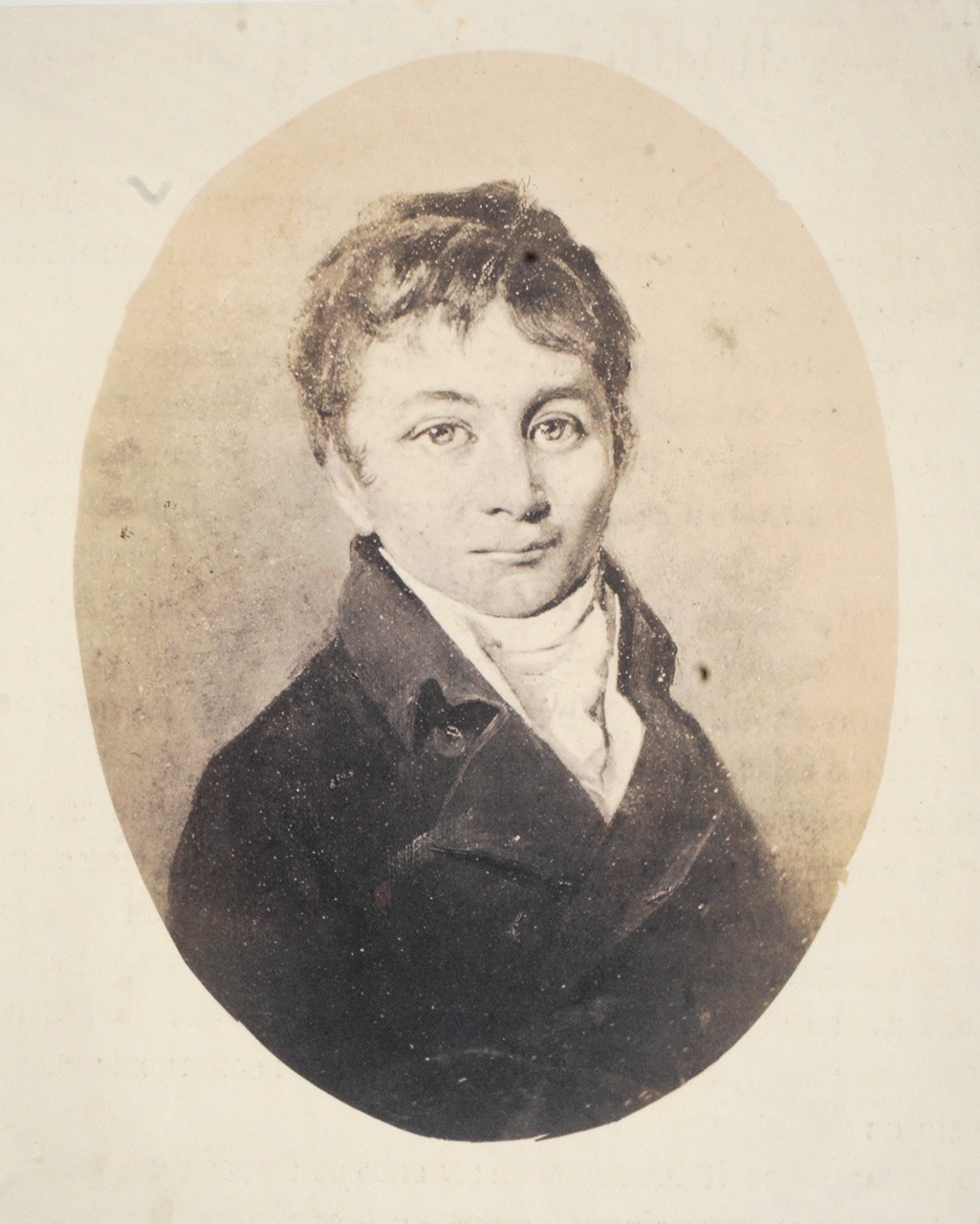
However, given the uncertainty of the times, Joseph’s parents, who until then had continuously increased the amount of land they owned, no longer wished to expand their properties. They sent part of the profits from the cotton produced on their estate at Saint-Gilles-les-Hauts to the United States and acquired land and perhaps annuities in New York, as well as in the states of Massachusetts and Maine. This substantial portion of the fortune required close supervision, and Joseph Desbassayns’ father decided to send his second son (Henri Charles, known as Montbrun) to America to manage these affairs, entrusting to him at the same time his younger brothers Joseph and Charles, for whom the journey would be more profitable than remaining on the small island of Bourbon with its limited prospects. They settled in Boston.
This first stay in the United States, which was to leave Joseph with very vivid memories, enabled him to rapidly learn English, a language he always spoke with great ease, and was undoubtedly the origin of his love of everything English that he retained to the end of his life. It also had another effect: it is quite possible that that it was here, in contact with Americans imbued with the Protestant spirit of enterprise (highlighted by Max Weber) and detached from European routine, that he acquired the boldness in business and blind faith in calculation that he would display throughout his later life, and which ultimately turned against him. Joseph returned to Bourbon Island in 1803, but made at least two further journeys to France, with inevitable return via the United States, the war making it necessary to embark on neutral ships sailing to the Indian Ocean. His last stay in France, which was to mark the start of prosperous ventures, was a fiasco: he returned accompanied by domestic guinea fowl, which he was the first to introduce to Bourbon Island, where they multiplied, but he was burdened with debt. A year later, in 1808, he was able to marry Elisabeth Pajot (1783–1844), his brother-in-law’s sister, thanks to the generosity of his mother, who settled all his debts. At the age of twenty-eight, he turned to agriculture. Owner of an estate at Sainte-Marie, he initially focused on growing maize, the subsistence crop for all the enslaved and at least half of the free population. He significantly altered the growing techniques and improved yields, foreshadowing what he would later do for sugar-cane.
Joseph Desbassayns was among the handful of inhabitants of the northeast of Bourbon island who, within a few months as from 1810, embarked on sugar production. The economic context appeared favourable. Sugar consumption continued to increase in France, where a significant portion of its imports from Saint-Domingue were also sold throughout Europe, particularly Great Britain. Yet France had just lost its Saint-Domingue sugar granary (1804), production in other French Caribbean colonies was now insufficient and Île-de-France, which had converted to sugar, had just fallen under English rule (1810), under which it would remain.
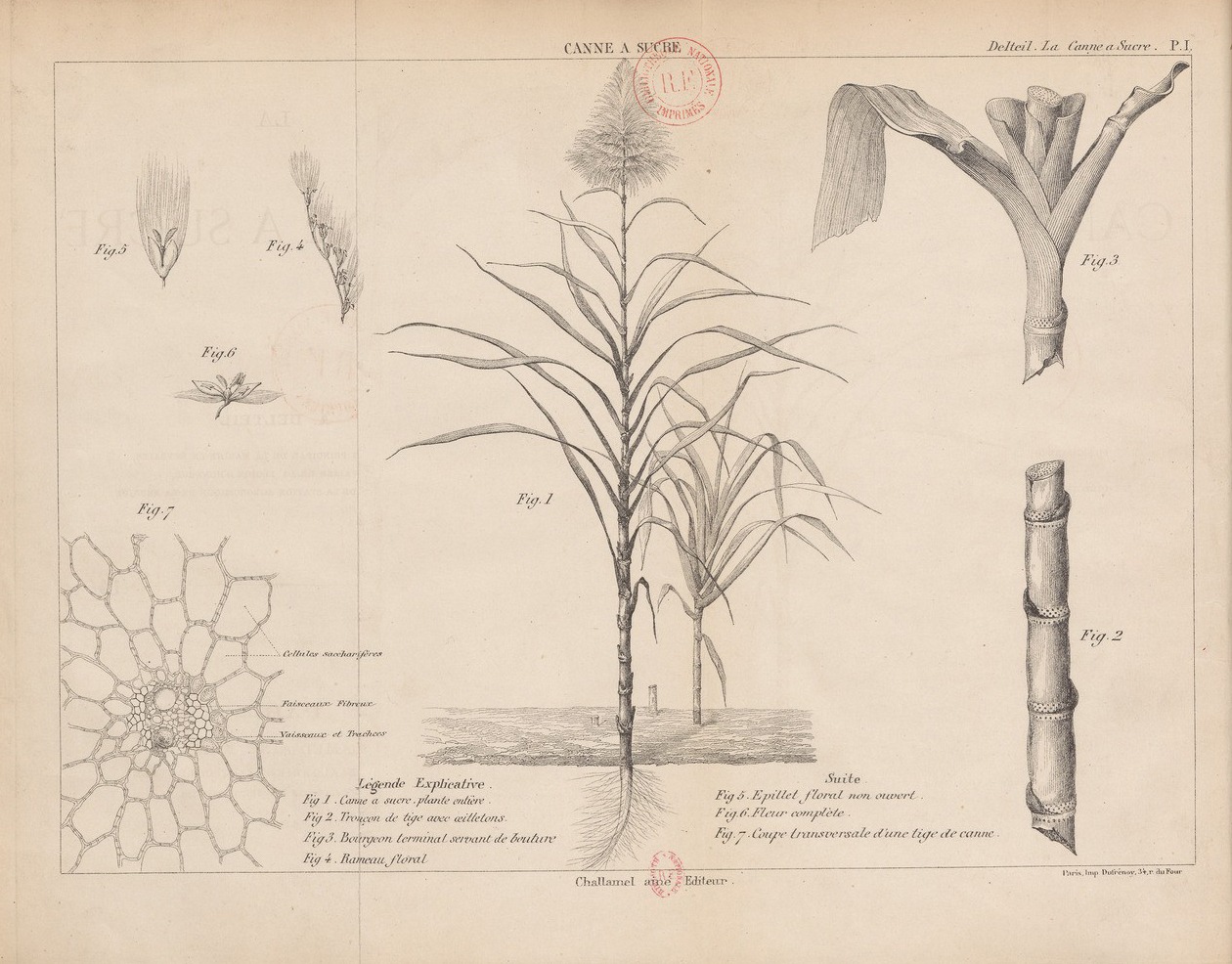
Joseph Desbassayns’s first originality lay in developing, from his own observations, a method of growing sugar-cane that earned him a flattering reputation as an expert agronomist, even though he had had no formal training in the field.
In his 1822 Memoir, Gaudin quotes from a report written by Lepervanche: “Before Joseph Desbassayns’s agricultural system,” Lepervanche notes, “planters applied various methods… But experience has shown the superiority of the system, and for the past four years plantations applying the same rules have shown perfectly uniform results across all plantations.” The method increased yields and turned reputedly sterile land productive, but it also standardized plantations, foreshadowing the uniformity that would soon characterize the industry.
From 1816 onward, the method spread throughout Bourbon Island; applied until 1848 and probably afterwards, it also spread to Mauritius. “Less than thirty years ago,” Joseph Desbassayns himself explained, with his characteristic lack of modesty, “sugar-cane on Bourbon Island was grown applying the wrong techniques and its inhabitants derived very meagre returns from this precious plant. Through constant experimentation and meticulous observation, I was the first to establish a rational method of cultivation, considered to be the origin of true sugarcane development in the colony. All its inhabitants and those of Mauritius have hastened to adopt it.”
Desbassayns’ method successively specifies crop rotation, planting, maintenance, and harvesting. “To perpetuate cane on a plot of land,” he declared, “is to seek its ruin and compromise one’s income at the same time.” He thus divided his land into eight sections: four planted with cane of different ages: one plot of young cane (planted in that year), one of mature cane (to be cut), one of a first ratoon and one of a last ratoon or ‘drawn cane.’ The other four sections were planted with ‘cover crops’ of peas: black Muscat peas or bitter Dutch peas, sown in December in alternating rows with pigeon peas, the stems of which supported the vines of the other peas. Over four years, soil fertility was thus restored.
The plantation deserved Desbassayns’ closest attention, and it was here, he believed, that had made his most personal contribution. The crop was to be planted in June and July on shallow soils, and in August, September and October on lower plots. Lines perpendicular to the slope were first be drawn (to prevent rain from washing away the soil and clogging the holes for the cane). Holes were dug along lines; from the excavated earth, a ridge was formed between the lines, where planting would resume after eight years. The cane was planted in holes dug from March to May. This digging work was the most arduous task assigned to the enslaved labourers.
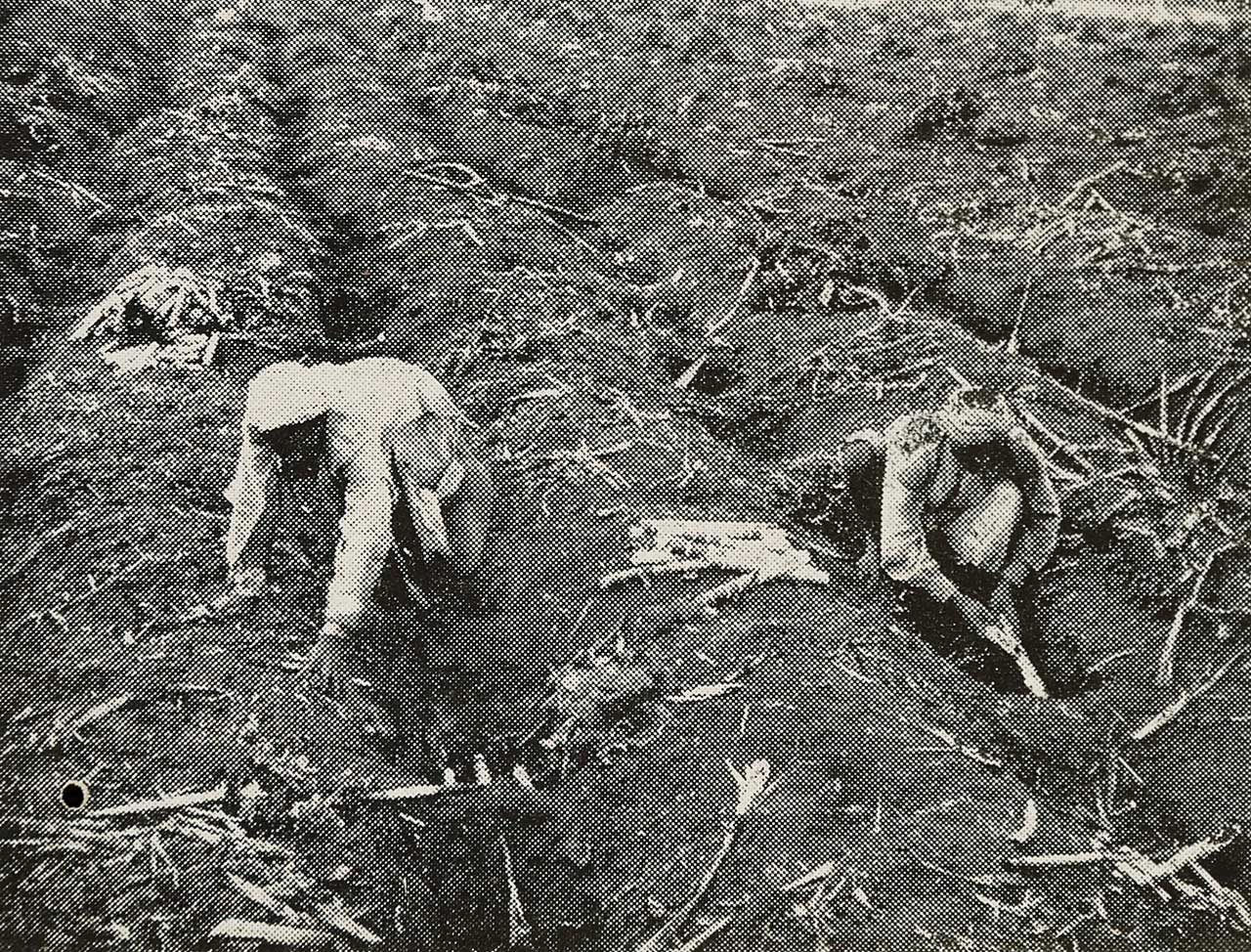
Desbassayns devised a tool for digging holes: a pick with a blade perpendicular to the handle and with the same width at the top and at the bottom: 3 inches (8 cm) wide and 8 inches (approx. 22 cm) long. Its curve allowed the blade to penetrate the soil in a single strike. Holes were 12 inches (32.8 cm) deep, 2 feet (approx. 66 cm) long, and 3 inches (just over 8cm) wide. The distance between holes was equal to the length of a hole (2 feet). This system allowed cane to better resist wind, suffer less from drought, and develop more extensive roots. Plants with well-formed buds were selected. “A foreman,” Desbassayns specified, “must always preside over and direct the planting.” Once inspected, each hole was filled with straw.
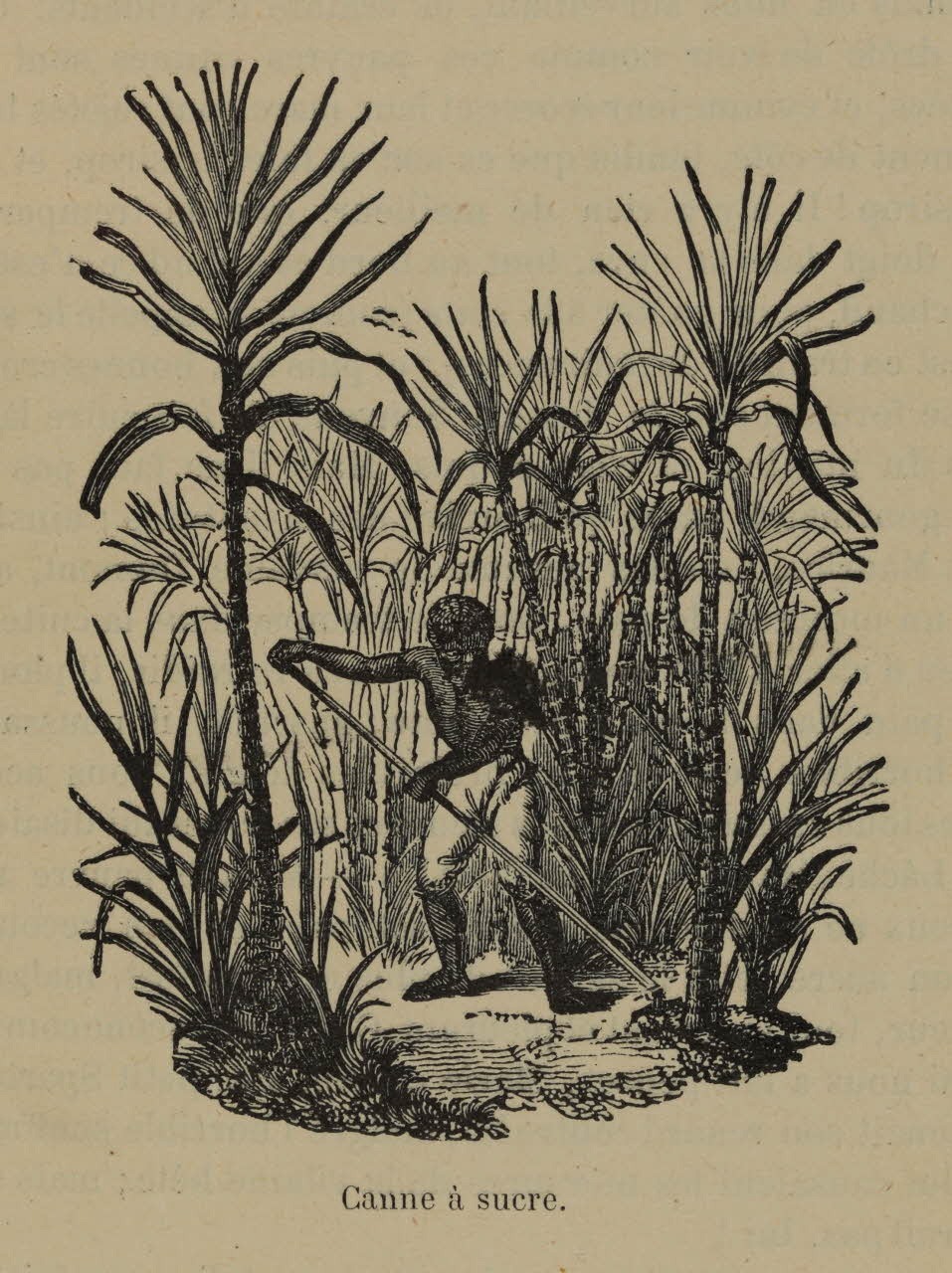
Far from growing on its own or encouraging idleness, as is sometimes claimed today, sugarcane required constant maintenance until maturity. “To ensure the sugar-cane remains green and that the shoots remain vigorous, they must be constantly hoed, making sure they remain clean, removing the earth fallen into the holes (emptying the canes or the holes). The fields must be hoed frequently. Hoeing needs to be carried out very often, even before the shoots of weeds have become visible.” The same fields were to be weeded frequently: every two or three weeks or following heavy rainfall. The same field was repeatedly hoed; “The enslaved labourer had to guide his hoe in a single motion, from the edge of the hole towards its centre and the following hole is to be dug next to it, without overlapping.”
Clearing out the holes (removing the soil that has fallen into them) was an essential operation, carried out by hand, and only young Black boys and the “negresses who have smaller hands, are more skilful, and can squat more easily than the men” were employed for this task.
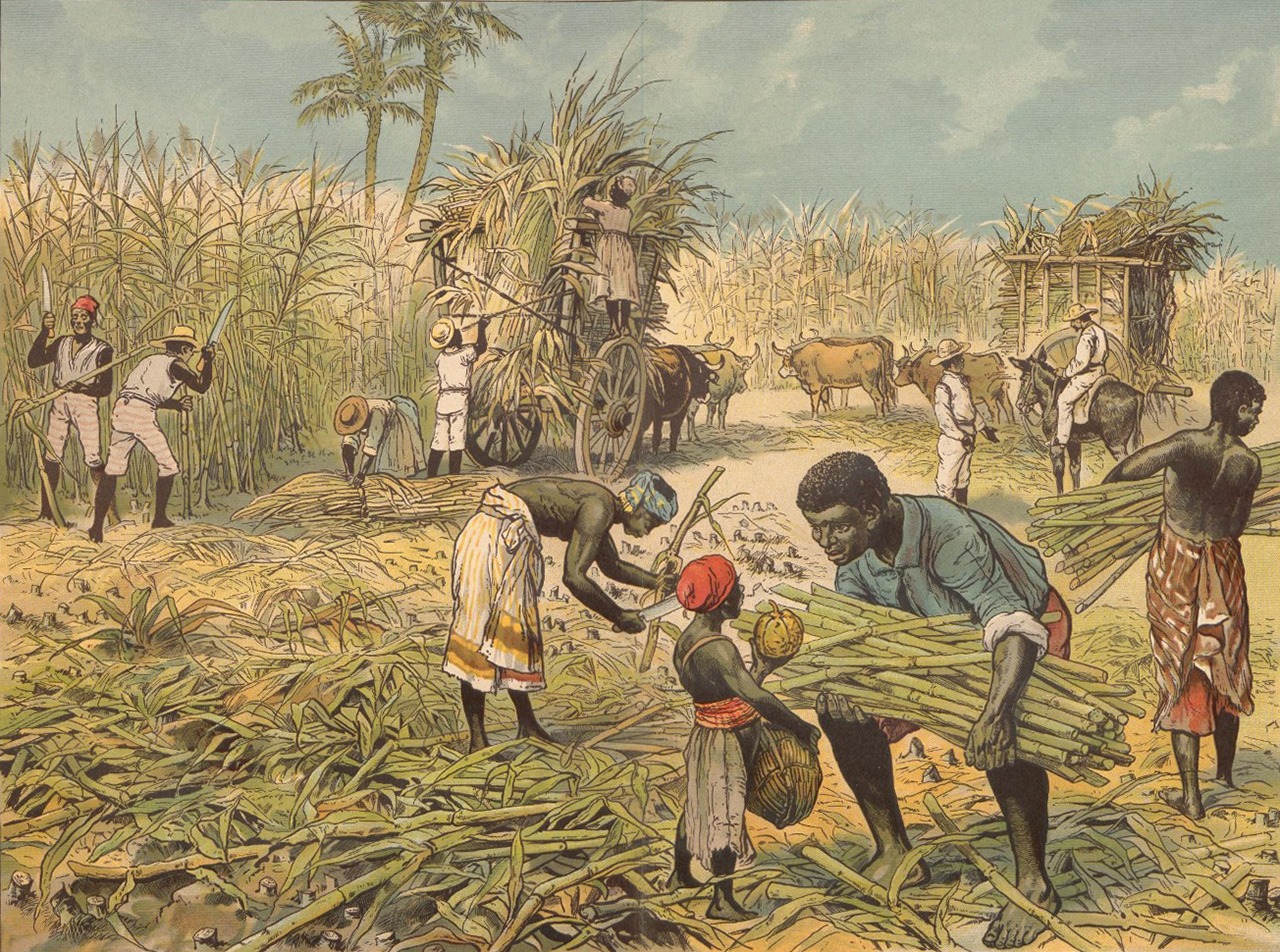
Desbassayns also planned the cutting of the cane: taking place from 1st July to 31st December. The cutters were divided into several groups. The first group cut down the canes with a narrow axe that cut the cane deep inside the soil; the cutter made the cane fall to the side where the strippers were positioned. This second group would pick up the cane by its core, remove the leaves, then throw the cane backwards onto the pile. The third group removed the somewhat larger shoots with a machete. The men of the fourth group would take the cane by the core in their left hand and once cut, the cane was thrown aside; then they cut it into pieces four feet long (1.3 m), which they tossed behind them, to the left, creating piles. The overseer ensured that the canes were not cut too close to their core and that large and medium-sized shoots were removed. Finally, the fifth group removed the canes and arranged them along the path in piles to be loaded onto carts.
It might be objected that this method was not original and closely resembled those described by Father Labat or Dutrône Lacouture. The novelty was the almost millimetric precision of the measurements, as well as the metrological obsession. The Desbassayns method, which defined and standardized the gestures, used division of labour, demanding massive toil from the enslaved and turned ‘field Negroes’ into virtual agricultural labourers. The growing of sugar cane was carried out by masses of labourers trained in the stereotyped gestures of production and retained under absolute subjection. This structure foreshadowed certain aspects of industrialization, under the tropics: the plantation was the laboratory of manufacture, the servile masses heralded the proletariat, the field prefigured the factory. The world’s first working class was that of the Blacks on the Bourbon plantations.
Joseph Desbassayns became obsessed with growing sugar, a state coyly attributed by his relative Élie Pajot to his travels in the United States, but also reflecting a propensity for reckless risk-taking in business. In the highly valuable correspondence he addressed to his suppliers in France, Great Britain, and to members of his family, JJoseph Desbassayns bears witness to this frenzy. Writing to Otard (of Bordeaux) in 1819, he explains that he can increase his production because “he has enough land; he has speculated well, since the price of land has risen. A plot worth 12,000 piastres has been sold for 35,000 piastres, without even having a sugar-works established on it.” He had thus gained an advantage over the other sugar producers and “will be the only one in Bourbon capable of generating an annual output of 1,200 mills of sugar (600 tons).”
Indeed, between 1812 and 1830, Joseph Desbassayns made numerous purchases: in 1812, two estates at Desrieux (the hamlet of Grand Hazier) and standing timber at Caradec and Tourris; two more properties with houses and 20 slaves the following year, in 1813; in 1819, a small plot from two daughters of Fanchon; in 1820, from his brother Montbrun, the undivided halves of Grand Hazier, the estate at Ravine des Chèvres, and the Tamarin estate, along with 126 slaves for 200,000 francs, under a rather vague agreement. He acquired the eleven plots and the Houbert and Gludic sugar works in 1827; another small plot from Vincent Seusse; an estate adjoining his own from Auguste Puissant, with whom he was in business; an estate and standing timber from Bruguiès and a vast estate from de Villeneuve. In 1828, he bought from Brunet (the younger) a 2.8-hectare plot surrounded by his own land and, from Toulguingat de Treffry, a sugar estate repurchased for “97,500 pounds of locally produced sugar, from land or that of Joseph Desbassayns, delivered to the depot of the Sainte-Marie establishment, or to that of Sainte-Suzanne if one is created, in three deliveries of 32,500 pounds, from the end of 1828 to the end of 1830, plus 21,345 francs payable in three instalments, with interest, in 1831, 1832, 1833.”
At the same time, Joseph Desbassayns sought to acquire the most advanced machinery and, beyond that, to ensure the modernization of the island’s sugar industry. As early as 1819, first through the merchant Otard in Bordeaux, then Prosper Lévesque in Nantes (Otard being too expensive), he ordered sugar-processing equipment from Fawcett & Littledale in Liverpool. A few months later, he contacted Avanzini, representative of the firm Nodler, Bonmary, Lafond and Co., to place orders, this time for steam engines, again from Fawcett: a 4-horsepower steam-engine bearing the mark CZ (Commans and Zamudio, its sponsors), an identical engine for Despeissis (mark D), for Dary de Lanux (mark DR), for his brother-in-law Joseph de Villèle with a cane mill (mark JV), for Bernard Pajot (mark PJ), and so on. In December 1819, feeling dissatisfied, he replaced the firm Nodler with Lévesque in Nantes. Desbassayns even diverted orders that were meant for other establishments, such as Baudin, and acted as intermediary for all sugar equipment: a water mill for Xavier Bellier, “a relative and friend” and a 4-horsepower animal-powered mill for Pignolet. At first, his business was prosperous, since the machinery served as freight for ships leaving Bourbon loaded with his sugar. Later, Desbassayns went so far as to guarantee the signatures of his clients. To demonstrate his good faith to Avanzini, he sent copies of the commitments he required from all private individuals “who wish to import factories from England under his guarantee.” The only requirement was that delivery be made on time, before the start of the harvest in July and above all that the equipment was not to be delivered to Mauritius! Desbassayns explained his motivations clearly on two occasions: in a letter to Otard dated 15th May 1819, he stated that he wished to “accustom the inhabitants to sending their produce to France, receiving goods in return, shaking off the yoke of merchants who are traders rather than true merchants”; in another, more detailed yet disillusioned letter to Otard dated 8th February 1821, he wrote: “The merchants of Bourbon have no money; what little they have they use to buy produce when it is not in high demand, only to resell it later at a very high price. Capitalists are very few in number; they invest their money at 18%, discounting traders’ or merchants’ notes at two or three months. The planter cannot borrow at such rates and does not enjoy the credit he ought to have. As for me, more than others, I am the target of all who are merchants or traders: the reason is that I was the one who encouraged the inhabitants to send their produce to Europe… hence the anger of the merchants against me.”
Desbassayns thus appears to have been driven by the wish both to produce and to speculate. But the result of these hazardous speculations was that he became indebted beyond all reason; all these purchases were made on credit and ultimately were not settled. If one adds the amount of several bonds, the total reaches the astronomical sum of 1,294,645 francs. As early as 1832, Desbassayns had to pledge 355 enslaved people collectively to his creditors, and on the same day to grant ‘antichresis’ (a form of mortgage or secured possession) on three estates: Bel-Air, Sainte-Suzanne and Sainte-Marie. The liquidation of this enormous debt lasted several years, “all regular,” wrote Élie Pajot, “and absolutely honourable: no claim was disputed, even though there were traces of usury. Everything was paid up, both secured and unsecured debts, with principal and interest. It was a liberation of land through land,” which yielded millions of francs in income during the period of liquidation.
Guided by his observations and intuitions, rather than by any academic training—which he never received—Joseph Desbassayns led the life of a very active sugar producer. He was also guided by his reading: the inventory drawn up after his death records “one hundred and eighty volumes of all kinds, notably on agriculture, all mismatched and difficult to describe.”
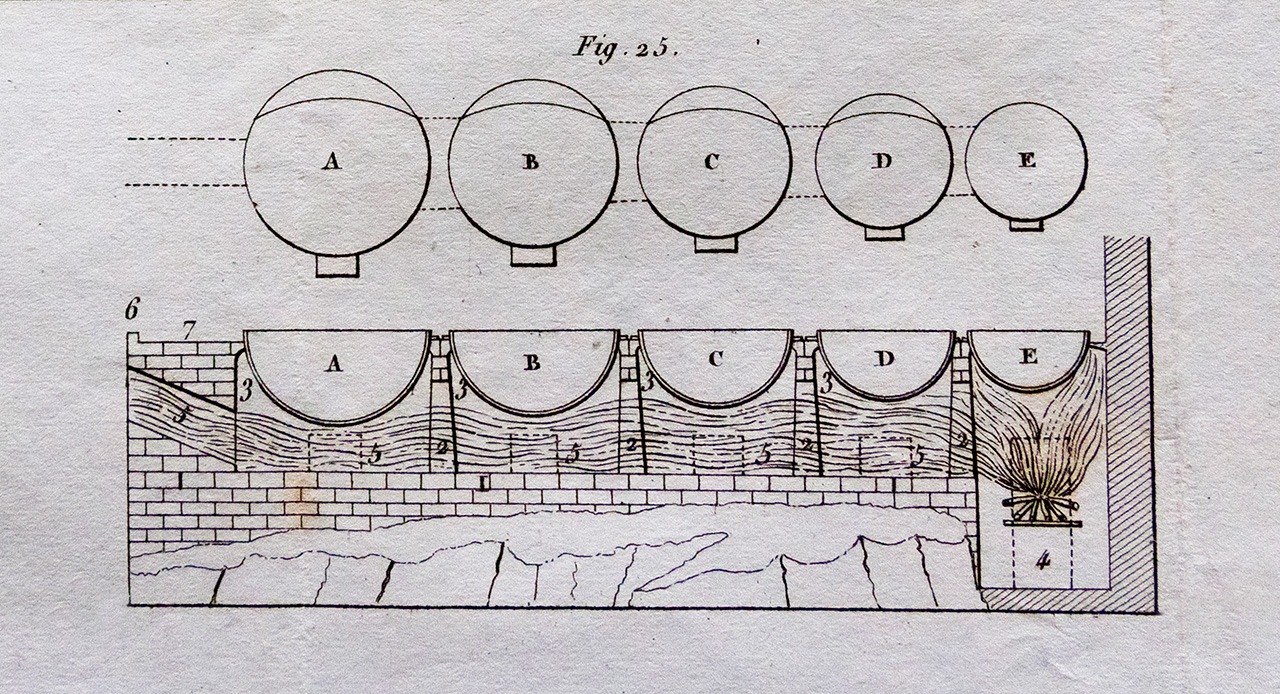
He never ceased trying to improve the sugar-manufacturing system. He detached the battery from the side wall against which it had been situated to place it sideways against the back wall of the sugar refinery. This arrangement, which later became widespread, made it easier to access the boilers from both sides and to remove the scum quickly when it formed to prevent boiling over; it also facilitated the transfer of liquid from one boiler to another using large ladles. He also opted for a single furnace, more economical in fuel, though this did have a drawback: placed beneath the final boiler (the “battery” or “strike”), the draft caused the flame to stretch forward and heat not the fifth boiler but the fourth: the “syrup”, which would boil before the fifth and hinder the cooking of the sugar. Joseph Desbassayns remedied this by building a ‘pre-boiler’, positioned in front of the fifth boiler; he experimented to determine the appropriate distance. This device, which lengthened both the battery and the flue, weakened the draft, which was restored by narrowing the passages between the cauldrons. Joseph Desbassayns rebuilt his battery himself following this model. Thus was born a Bourbon tradition known as the ‘Adrienne’ boiler. As a sugar-producer, his powers of observation led to a form of empiricism that proved totally effective. His correspondence teems with other innovations: he set up “a battery following a new plan,” tried “new crates for purifying sugar,” used “animal-sourced charcoal,” changed the size of his boilers and increased their number, and so on. We have the impression that no operation ever began on quite the same basis as the previous one, and indeed that even within a single season, a process could vary.
Certain entries in the diary of Lescouble reflect this ceaseless activity: “I wrote to J(ose)ph Desbassins this morning about an experiment on sugar batteries. He replied that it was not going well and urged me to come to his place to discuss it” (1822); “This evening, rain again. [Joseph] Desbassins sent me his English founder to obtain information on how to cast taps. I promised to go to see him myself about that” (1827), etc.
Without entering into further detail, we present below his main factory, that of Bel-Air in Sainte-Suzanne.
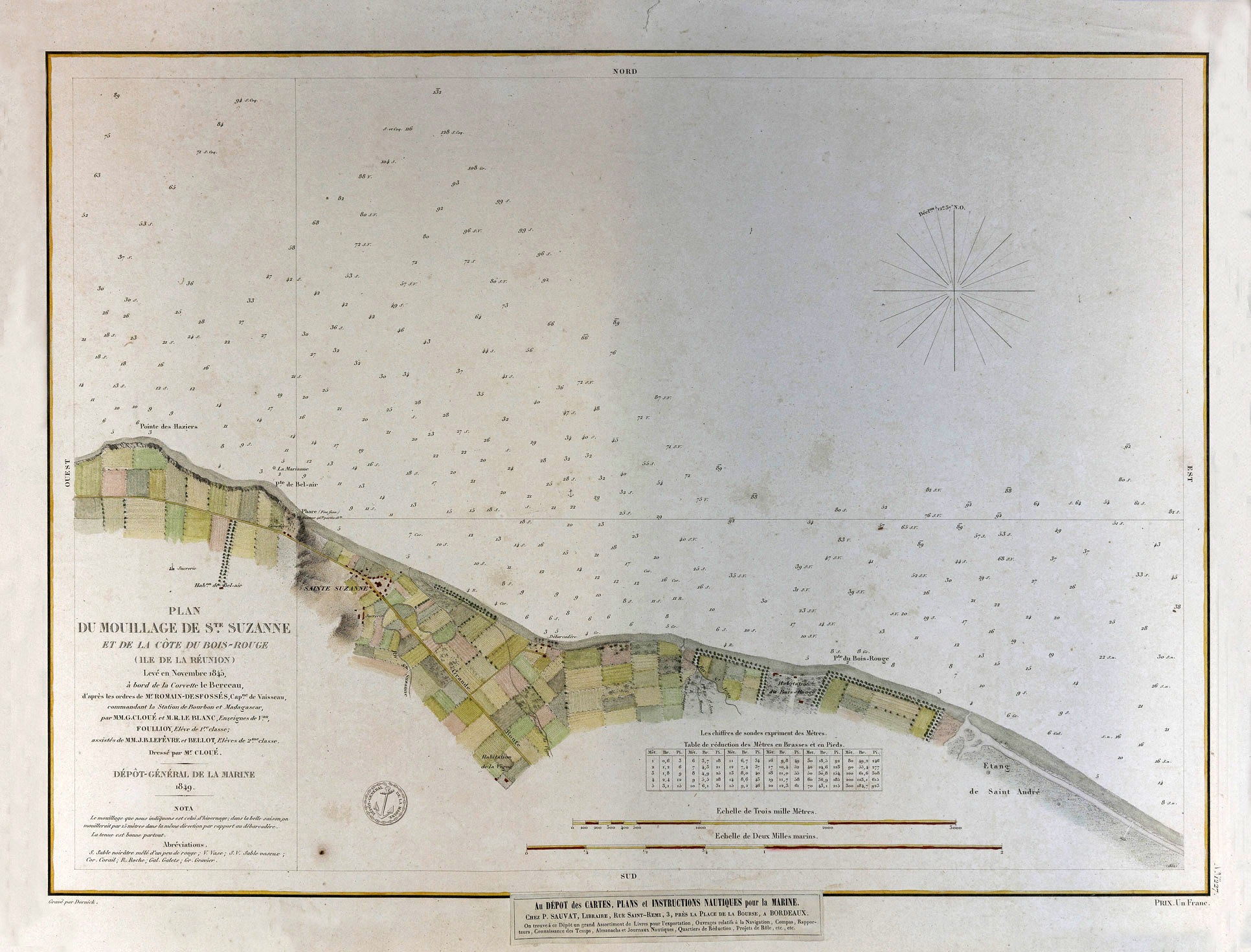
On lands he had been consolidating since 1812, probably in the 1820s Joseph Panon Desbassayns built a factory first mentioned in 1831. His daughter, who inherited it in 1850, had to sell it in 1879 to Denis-André de K/Véguen.
The inventory drawn up after his wife’s death in 1845 enables us to propose the following plan and description.
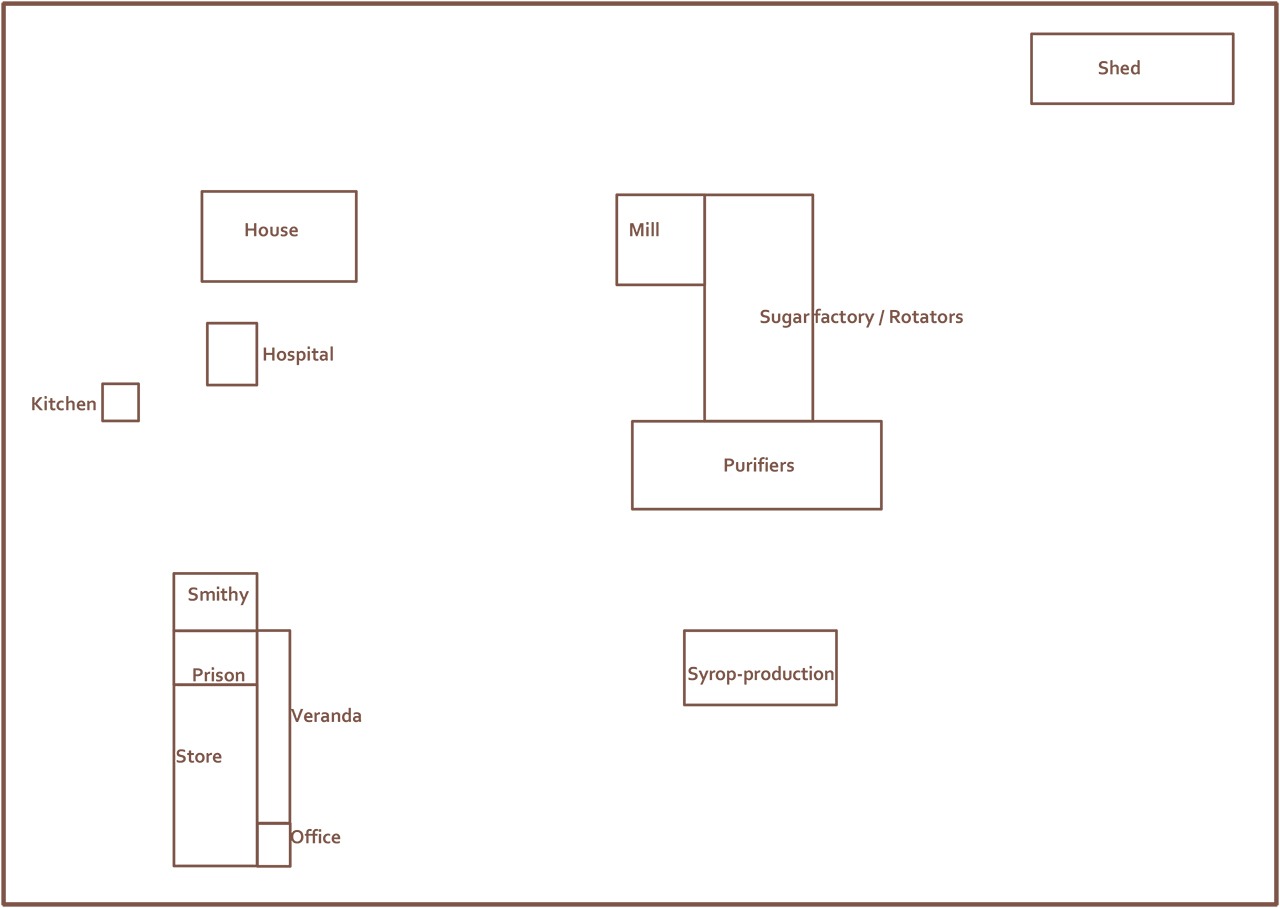
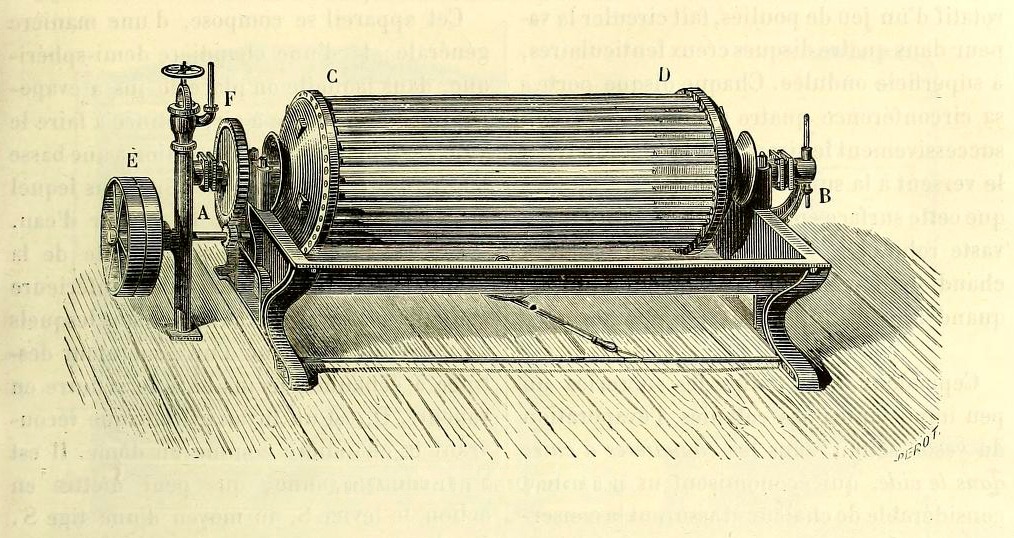
By 1845 the factory had incorporated the latest technical advances, in particular Wetzell’s “rotators” or “low-temperature boilers.” . This innovation allowed Joseph Desbassayns, at the forefront of sugar technology, to link up two buildings that had previously been separate: the pump house, or mill, and the curing house. The rotator building, where sugar was now boiled without fear of caramelization, naturally took its logical place between the other two. Another, older (?) sugar works was located farther south in a very precarious building, perhaps the syrup-production house. The bagasse shed stood apart, to prevent the spread of fire in case of a blaze. To the east were the domestic installations: the house, hospital, kitchen, forge, prison and an office, the presence of which should be noted. The sugar complex was thus spatially distinct, and technical innovation was a powerful factor for the transformation of the space.
Regarding slavery, Joseph appears to have remained an unshakable supporter until abolition. As a landowner now residing in Paris (since 1845), he was associated with the “Protest Presented to the Lower Chamber by the French Colonists” on 8th May 1847, which denounced the limited and modest reforms proposed by the Mackau laws two years earlier and concluded with a plea, today embarrassing and misplaced, that Joseph would no doubt have endorsed: “We are left with the final resource left to the weak oppressed; the right to protest and to complain; the right to tell you: enslaving the Whites is a poor prelude to the emancipation of the Blacks!”
There are only a few scattered notes which allow us to judge that he was neither better nor worse a master than others on Reunion island. In 1818 he ordered from Lévêque, a merchant in Nantes, “six rolls of cloth for trousers for the Blacks, six rolls of coarse striped ticking fabric for trousers and trimming for the Blacks”; in a letter to Otard in Bordeaux (August 1819), he requested “48 galley irons, one inch and one and a half inches wide”: deemed inhumane, these grim instruments were condemned by the law in 1845, though many masters used them until 1848. We also know that in 1820 he imported cheap wine: “These heavy wines sell very well here, because the Blacks drink a great deal of them.” The public prosecutor Massot noted that his estate included one of the rare prisons he considered properly to be correctly equipped. . Such prisons generally contained a camp bed with, at its foot, a wooden or iron block. These places, usually well lit, were not always securely locked. The general rule was that of precarious, flimsy constructions, often makeshift additions to the other structures. The same 1845 document, quoted earlier, indicates that Joseph Desbassayns had decorated the interior walls of the estate hospital with edifying religious engravings, doubtless in the paternalistic hope of instilling in the enslaved the religious convictions he believed would help them accept a vile and inhuman fate.
After the abolition of slavery, at the time of Joseph’s death in 1850, the workforce had risen to 396; of these, 196 (49.5%), almost half, were freed persons who had remained on the estate; the other half of the former slaves had left; the remaining 200 workers were indentured labourers, very largely Indians, the first 85 of whom arrived in the first quarter of 1849. These figures, which speak for themselves, were similar to those of other sugar estates. The establishment ceased operating in 1879.
After the abolition of slavery, at the time of Joseph’s death in 1850, the workforce had risen to 396; of these, 196 (49.5%), almost half, were freed persons who had remained on the estate; the other half of the former slaves had left; the remaining 200 workers were indentured labourers, very largely Indians, the first 85 of whom arrived in the first quarter of 1849. These figures, which speak for themselves, were similar to those of other sugar estates. The establishment ceased operating in 1879.
Lescouble’s diary regularly mentions Joseph Desbassayns, who was related to him and also lived in the island’s northeast. Lescouble is recorded as selling him a stallion for 430 piastres (1812). The diarist sometimes dined or lunched with him, often among the select company of neighbouring estate owners. Small favours were exchanged: Lescouble came to paint his house; Joseph agreed to employ his friend Henri Geslin.
At times the tone is dramatic, as when he notes that “the warehouse and the establishment of Jos(e)ph Desbassins at Ste-Suzanne, his bridge, everything was destroyed from top to bottom” by a “gust of wind” (cyclone) (1831). At times it is lighter, when good-quality bottles were exchanged; or when, along with their friend Fréon, he congratulated Joseph for the king’s granting him the title of baron and the decoration of the Legion of Honour (1827). Some observations are more amusing, for example Lescouble teasing Joseph about his many sugar ‘discoveries’: “I made him a little angry about his methods and inventions, but he now takes my jokes well” (1826). They become frankly humorous, for example at the wedding banquet of Hippolyte Féry and Tarsile Boyer: “When came the time for songs, Marcian sang verses praising Joseph as a father and benefactor of Creoles, followed by another song, again by Mr Henri, a teacher, so extravagantly flattering and the flattery so shocking that Madame Joseph and her daughter blushed to the tips of their toes and lowered their heads for the duration of the song. Yet Joseph himself swallowed it whole, like a dish prepared specially for him.” (1831). Also, when Joseph gave “an account of a disastrous dinner given by the Englishman Keatings, for him, Fréon, Montrose, Féri, d’Ableville etc. and leading to an extremely amusing anecdote. The wretched man served them nothing but a roast duck tough as the sole of a shoe, a stewed hare, which, he admitted, had been caught “by chance,” and a rock-hard black-crusted pie filled with salted beef. It was suggested that he had brought it over from Ireland when the island was captured. For the fussiest present, there were also three dishes of potato and one of aubergines, the latter served up as the star of the show. Finally, all this was crowned with another dish (remaining covered) of palm hearts, and a dull and sulky expression (1826). Can you imagine such a joke?” (1826).
But Joseph was seriously ill. Perhaps originally a hypochondriac, like many of the settlers, including Lescouble, who self-medicated with ‘Le Roy’s medicine’, while at the same time making fun of Joseph. “Joseph came to see me, despite the weather. He was taking sodium chloride, which, he declared should make him feel better within six months. For the moment, he rubs salt into his wrists. Later on, he will do the same with pepper. He’ll finish off with a whole lettuce. In the meantime, he does not move his legs and runs around all over the place […] In his old armchair, carried by two dirty naked Blacks and his nanny following, wearing the remnants of a sheet used as a coat. Nogues brought him news of his daughter, he had seen in Paris. Nogues says she is tall and handsome, but a little anxious [… ] as regards her character. Well, that’s not so bad. Actually, Josephe intends to travel himself next year to bring her back, since by then the lettuce will have enable him to move all over the place on the legs […] of his armchair” (1827). Indeed, the sugar producer suffered from a a disease called ‘barbiers’, described by French, English, and Dutch physicians and prevalent in the nineteenth century in Reunion, India, and elsewhere. Dr. Vinson described it as “a serious illness, difficult to define… characterized by fever and violent pains in the limbs, lower back and along the spine.” In one form “the paralysis most often affects the lower limbs.” Before the age of forty, completely deprived of the use of his legs, Joseph Desbassayns moved around only carried in a sedan or armchair by robust Bambaras. Apparently, this infirmity did not in any way diminish his activity or dynamism: his nephew Élie Pajot recalled him, “crippled as he was, having himself lowered, suspended by ropes, down the middle of a cliff on the banks of the Sainte-Suzanne River to determine the points through which should pass the canal supplying water to his factories.” To relieve his suffering and attempt a cure, Joseph tried everything, but in vain, even magnetism, which Lescouble in fact denounced: “…at Belle-Eau. I saw Joseph Desbassayns there, completely crazy with his magnetism” (1829).
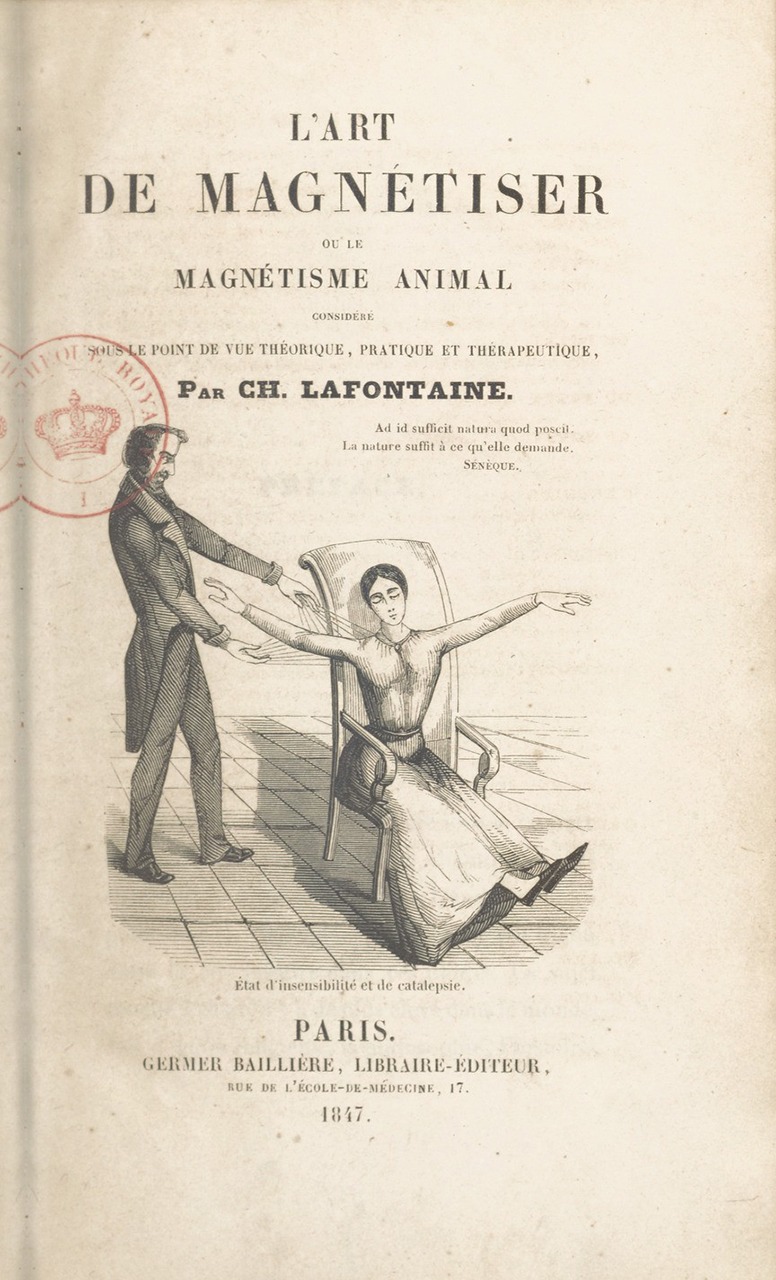
This was one of the “revolutionary” medicines (along with phrenology, acupuncture, and homeopathy) that emerged in France in the late 18th and early 19th centuries, and which can be attributed neither to 17th century discoveries, nor to links with Christianity such as animism and vitalism. It was actually one of the reasons for the sugar maker’s final trip to France in 1845, just after the death of his wife: settlers commonly believed that a long sea voyage and a change of air in ‘metropolitan France’ had curative virtues. In Paris, where he did not recover, Joseph fell under the influence of the “somnambulist” or medium Doralis, who Sigoyer describes using the following terms: “Mr Joseph Desbassayns was still alive, and always accompanied by the famous Doralis. The 1848 Revolution had forced him to leave Paris and he was in London… Who was Doralis you might ask? Doralis what a clever person who, having found Mr Joseph Desbassayns’ weak spot, had been taken by him as a somnambulist subject to carry out magnetic experiments and who managed to dominate the man’s spirit so well that upon his death, she inherited half of his estate, jointly with Madame Jurien, his only daughter.”
The famous armchair, evoked several times by the writer Duxel Daguères, was also a symbol of Joseph Desbassayns’s conservatism. Inclined toward modernity in technical and agricultural matters, as we have seen, he was fiercely conservative as regards slavery, as well as in politics. Lescouble mentions, while downplaying it, the episode of the armchair. “On Monday morning took place the wedding of Mr. Jurien, our authorising officer, and Mlle Joséphe Desbassayns. In a accordance with an old custom, a white handkerchief was placed on Josephe’s armchair, taken as a pretext by ill-wishers who, wishing to create a row, used the piece of cloth as a pretext, and halted the procession shouting “Down with the Desbassayns,” tearing the cloth to pieces. The calm steady action carried out by Mr Jurien put an end to the racket and everyone retreated. The wedding took place at the Grand Hazier, Joseph’s estate, as planned.” Duchaillu recounts the incident differently, emphasizing the planter’s arrogance: after the 1830 Revolution, when the three-coloured flag replaced the white one. “The wedding was celebrated in the government chapel, through special permission, certainly thanks to the Desbassayns family. Mr Joseph Desbassayns, in the middle of the procession leading to the church, could be seen sitting on a sedan chair, and with a white flag, carried by a negro walking next to him. He crossed the town, defying the general indignation… the scandal led to an assembly of a large group of citizens at the Square. Like many others, Mr Duchaillu was present: a three-coloured flag was brought along, and when the wedding procession came out of the chapel, they made Joseph Desbassayns drape this flag over his chair. The good nature citizens limited their action to this kind of punishment.”
The armchair, symbolising Joseph’s illness, thus evokes magnetism, which in turn evokes conservatism. Widespread in the colonies, “mesmerism,” that is the same magnetism, promoted by certain settlers enlisted in counter-revolutionary armies, later became a source of inspiration for the doctrine of the Holy Alliance through figures such as Joseph de Maistre. Though not without subversive elements, magnetism continued to be practiced by de Maistre, an advocate of ultra-royalist opinion.
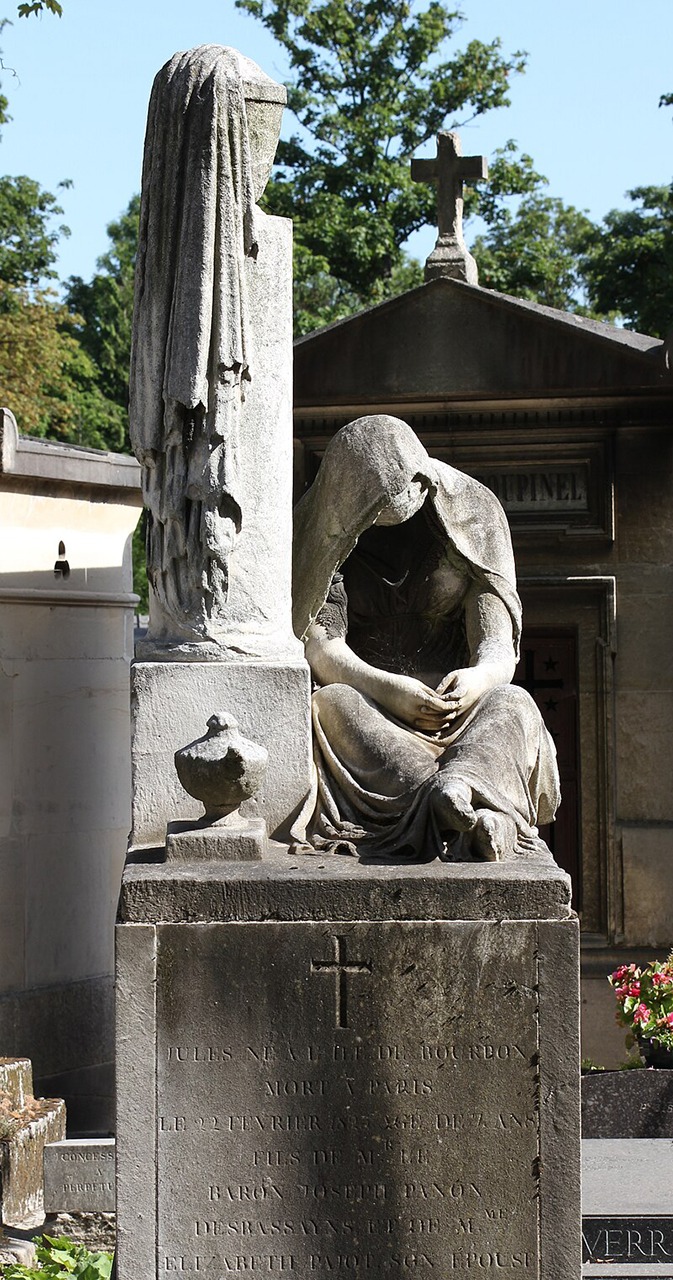
Joseph Desbassayns died in Paris on 17th April 1850 at his home, 14 rue Taitbout. He is buried far from his homeland in Père Lachaise Cemetery, Division 6, chemin Lebrun, first row. The rectangular tomb bears a marble statue of a veiled woman (likely his wife, buried in 1855 with their son Jules, 1816-1823), seated on the ground with hands clasped and head bowed in deep mourning. To her right a column surmounted by a funerary urn partly draped with cloth descends along the shaft. The monument is badly eroded; the woman’s face is shapeless. It is signed Étienne Ricci of Florence and is not dated.
As far as we can establish, Joseph Desbassayns lived a contradictory life: that of a man clinging to traditions, loyalties, and allegiances to the past that successive revolutions had rendered obsolete and virtually irrelevant in France, even though they had not completely disappeared, and conversely, that of a man who, through his agricultural, technical, and economic choices, promoted the development of sugar on Bourbon Island, contributing to its entry into modernity, a transition that also encompassed the abolition of slavery, which Joseph would most likely have denounced. Large-scale sugar production made the Bourbon industry technically independent and led its promoters, unwittingly, to adopt positions that implied a certain colonial autonomy. In the person of Joseph, the images of politics and sugar-production are contradictory, intertwined, and mutually enriched.
Domaine Panon-Desbassyns
Saint-Gilles-Les-Hauts
Tel. : 0262 55 64 10
Email: musee.villele@cg974.fr
Get there
Open from Tuesdays to Sundays 9.30am to 12.30pm and 1.30pm to 5.30pm
Closed on Mondays
Closed 1st May / 1st January / 25th December
Scientific committee
Legal notice