On 2nd November 2026, France enacted the law repealing the Code noir, a royal decree of March 1685 which legally established slavery in the French colonies of the West Indies.
This decision, which carries great symbolic significance, comes more than three centuries after the establishment of a system that left a lasting mark on the history of France’s overseas territories.
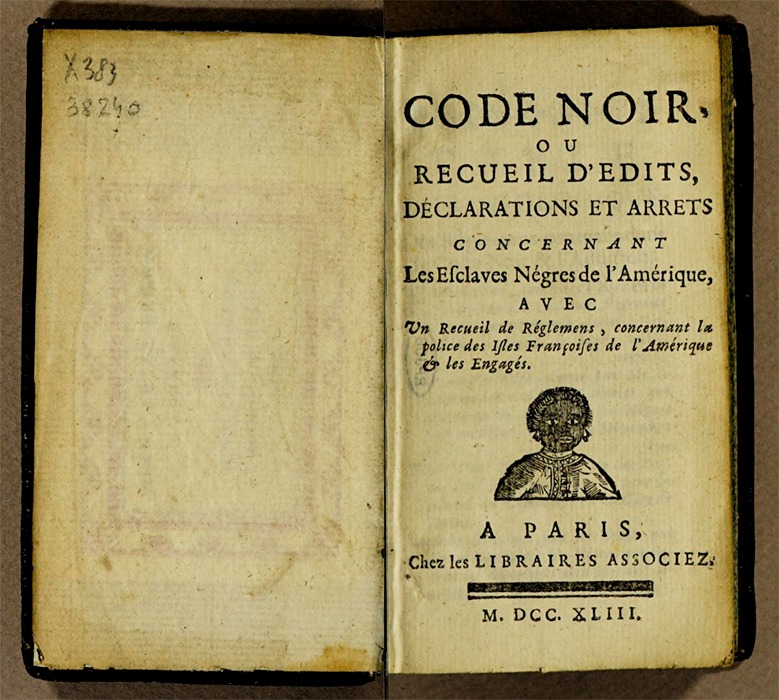
However, the history of French slavery is not limited to the West Indies. In Réunion and Mauritius, the letters patent of December 1723 also established the system of slavery on the Ile de Bourbon and Ile de France. This historical reality was one that several elected representatives and historians from Réunion wished to see explicitly acknowledged during the parliamentary debates of 2026.
In both the National Assembly and the Senate, MPs argued for the full and complete inclusion of this text, specific to the Mascarene Islands. This proposal was not included in the final draft.
However, Réunion’s history followed an usual timeline. The abolition decreed in 1794 was in fact not implemented here, and it was not until 20th December 1848 that Sarda Garriga proclaimed the abolition of slavery in Réunion, freeing more than 62,000 people.
From a legal perspective, the Code noir had already ceased to have effect following the successive abolitions of slavery. Its express repeal therefore constitutes an act of both legal clarification and historical recognition.
The new law also stipulates that the Government must submit a report to Parliament, within one year, on the provisions derived from colonial law that remain in force in France’s overseas territories and their contemporary implications.
This is an important development for Réunion, where issues relating to the legacy of the plantation society, historical inequalities, the transmission of memory and reparations continue to be the subject of debate.
The repeal of the Code noir does not, in itself, constitute redress for the suffering endured by enslaved peoples and their descendants. It nevertheless represents a new step towards the institutional recognition of this history.
Beyond the legal aspect, one challenge still remains: to ensure that the history of slavery in the West Indies, Réunion, Mauritius and all of France’s overseas territories takes its rightful place in our national memory. For recognising the past also means enabling future generations to better understand the society in which they live.
Main reference: Act No. 2026-1015 of 2 November 2026 repealing the Code noir, Official Journal of 3 November 2026.
Edit du Roy or Code noir of the American Islands of March 1685
Letters Patent of 1723, better known as the Code noir of Ile de France and Ile de Bourbon

Domaine Panon-Desbassyns
Saint-Gilles-Les-Hauts
Tel. : 0262 55 64 10
Email: musee.villele@cg974.fr
Get there
Open from Tuesdays to Sundays 9.30am to 12.30pm and 1.30pm to 5.30pm
Closed on Mondays
Closed 1st May / 1st January / 25th December
Scientific committee
Legal notice