Within the slave-based society of the colony of Réunion, some landowners possessed only a small number of slaves. They formed an unofficial social class, referred to as ‘small-scale slave owners.’ The initial tendency might be to regard them as impoverished, but inventories drawn up by notaries provide insight into their individual profiles. All groups of the island’s population have been examined, based on a study focussing on the period from 1790 to 1848. The threshold of six slaves per owner is used as a benchmark, and we can observe a striking correlation between the more modest estates and small numbers of slaves. In particular, routine and a lack of ability meant that some settlers remained at a modest level and owned only a small number of slaves. However, some respectable and even affluent estates also only owned a small number of slaves. It appears that the number of slaves corresponded to their needs. These included, in particular, urban households and artisans who mainly employed domestic servants and skilled slaves. A small number of slaves was thus connected to personal and family circumstances. Therefore, it remains a simplistic and unfounded approach to automatically define all ‘small-scale slave owners’ as impoverished owners.
“In order to gauge the wealth of the people of Bourbon, the best criterion – the one most often used for setting taxes – is the number of slaves they own,” wrote C. Wanquet in Histoire d’une Révolution, La Réunion (1780–1803). In the one town unanimously regarded as the island’s most industrious and wealthiest (Saint-Paul), in 1779, out of a total of 346 free heads of families (whether white or people of colour) nearly 47 per cent owned no more than five slaves. This is indicative of an impoverished island population.
However, did owning fewer slaves inevitably signify poverty? In reality, this aspect of historical research has been little explored, particularly for the post-revolutionary period. This article seeks to address this, with the aim of refining the observations set out above. The post-mortem inventories drawn up by notariesⁱ represent the source upon which we base our documentation. Notaries would visit the premises formerly occupied by the deceased, and accompanied by experts, they would carry out an evaluation of “furniture, household utensils, linen, clothing, silverware, slaves and other effects”. Although immovable property rarely features in these inventories, we are able to ascertain the deceased’s estate
Having catalogued more than 900 inventories from the period 1790–1848, we have chosen to retain those listing a maximum of six slaves, including, where applicable, children listed alongside their mothers. This amounts to 271 inventories. From this corpus, we have extracted a number of relevant cases that shed light on the concept of ‘small-scale slave owners’. It is also important to recognise that the value attributed to a slave often constituted a significant proportion of the estate, even exceeding that of the buildings (huts, outbuildings, stables, etc.).
The estate of François Ady, a blacksmith (1792)ⁱⁱ, was characterised by its meagre value. Apart from a few tools and other personal effects, part of his maize stores had gone rotten. He left behind only a threadbare jacket and a pair of shabby trousers of no value whatsoever. Only one slave is mentioned.
Miss Louise Suzanne Lefebvre (Year IX) died unmarried and the mother of an illegitimate child. Her estate consisted solely of hand-me-down clothes, and one slave, along with her son.
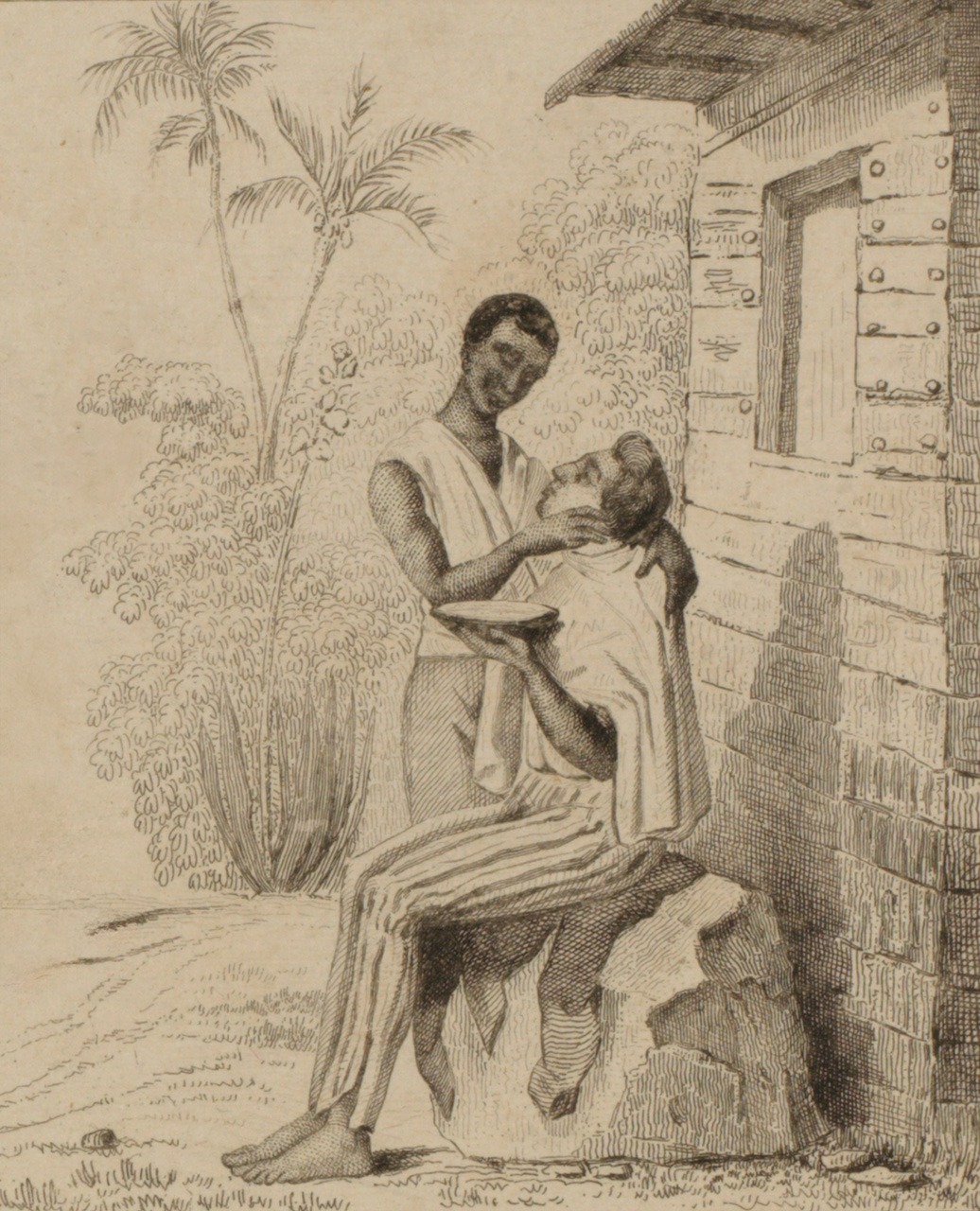
One senses a certain modesty when reading the inventory of Madame Mollet, wife of Dugoulet, the prison warden (1808). The house, cottage, kitchen and slave quarters were not evaluated, unlike the furniture, animals and clothing which were not valued highly. The inventory lists three slaves, including one with her two children, and a barber who could wash and iron.
Jacques Évaneau was also clearly not well-off (1814): a few worn-out chairs, a dining table, a chest, a bedstead with bedding, pots in poor condition, six plates, and two pieces of silver cutlery. He owned one female slave with two children and another slave who had run away.
The estate of a certain Victoire, who was enfranchised in 1815, comprised a few small properties, some furniture in poor condition and some poultry. Two slaves survived her, one of whom was in poor health.
John Cullen (1815) was a major in the infantry in the service of Her Britannic Majesty. He died in Mauritius, leaving property on Bourbon Island, where he kept cattle. Whilst it is almost impossible to fully assess his wealth, his inventory lists two servants and a cattle herder.
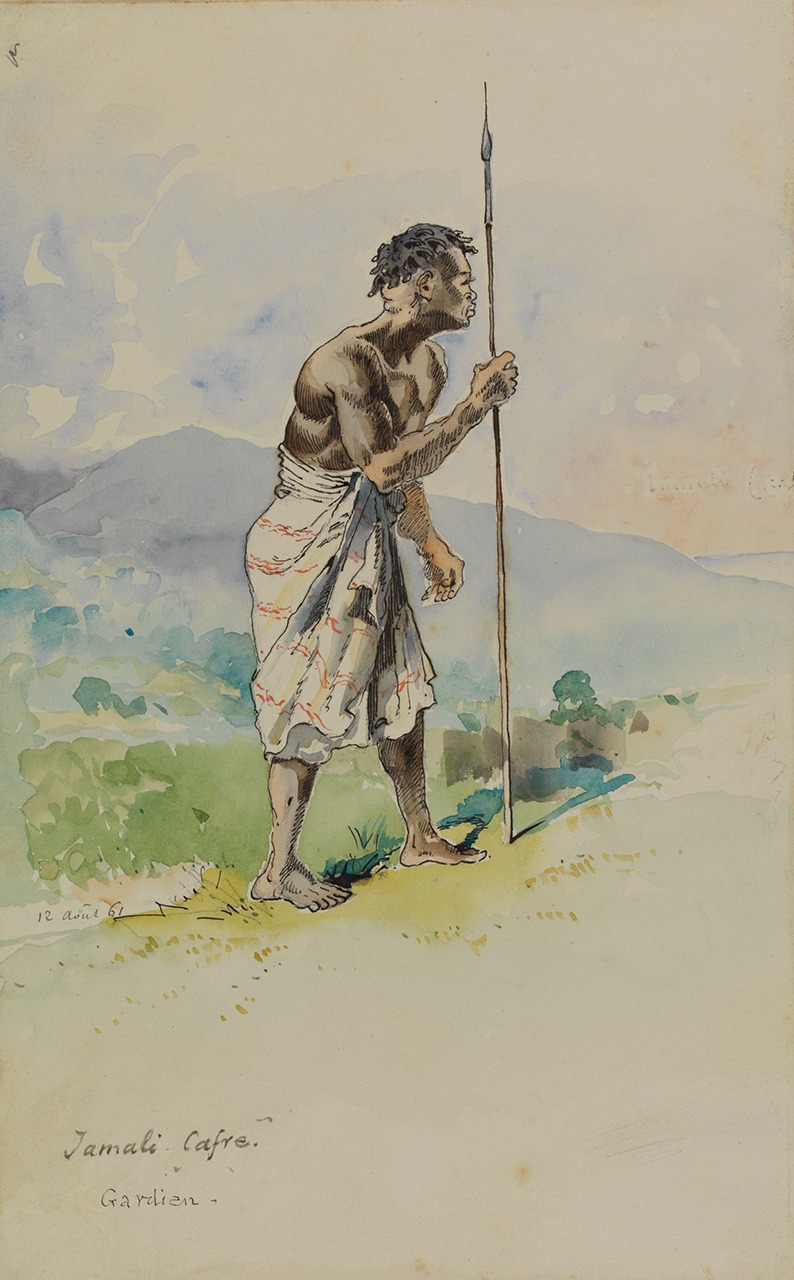
The fortune of Claude Rouxel, steward’s secretary (1817), was meagre. He owned only one slave, aged 13, who worked as a labourer.
The extent of the property recorded at the home of a certain Hélène, a free woman (1817), including a dilapidated hut measuring 10 square feet, reveals her precarious circumstances. She owned three slaves, one of whom was disabled.
Guillaume Leyritz, who was no longer on the island (1819), used to live in the house of a woman named Victoire Naraguy. All the furniture and household utensils found there belonged to her and her daughter. He himself had owned three slaves, two of whom were accompanied by their children.
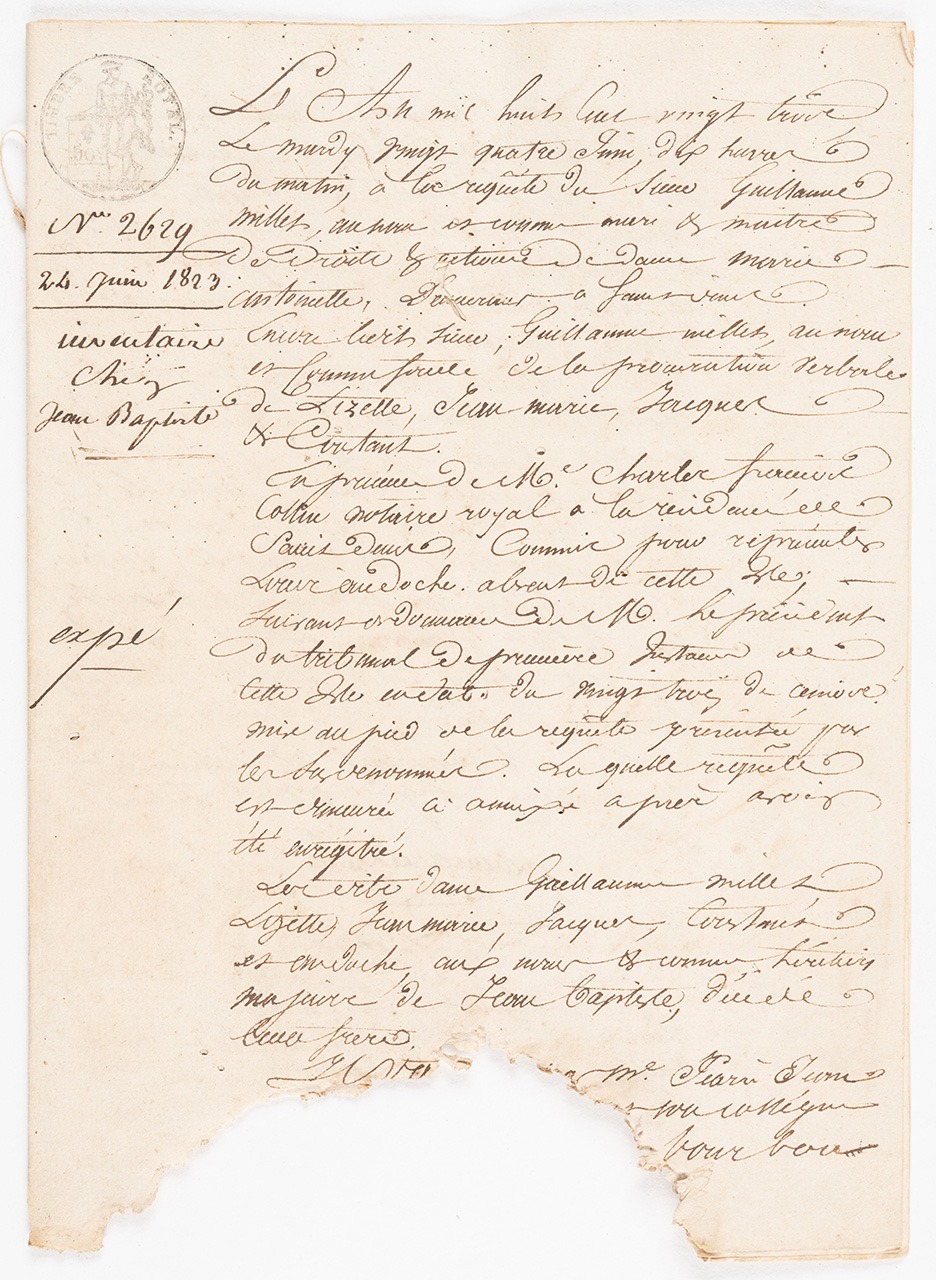
The assets left by Jean Baptiste, a free man (1823), were also meagre: notably, a few dilapidated chests or old clothes, a small wooden hut with a thatched roof, and three small outbuildings in poor condition. He owned a single slave, aged 60.
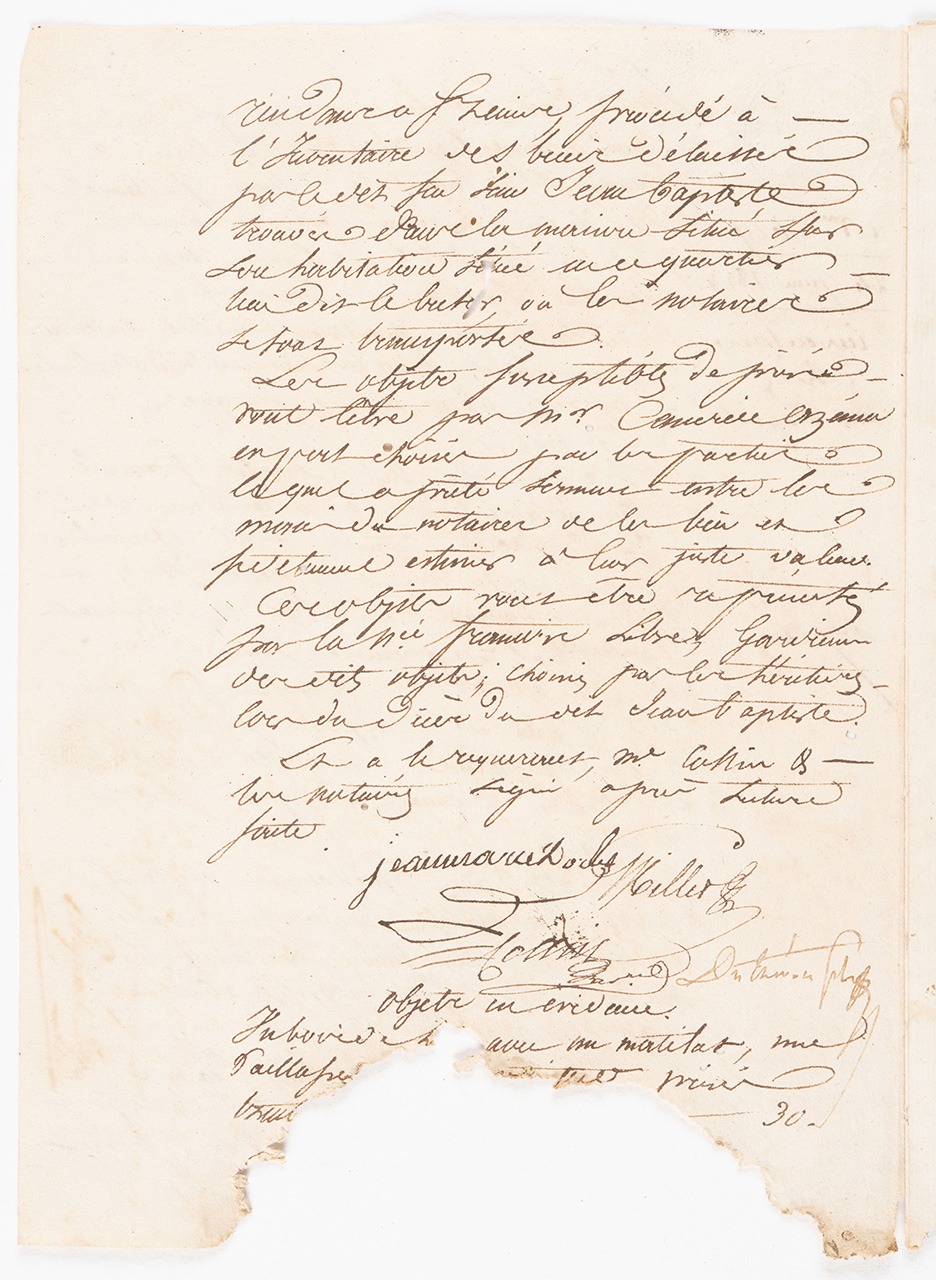
The estate of Marie Louise, a free woman (1823), is unusual, though it is difficult to categorise it precisely. It consisted solely of five slaves, all employed in farming, and the linen for her personal use, which was left to her nine minor and illegitimate children.
Given that the property left behind by the late Jacques Étienne Grimaud (1826) was of little value and could not be divided amongst his six siblings, they requested that it be sold off. This was declared in the inventory carried out at their brother’s home, who owned four slaves.
The estate of Grégoire Alexis Paquet is also modest; he owned one slave whom he had taken with the intention of enfranchising him, and who was claimed by a third party as being in fact their property.
‘Meagre’ seems to be the word that best describes the estate of Vincent Beauvillain (1840): an old sofa, a wardrobe and waistcoats in poor condition, old tables and shirts, etc. Only one slave, a crippled labourer, is listed in the inventory.
One would hesitate to describe the estate of Saysset, archivist of the Colonial Council (1847). It comprised some decent furniture, crockery, silverware, books, undescribed linen of little value, and a single female slave. It is stated that slaves had been left in his service for a very long time, but that they were not his property.
The estate of Louis Lauricourt Euger (1848) is virtually empty. He owned neither property nor any personal effects. His linen and clothing were of such little value that it was deemed unnecessary to have them inventoried and valued, and he was in debt for several sums. As the owner of four slaves, he bequeathed one of them, along with her children.
A picture of prosperity emerges from the detailed inventory of the movable and immovable property (a main house, two shops, a kitchen, two huts for slaves, and a hut used as latrines) belonging to Madame Marie Éléonore Pinard, wife of Michel Fromont (1791). Three slaves were in her service: a cook and her two children, a male servant, and a female servant assigned to look after the Fromont child.
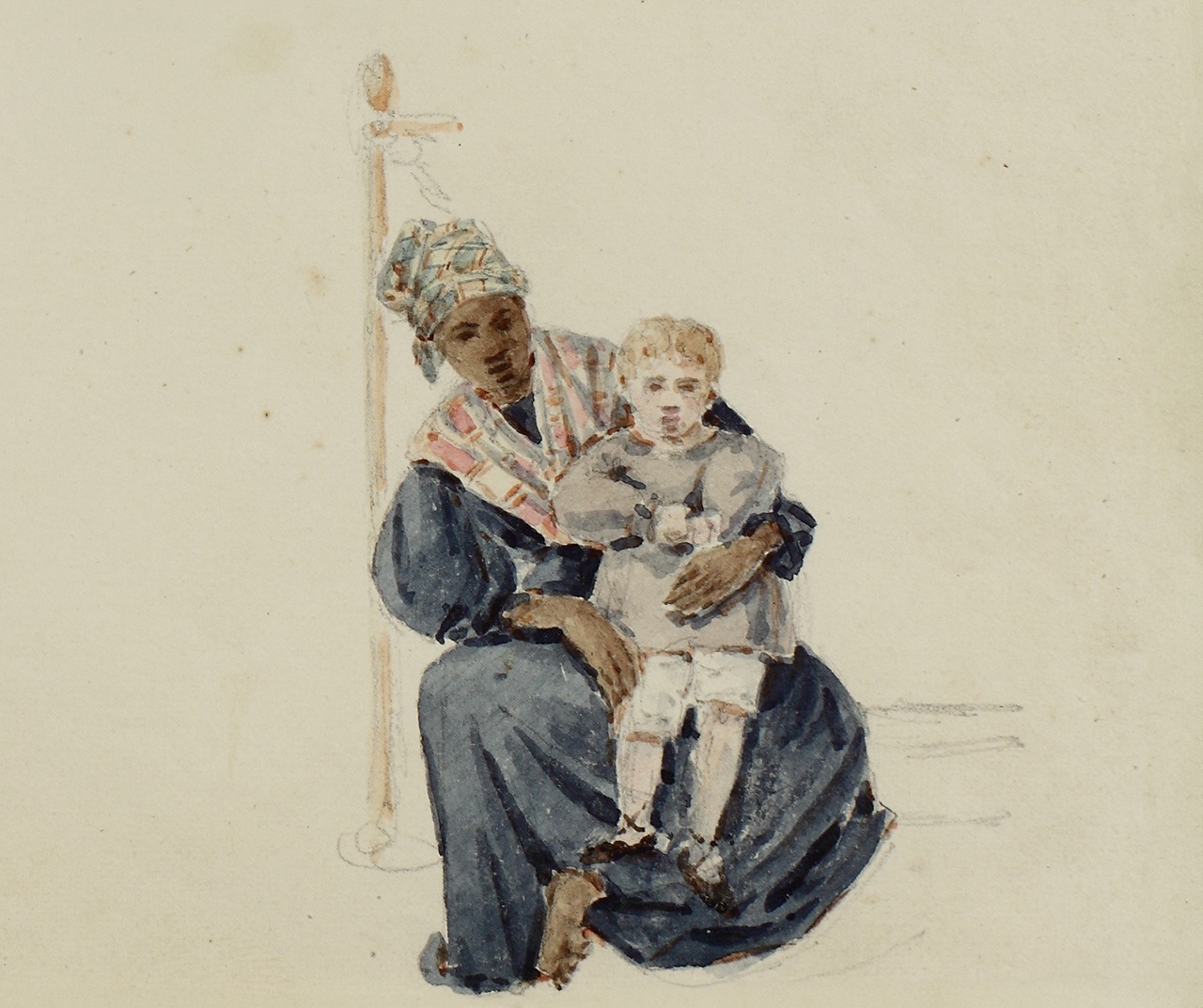
The estate of François Richard, a cobbler (1792), was respectable, comprising items related to his trade (some goatskins), his tools, furniture and silverware. The notary listed two slaves, one of whom was a runaway.
Comprising just five slaves, including a midwife and a laundress, the estate of Antoine Mussard (Year III) was highly diverse and extensive (money, tools, linen, animals and utensils).
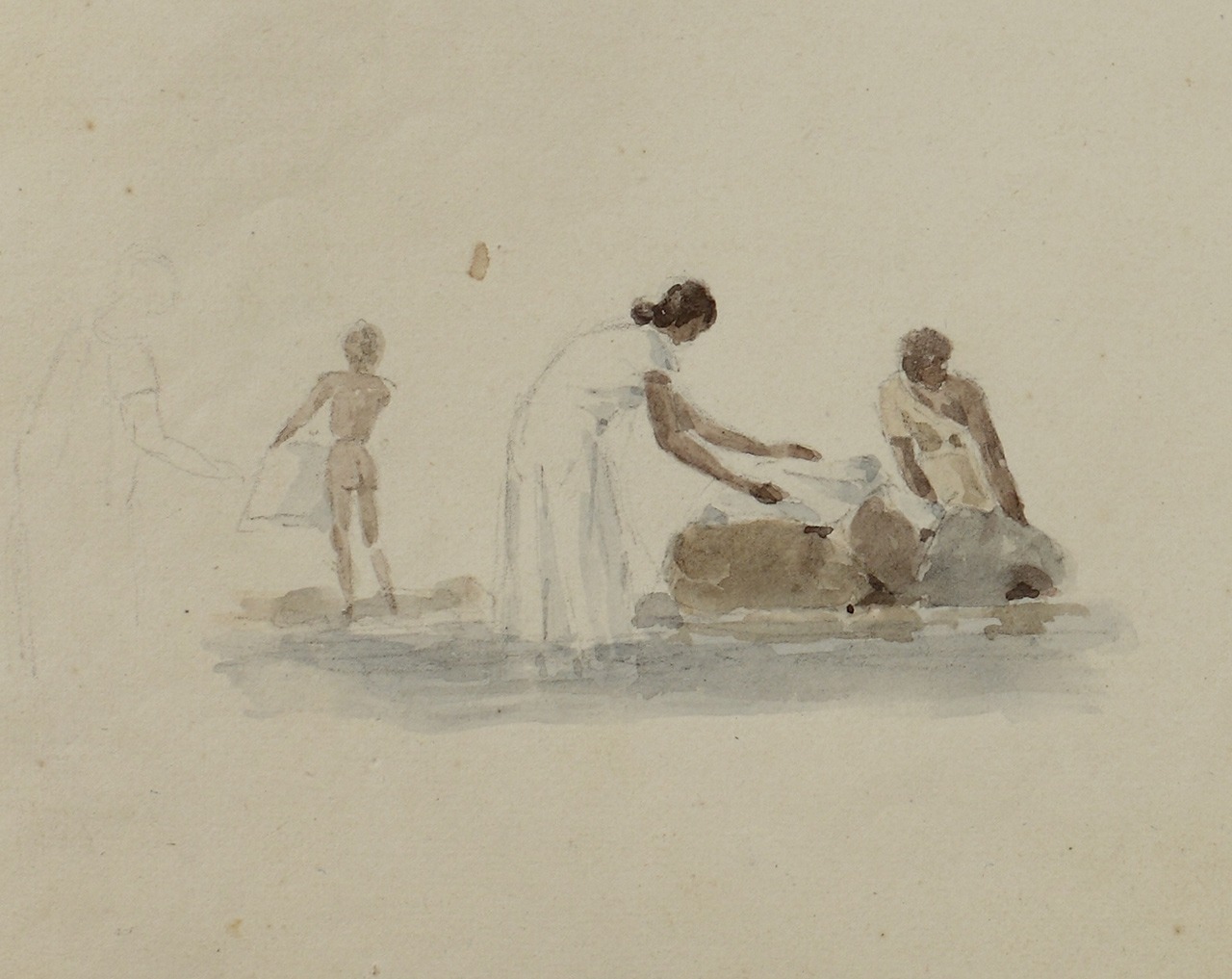
The inventory of the joint estate of Miss Gillot and Beurnonville, an officer in the armies of the Republic (Year VIII), dissolved by divorce, is quite revealing. The total value turns out to be, all things considered, quite respectable. Three slaves are listed. However, according to Geneviève Gillot l’Étang herself, when her former husband left for Europe, he had left her with eight slaves. Two had died. One was sold to settle a debt owed by Beurnonville. She was forced to sell three slaves, the proceeds of which were used for her own upkeep. And she exchanged two slaves for one of her father’s slaves.
Sidonie, a woman of colour (1807), owned only two slaves, although she possessed a respectable amount of property.
Five slaves formed part of Mathurin Bouilly’s (1808) very substantial estate, along with the stock and merchandise of a shop, foodstuffs, piastre coins, tools, silver and cutlery.
The estate of Armand Vénérozy, a former captain in the Île-de-France Regiment (1809), was substantial. In addition to furniture, tools, clothing, silverware and a silver watch, he left behind six slaves, including a laundress and ironer with her child, and a labourer who worked as a blacksmith.
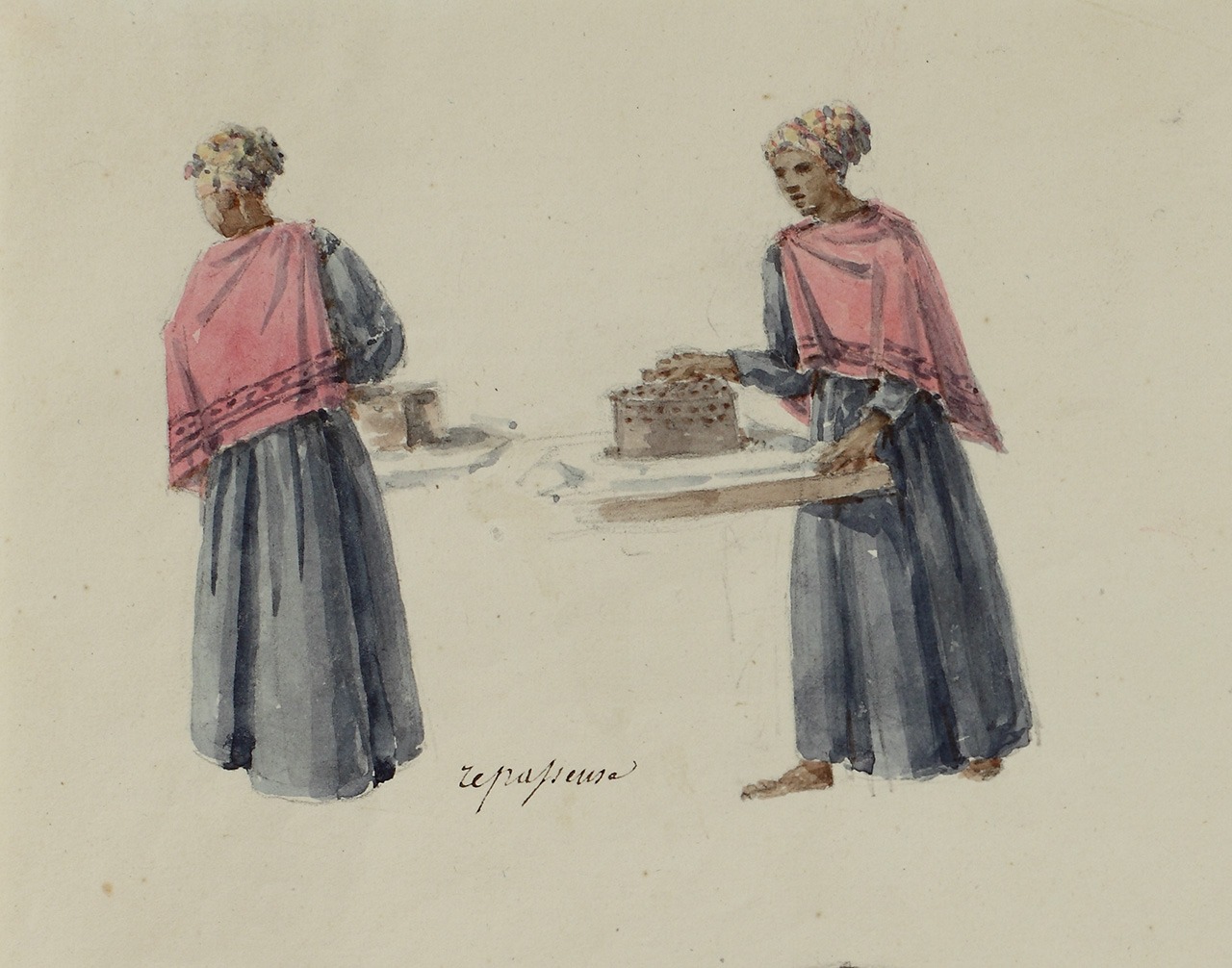
Jean Baptiste Lebon’s (1810) wealth was well-established and quite diverse (double-door cupboard, tools, sugar-cane grinder, livestock, shingle-roofed house, utility room, store, kitchen and stable). He had six slaves, including a carpenter, a labourer who worked as a pickaxe-man and sawyer, a disabled woman, and a woman with two children.
The estate of Mrs Geneviève Moreau, wife of Jean Arhel (1811), was of a respectable size (furniture, tools, foodstuffs, livestock, silverware, two houses, two shops and a kitchen). She had six slaves, including one woman with four children.
Jean Delpit (1814) was not affected by financial hardship, and a number of inventories were required. He ran the state-run bakery and butcher’s shop. He had four slaves, including a stable hand, a cooper and a servant.
The estate of Madame Picard, widow of Étienne Pontgérard (1815), was modest, comprising some silverware, clothing, linen and various items of furniture. The household included five slaves: one footman, one who was a bit of a cobbler and a fiddler, one female servant and seamstress, and two labourers.
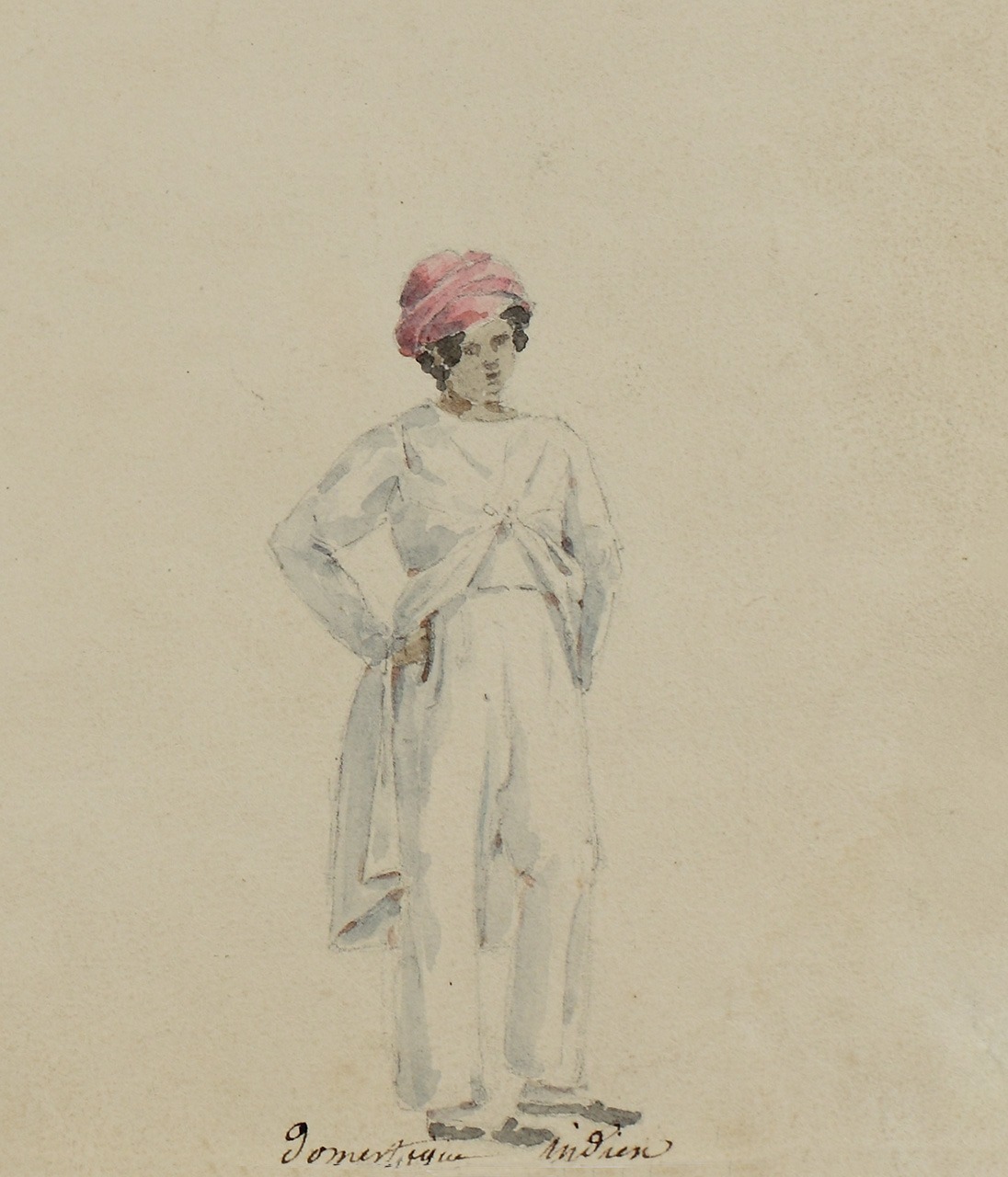
François Despeissis (1816), a 50 per cent partner in a trading firm, lived in luxury, but had only one slave.
Notwithstanding a modest livestock holding, the movable property of Madame Dejean, wife of Delacroix, a solicitor (1818), indicated a comfortable lifestyle. A 20-year-old female domestic slave is mentioned.
Joseph Laurent Fouque, a doctor (1824), owned five slaves, including a cook and pastry chef, a butler, a stable hand and a bricklayer, whilst the notary’s records reveal a variety of possessions (a piano, books, coins, silverware, etc.) and wealth.
The same applies to Gabriel Marcelin Garien, owning a sedan chair, pianos, books, weapons and horse-drawn carriage (1825). He owned four slaves, including a female servant.
The situation for Claude François Chanal (1827) was quite similar, owning various items of furniture, a rifle, a silver watch and numerous buildings. Six labourers are listed; plus one who was a leper, and was not included due to the severity of his condition.
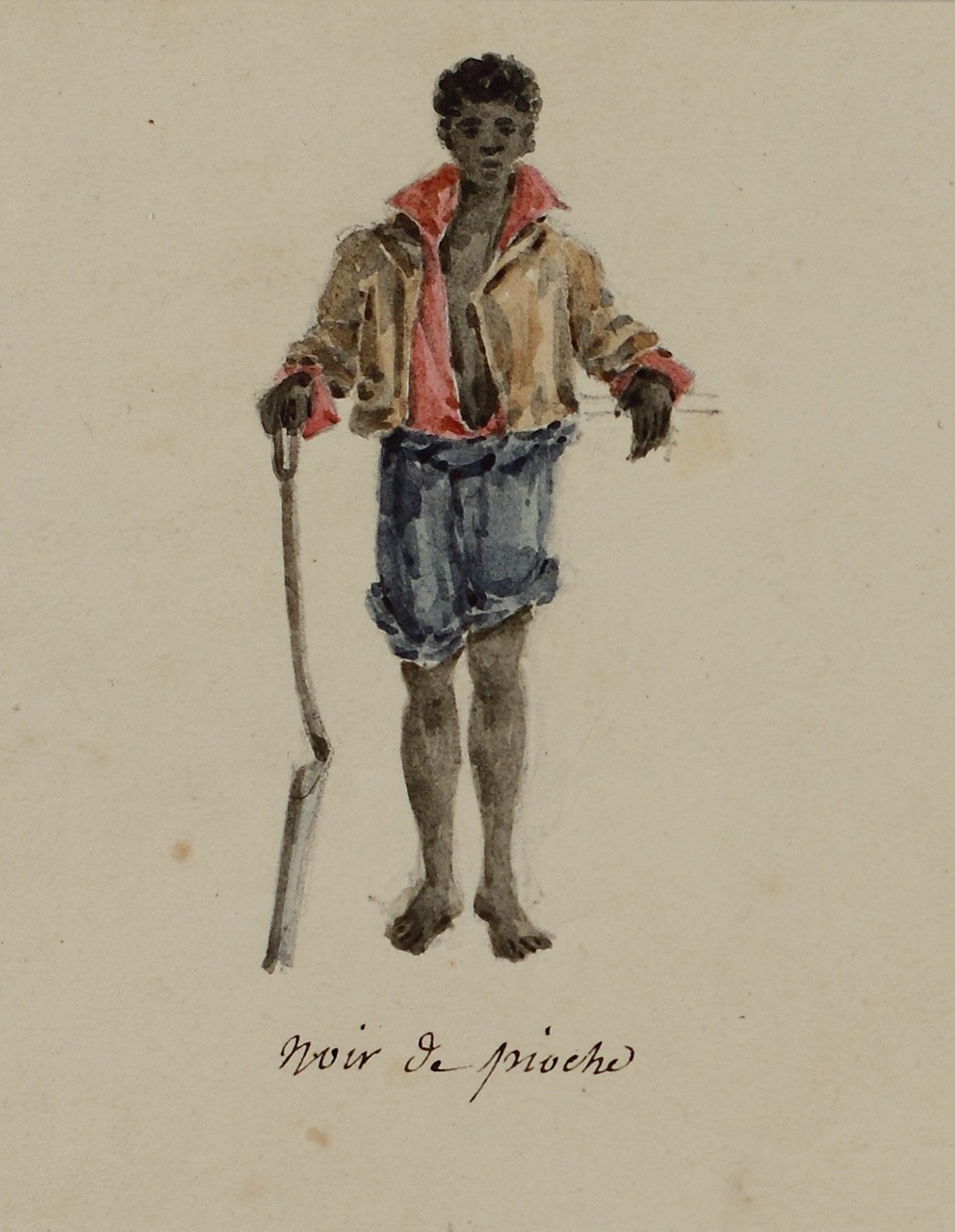
The furniture, household linen, clothing, gold watch and silverware, other personal effects, and above all the money in cash owned by Duperrel (1830) were substantial. Two labourers and a carpenter are listed.
All in all, three slaves listed as domestic staff were owned by Charles Taboy (1835), a man with numerous and varied possessions (furniture, crates of wine, money, etc.).
Dame Delahogue, widow of Villagrand (1844), possessed a substantial collection of furniture, silverware and books, as well as a Batavia horse. She had four slaves, three of whom were domestic servants.
The ironmaster Jules Mourgues (1844) was very wealthy indeed. In addition to clothing, tools, equipment and handcarts, the inventory listed six skilled slaves: a cook, a cooper, a master blacksmith, a blacksmith, a locksmith and a tinsmith.
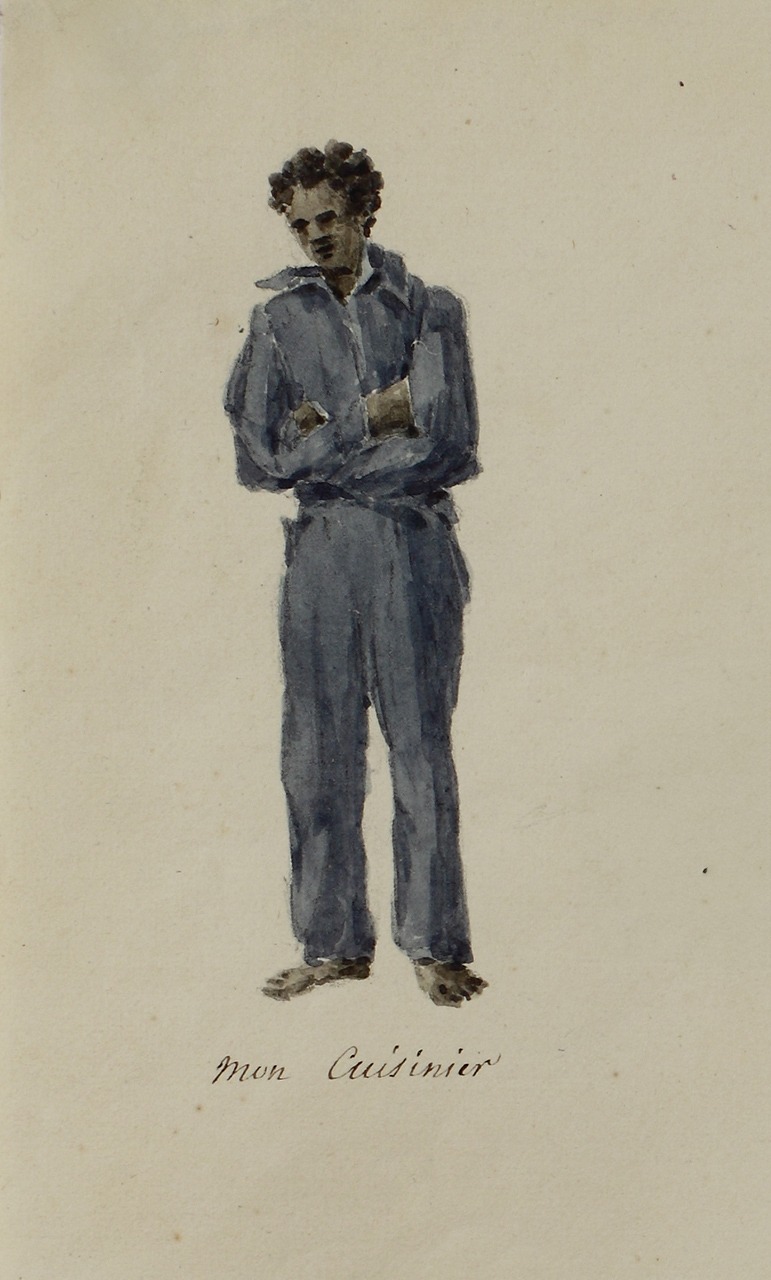
Dame Rébreffet, widow of Jean Styrnsky (1844), whose opulent estate, comprising not only her personal effects but also the substantial stock of her shop and holdings of gold and silver coins, included a single slave, a peddler.
Whilst the court official recorded three slaves, the estate of Madame Desprez, wife of Jules Hoarau Laroche (1847), a solicitor, comprised a wealth of furnishings, the value of a solicitor’s practice, and numerous outstanding debts.
Undeniably, Madame Desrieux (1847) belonged to the upper echelons of society, as shown by the notary’s report. This records five slaves, including a cook and a labourer, and two women with their children.
During the period under review, the currency units varied: pounds, piastres, and francs. During the Revolution, the island’s economy underwent a period of high inflation. It is difficult to establish a standard that would allow for meaningful comparisons. There were wealthy individuals for whom it was unclear on which side of the divide they might fall: whether that of honest affluence or routine ‘sufficiency’, or those sliding towards precariousness and poverty in varying degrees. The inventories provide insight into all levels of society: settlers, craftsmen, rentiers, freedmen, widows… We are dealing with a group of landowners who possessed only a few slaves but who certainly cannot be said to be destitute. In some cases, there is no correlation between the number of slaves and the level of wealth at all. Those with substantial estates in terms of furniture, clothing, silverware, miscellaneous effects and buildings are often found to have only a limited number of slaves. Townspeople living honestly possessed only a few slaves employed as domestic servants. Artisans employed skilled slaves to assist in their trade. It is certainly true that there are cases where modest means and a small number of slaves go hand in hand – those of limited means were, of course, unable to acquire the number of slaves they would have needed to maintain their homes. And even less so to provide for their own needs and those of their families. Routine may mean that some owners did not wish to burden themselves with a host of slaves. Specific cases can be read between the lines: cohabitation, an elderly wet nurse who remained in the family’s service, individuals handed down through inheritance. Settlers could also occasionally hire slaves. Being unmarried or living alone did not imply any obligation to own slaves, at least not in terms of numbers. Miss Marie Joseph Lebidan (1816) lived continuously in a cottage on her brother Yves Louis’s property (he was a justice of the peace and a former notary) since she arrived on the island. The furnishings do not belong to her, but was granted the usage thereof by her brother. The bulk of her possessions consisted of her clothes and garments. And yet she owned eight slaves.
Far from forming a homogeneous group, this category of ‘small-scale landowners’ comprised a wide range of individuals, from the most destitute to the most opulent. The small number of slaves they owned did not, in any way, constitute a definitive marker of poverty.
ⁱ Held at the Departmental Archives of Réunion, sub-series 3 E.
ⁱⁱ Date of the inventory.
Domaine Panon-Desbassyns
Saint-Gilles-Les-Hauts
Tel. : 0262 55 64 10
Email: musee.villele@cg974.fr
Get there
Open from Tuesdays to Sundays 9.30am to 12.30pm and 1.30pm to 5.30pm
Closed on Mondays
Closed 1st May / 1st January / 25th December
Scientific committee
Legal notice