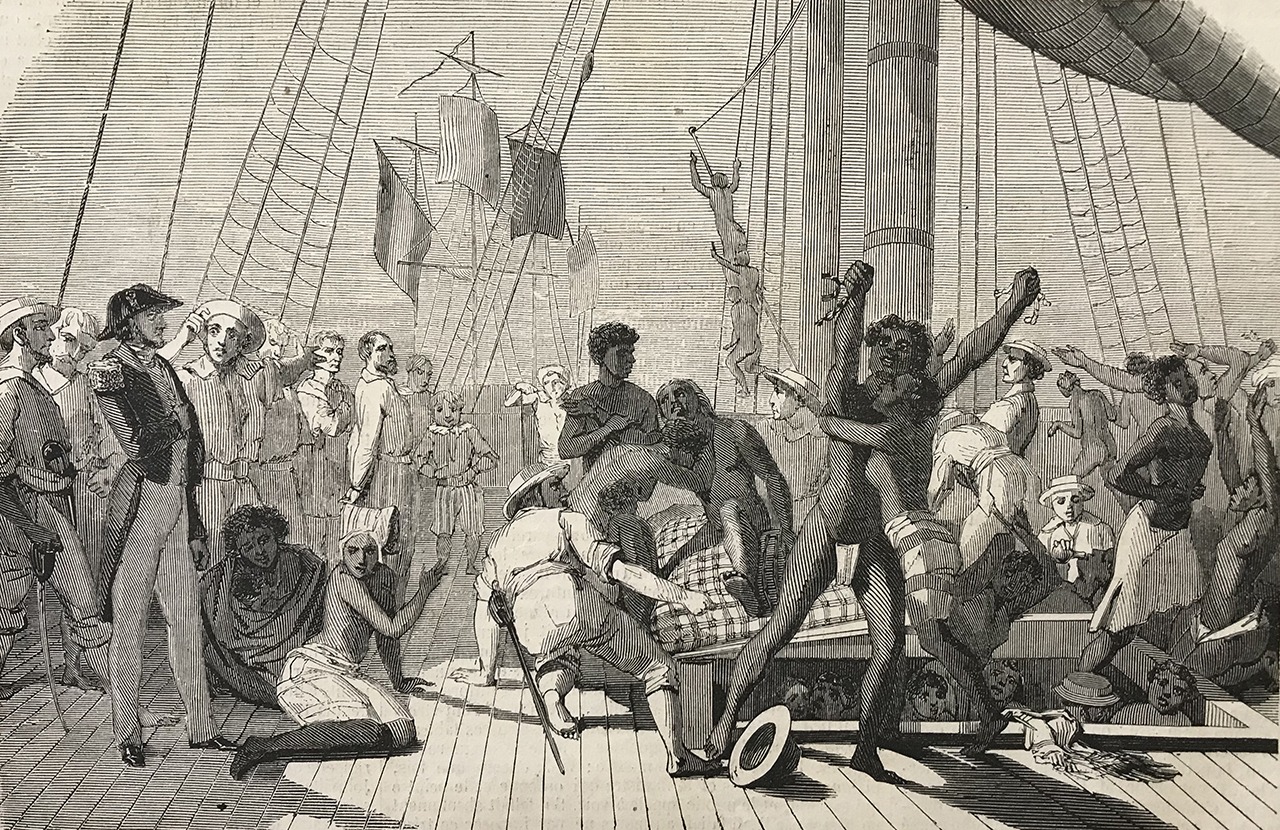
A Portuguese brig, the Pocha, was captured on 25th August 1840, not far from Mayotte in the Mozambique Channel, by the Prévoyante, a French naval vessel acting in accordance with the Act of 4th March 1831, which was France’s most recent legislation concerning the suppression of the slave trade. The Pocha had 220 slaves on board. The crew of the Prévoyante ‘freed’ them, took them into their care and then disembarked them on 13th October at the port of Saint-Denis in Réunion, thus handing them over to the island’s colonial authorities. The case of the capture of the Pocha, as well as the fate of the enslaved people following their ‘liberation’, leads us to question the nature and results of the crackdown on the slave trade carried out by the French navy in the Indian Ocean between the 1840s and 1900.
Let us first summarise the facts as they appear in the archives. On 25th August 1840, a French naval vessel captured the Pocha, a Portuguese ship engaged in the slave trade, in the western Indian Ocean. The Pocha had come from Havana. The crew was predominantly Spanish, but the vessel flew the Portuguese flag and had been provided with ‘Portuguese trading licences’, i.e. letters of trade, fraudulently issued by a Portuguese consul in Havana who, having been dismissed after issuing them, fled to Mozambique. It was upon arriving at this very destination that the Pocha was fined by the Portuguese governor of the territory, and its letters of trade revoked. Since 1810, Portugal had in fact committed itself to gradually abolishing the slave trade in all its overseas territories under pressure from Great Britain. A law to this effect had been enacted in 1836.
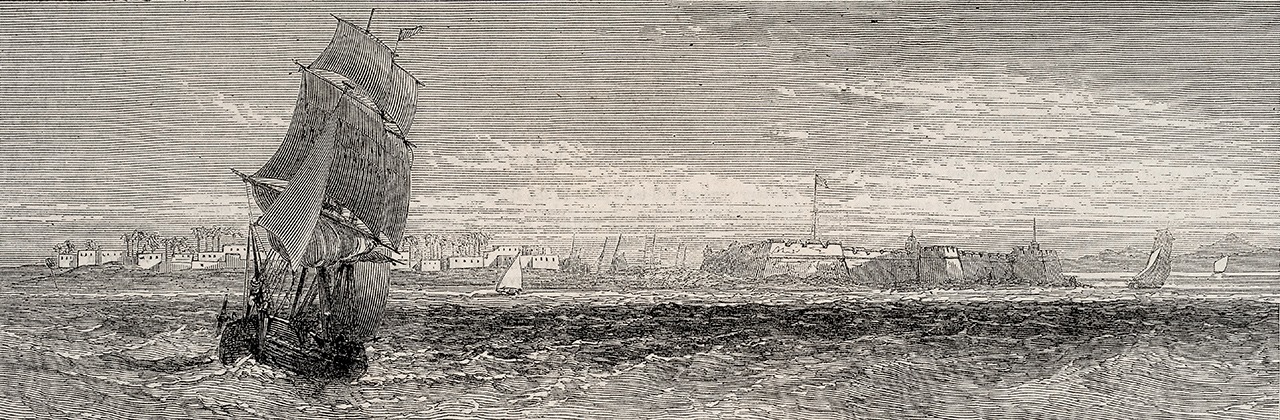
Despite this conviction, the Pocha nevertheless turned to piracy and the slave trade in the Mozambique Channel. It first captured a dhow, one of those ships with triangular sails so characteristic of Indian Ocean shipping, and enslaved six free men. The Pocha then seized a second dhow already operating in the slave trade, enslaving their crew of eighteen men while also seizing the 120 enslaved Africans it was carrying. Finally, they carried out further acts of piracy and abduction, notably in Mayotte and Nossi-Bé (Madagascar). It was at Nossi-Bé, of which France had taken possession in 1840, that the Pocha was finally spotted by the French navy, pursued, and ultimately boarded off the coast of Mayotte. The Prévoyante then took the 220 survivors on board.
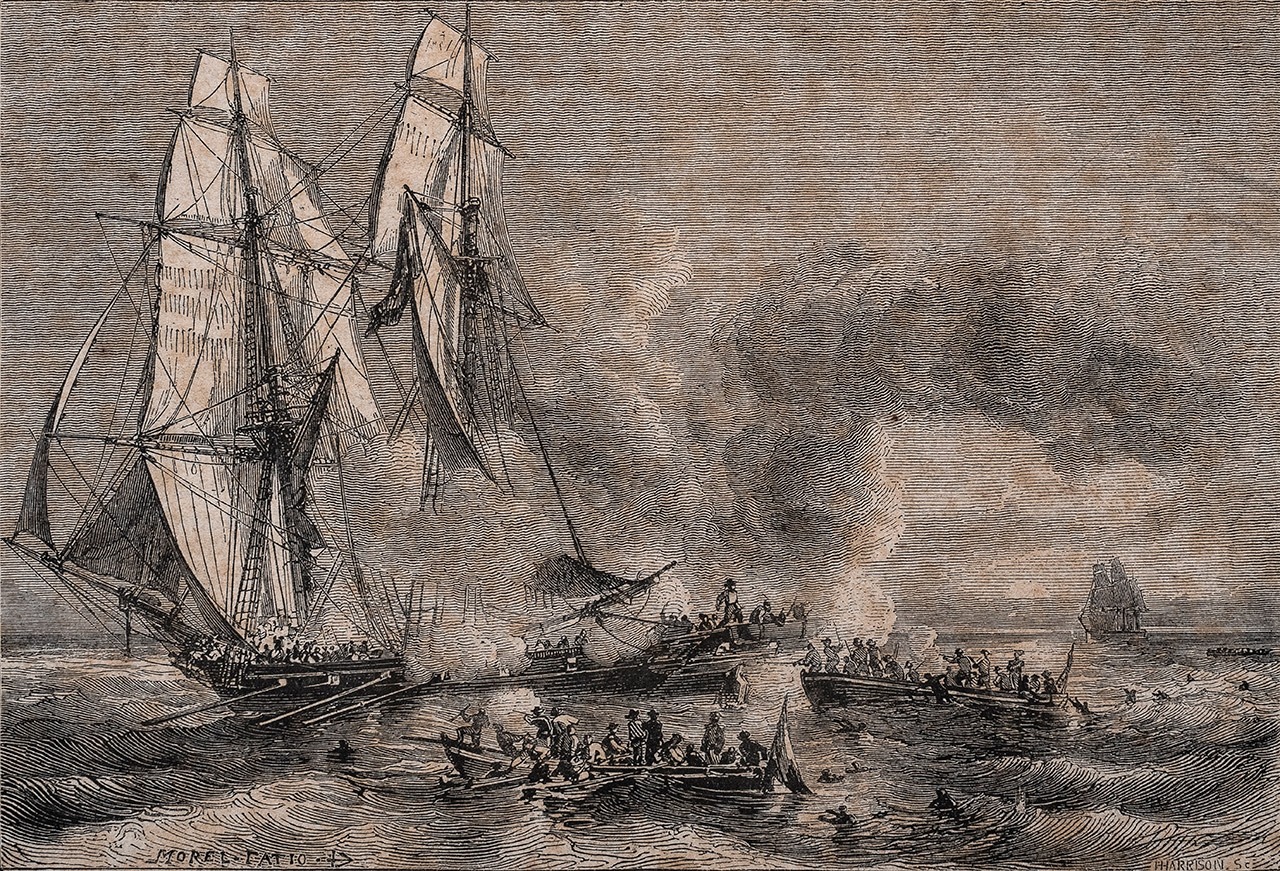
On 13th October, nearly seven weeks after its capture, the ship arrived in the port of Saint-Denis in Réunion and disembarked only 190 men, women and children, whom it handed over to the island’s colonial authorities. Thirty people had died between the Pocha’s capture and their disembarkation in Réunion, proving (if indeed any proof were needed) that both the physical and mental health of the survivors of the slave trade was in a most abject state. As the Prévoyante was not a hospital ship, the crew were therefore unable to care for the survivors of the slave trade as would have been desirable. The seven weeks that elapsed before reaching Réunion are difficult to explain: archives remain silent on this point, but it is quite possible that the Prévoyante remained anchored in Mayotte in quarantine before setting sail again, in order to monitor the survivors’ state of health.
Once in Réunion, the Pocha and its entire crew set sail for Brest to stand trial before the maritime court on charges of piracy and the slave trade. The captain and his first mate were sentenced to hard labour for life. The ship and its cargo, valued at 250,000 francs, were sold at auction. This sentence was sufficiently extraordinary to be reported in numerous press articles of the time, both in France and in Great Britain. This is a significant point which shows that the French authorities were keen to publicise their actions and the court’s decision. As the commission responsible for examining cases relating to the enforcement of the Act of 4th March 1831 pointed out, this capture was similar to those carried out by buccaneers in the Caribbean during the age of privateering (17th–18th centuries). This capture was deemed doubly lawful by the Council of State and the Brest Maritime Court because the Pocha’s command had been found guilty of piracy and slave trading.
The Prévoyante had therefore carried out both a capture and a ‘liberation’. Although the archives unfortunately contain no accounts from the survivors of the Pocha, one might nevertheless hypothesise that they could not have imagined that this constituted any form of release for them. How indeed could they have thought that they were not experiencing yet another capture, given that they had already been subjected to it at least twice before? Furthermore, in the first half of the 19th century, Europeans (foremost among them the French) dominated the maritime slave trade routes in this part of the world before finally being supplanted, after 1848, by dhow ships from Oman, the Persian Gulf, Arabia or the Red Sea.
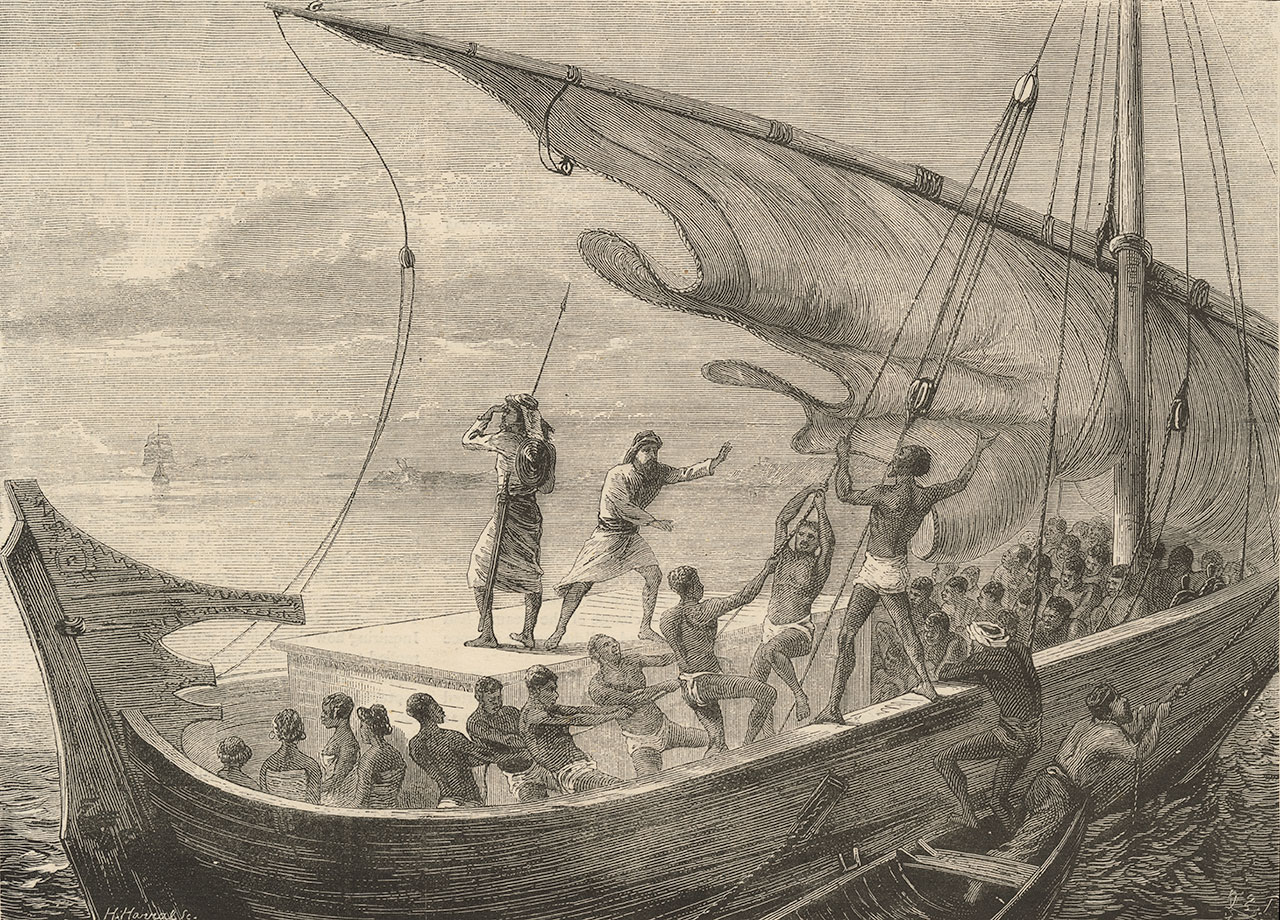
Finally, on their arrival in Saint-Denis, the 190 survivors were handed over to Réunion’s public works office. Under Articles 10 and 11 of the Act of 4th March 1831 on the suppression of the slave trade, these so-called ‘freed’ individuals were in fact to be employed as contracted labourers and placed under the authority of the director of the colonial workshops. It was therefore as much a ‘release’ as it was a new ‘capture’ leading to further servitude.
For the French navy and the colonial authorities, the question of the fate of these ‘freed captives’ hardly arose. However, abolitionists were not taken in and denounced these new forms of colonial servitude, which simply mirrored the conditions of Indian or Chinese indentured labourers.
From the navy’s point of view, however, the primary aim was to legitimise the seizure of a foreign merchant ship engaged in the slave trade by demonstrating compliance with both French and international law. In fact, under maritime law, any boarding of a merchant ship flying a foreign flag was lawful only within the very strict framework of the right of boarding in times of war, a law finally passed following the Crimean War (1856). Only under these conditions was it lawful for a nation’s navy to capture a merchant ship flying a flag other than its own. For example, within this framework, the French navy could lawfully board a Portuguese ship in order to prevent any interference in the ongoing conflict, notably by preventing the smuggling of arms, ammunition or troops. In peacetime, however, a country’s navy was not authorised to board merchant ships flying the flag of a third country. The aim here was to uphold two fundamental rules of international law: firstly, the freedom of trade and navigation; and secondly, respect for the sovereignty of states, a sovereignty embodied at sea by the flag.
As highlighted in the article in Le Constitutionnel of 24th August 1842, found in the archives devoted to the capture of the Pocha, the issue of capturing a slave-trading vessel was, for these very reasons, a crucial matter of international law throughout the nineteenth century. Thus, as early as the Congress of Vienna in 1815, Great Britain helped secure the adoption of a non-binding political declaration by all signatory countries with a view to legalising the right of boarding in peacetime. The text stipulated that “the slave trade [was] contrary to the principles of humanity and universal morality”. This was an important first symbolic step for nations that had legalised and institutionalised the slave trade for nearly 400 years.
In fact, it was due to pressure from the British that Louis XVIII, whilst in exile, signed an initial treaty with Great Britain in which France formally committed to putting an end to the trafficking of human beings (1814). On 8th January 1817, the first royal decree prohibiting the slave trade was published. It was followed and then supplemented by the Act of 15th April 1818. These two laws, apparently ‘drafted reluctantly under British pressure’, were finalised by the July Monarchy, which finally enacted the Act of 4th March 1831, strengthening the legislative framework to encourage the suppression of the slave trade and to assert France’s role in the abolitionist movement internationally, so as to appear as ‘a civilised nation’. It was against this backdrop that the capture of the Pocha took place.
Building on its maritime supremacy, Britain took the lead in fighting the slave trade at sea during the 19th century, seeking to legalise the right of boarding in peacetime or to have the slave trade recognised as an act of piracy, as at the congresses of London in 1817–1818, Aachen in 1819, and Verona in 1822. Piracy was then the only universally recognised legal ground for seizing a ship in peacetime, regardless of its flag. It is worth emphasising here the importance of the Treaty of the Five Powers (Austria, France, Great Britain, Prussia and Russia), signed (with the notable exception of France) on 20th December 1841. Through this treaty, the contracting parties sought to equate the slave trade with the crime of piracy and declared that any ship attempting to engage in it would, by that act alone, forfeit all right to the protection of its flag. France’s rejection of the treaty, however, led to its failure. France considered that it legalised a ‘British’ right of boarding and effectively crowned the maritime supremacy of its great rival, a point that was unacceptable from its perspective following the humiliations of Trafalgar (1805) and Waterloo (1815).
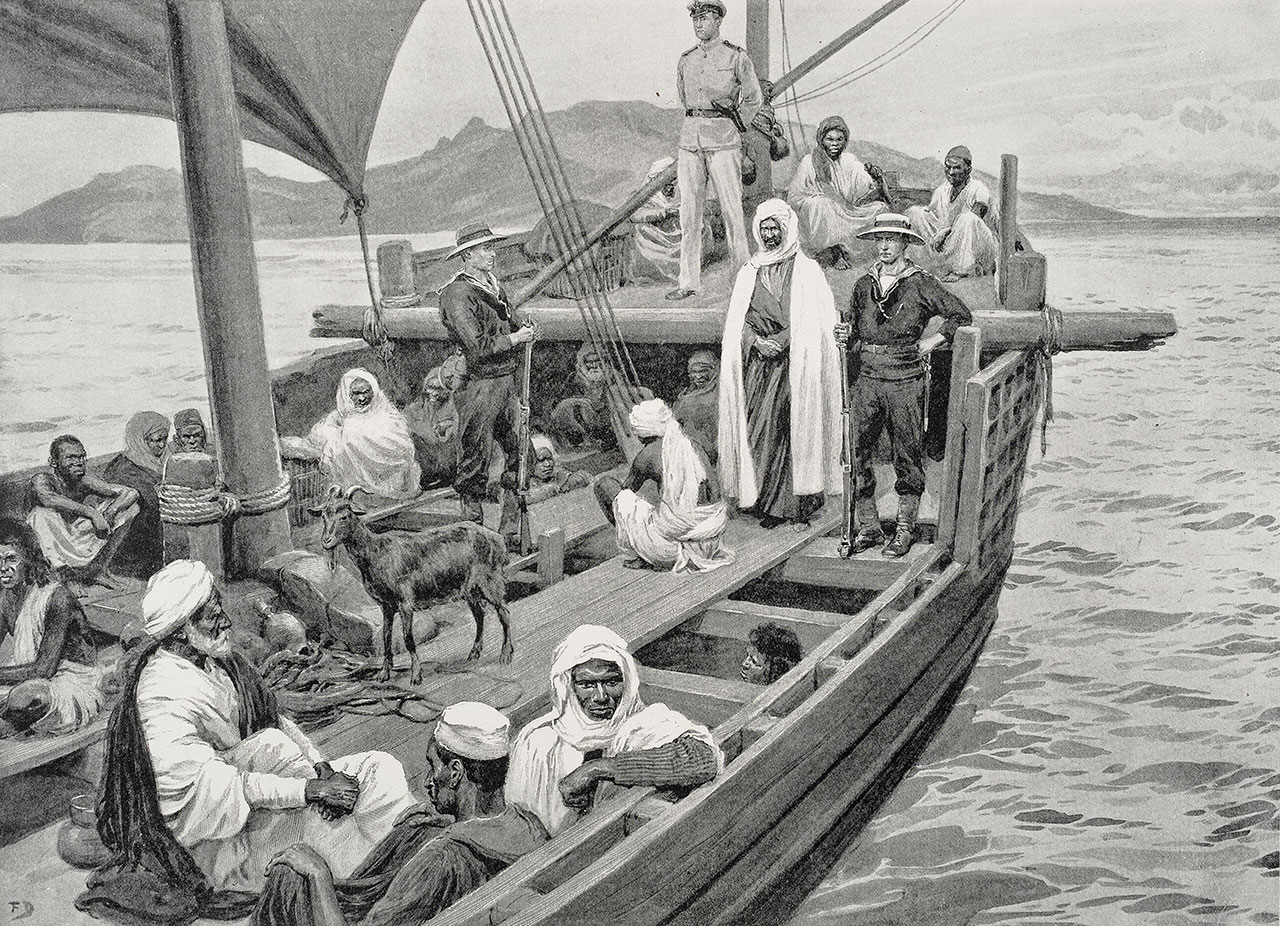
And this is where archives detailing the capture of the Pocha provide particularly interesting insights. The capture was in fact deemed lawful by the Brest Maritime Court primarily on the basis of the French Piracy Act of 10th April 1825, and not solely on the basis of the Act on the Suppression of the Slave Trade of 4th March 1831. It is therefore rather paradoxical that the article in Le Constitutionnel of 24th August 1842 highlighted the law on piracy, even though France had refused to sign the Treaty of the Five Powers mentioned in the previous paragraph. This highlights the full extent of the contradiction in French policy on the suppression of the slave trade during the second half of the 19th century. France sought above all to preserve the integrity of its sovereignty in the face of British maritime dominance. In the judgement handed down in Brest (as at the Brussels Conference in 1890), France refused to implement international measures to suppress the slave trade. In Brussels, France refused to sign the conference’s final acts because of the introduction of a universal right of boarding for merchant ships suspected of trafficking within a vast international maritime zone defined in the western Indian Ocean. France, as with the case of the Pocha, defended in Brussels the view that each nation had a duty to police its own territorial waters or merchant ships itself, rather than surrendering its sovereignty to international bodies. For France, state sovereignty took precedence at that time over the international prosecution of a crime that was on the verge of being characterised by international law as a universal affront to ‘humanity’; ‘a crime against humanity’, as the English abolitionists had already denounced it in the press as early as the 1840s.
In line with its approach to sovereignty, France had therefore, in conjunction with Britain, established a fleet of warships to crack down on the slave trade carried out by vessels flying its flag or by foreign vessels sailing in its territorial waters. Between 1817 and 1831, it deployed 77 cruisers in the Atlantic. Around 301 slave ships out of a total of nearly 729 were captured. However, in the Indian Ocean, mobilisation was more modest and the results very limited. According to Hubert Gerbeau’s research, 115 ships were involved in the illegal slave trade off Réunion Island between 1815 and 1848. Whilst around 50 of these ships were seized, very few crew members were ultimately convicted. . The French government subsequently established their Indian Ocean Naval Station between 1858 and 1889. The stated aim was to put an end to the illegal slave trade under the French flag and to monitor the conditions under which indentured workers were recruited. A total of 234 French warships served in this naval division, an average of five ships per year. However, the French squadron achieved very little, as only 22 ships were captured between 1858 and 1889.
To conclude, let us now return to the fate of the ‘liberated captives’. Following the local decree of 4th August 1831, the authorities on Ile Bourbon imposed on all ‘Black slaves’ (to use the terms of the time) a seven-year commitment to work in their colonial workshops. ‘Liberation’ thus gave way to new forms of servitude.
According to the report by the director of Réunion’s colonial workshops, the survivors of the Pocha in 1841, for example, were required to carry out 26,797 days’ worth of moving rubble on main roads out of a total of 32,161 working days for the year. In 1842, they were required to carry out (amongst other things) 19,709 days’ worth of maritime labour out of an annual total of 31,101 working days. These figures, which must be considered in relation to the number of workers (190) to be fully understood, show unequivocally that the survivors of the slave trade were compelled and forced to ‘serve’ the colony. It is particularly worth noting that, in the same report, an expenditure of 5 francs was recorded for ‘the capture of a Black man from the Pocha’. This entry clearly and unequivocally implies that these men, women and children were by no means free. They were still being treated as enslaved people. Finally, the survivors from the Pocha all signed a new contract of employment and left Réunion for Mayotte in December 1842, where, unfortunately, their traces are lost in the silence of the archives. The only details on record (a fact rare enough to be worth mentioning) are their names, dates of birth and places of origin, such as Amadi (Mougara), born in 1822, or Moimomé (Marave), born in 1825.
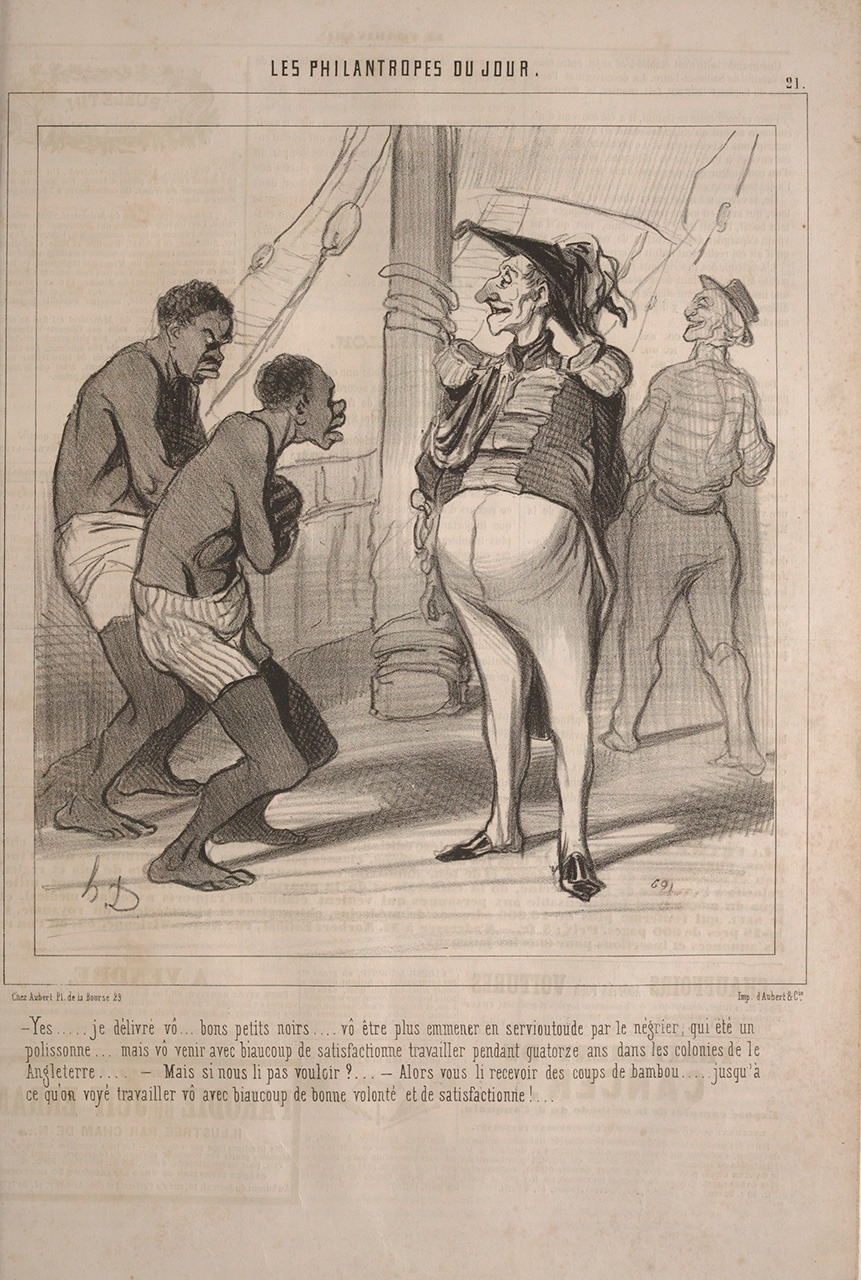
Their ‘liberation’ was decidedly bitter. It had led only to a new and different form of servitude. However, this small step, however limited and contradictory, was nonetheless a step – a decisive step on the long march towards the universal abolition of the slave trade and slavery.


Domaine Panon-Desbassyns
Saint-Gilles-Les-Hauts
Tel. : 0262 55 64 10
Email: musee.villele@cg974.fr
Get there
Open from Tuesdays to Sundays 9.30am to 12.30pm and 1.30pm to 5.30pm
Closed on Mondays
Closed 1st May / 1st January / 25th December
Scientific committee
Legal notice