A study of the archives of the region of Saint-Louis (within its territorial boundaries as assigned at that time, reveals frequent and persistent acts of aggression and political violence. Various parties committed acts of brutality, either to reinforce their domination or to resist oppression. Theorised within the framework of studies on the ‘second colonisation’, the historiography of colonial violence links two phases of colonisation: conquest and the maintenance of order. In a context of slavery, this trafficking constituted the primary form of violence: the capture and subsequent deportation of men and women served to instigate, legitimise and reinforce the use of force on a daily basis. Acts of brutality were then perpetuated and adjusted in accordance with the requirements of maintaining order in the colony.
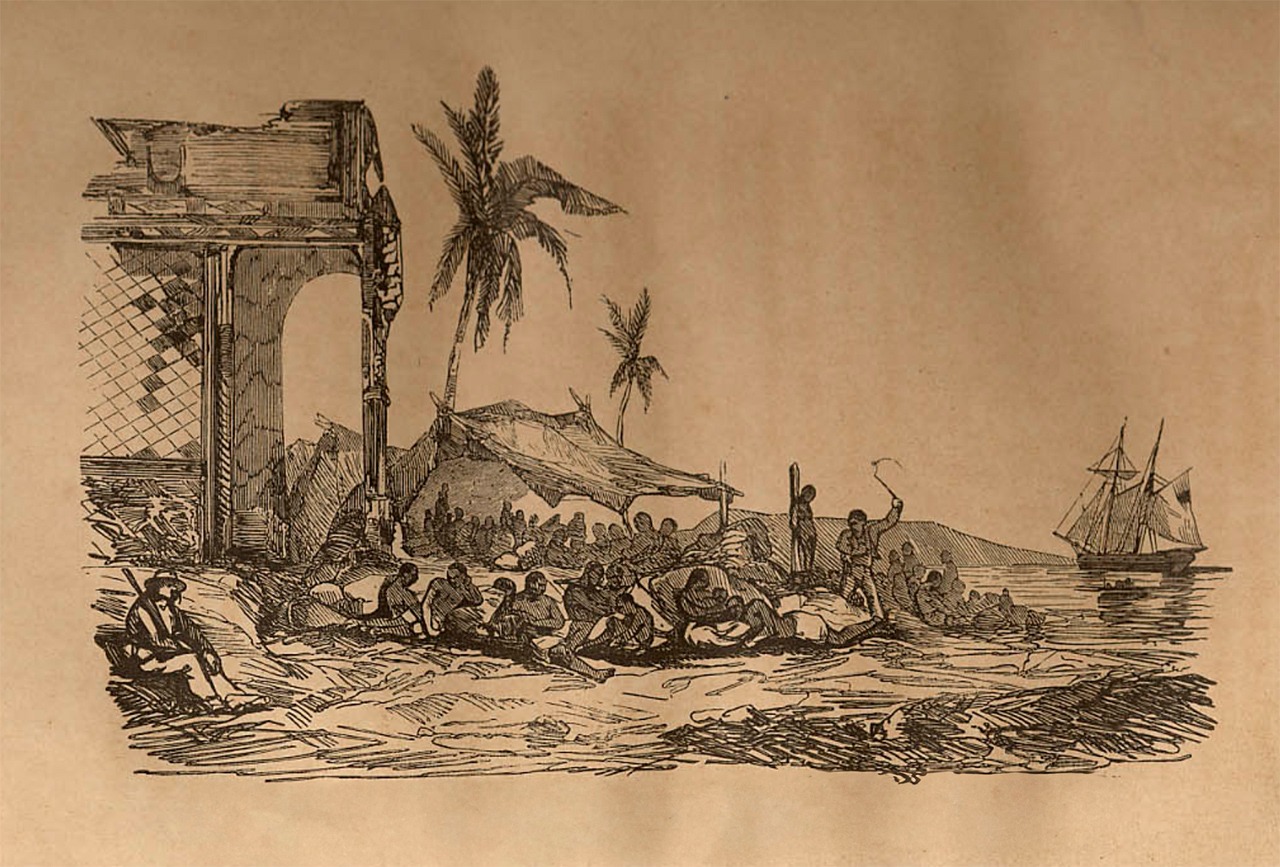
In the second half of the 18th century, France became the largest importer of captives into North American colonies. Colonial commerce and the slave trade generated economic profits throughout the kingdom. Ports and their hinterlands grew wealthy by producing export goods, and ultimately it was all retailers, and subsequently consumers, who benefited from the sugar and coffee produced in the colonies. Any analysis of such a significant boom cannot be reduced to a mere examination of the psychology of those involved. The slave trade was not the work of a few adventurers driven by greed and the pursuit of profit; on the contrary, it was fully integrated into the development strategies of the first colonial empire. According to the historian Aurélia Michel, there existed ‘a State policy to produce the Negro, capture him in Africa, transport him across the seas, and force him to work’. The French mercantile state was the primary beneficiary of colonial trade; it was also the main operator of these slave trade expeditions. These imperial policies resonated with private interests, based on the freedom of capital and property. Merchants and ship-owners rapidly acquired vast fortunes, and the slave trade became a means to social success.
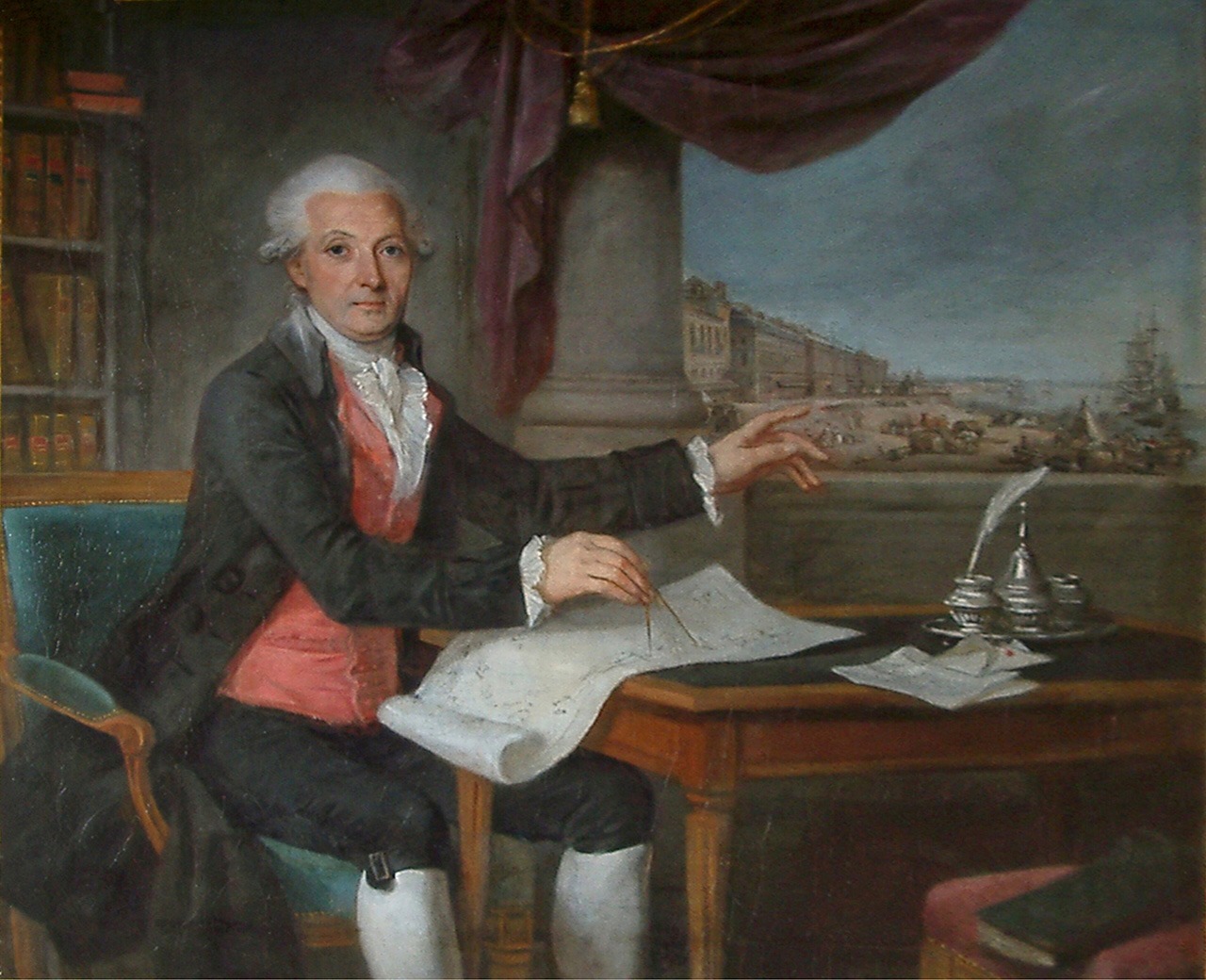
The Nairac family is representative of these wealthy merchant dynasties that forged links between Europe, Africa, the Americas and Asia. Antoine Henry-Paul Nairac (1735–1816) arrived in the Mascarene Islands in 1770 and settled in Saint‑Pierre. In Saint-Louis, his son Richard-Henry Nairac (1763–1831) gradually bought up the Maison-Rouge estate, which he had been managing on a leasehold basis since 1793. The Nairacs were merchant ship-owners in Bordeaux, a tradition passed down from father to son. Richard-Henry Nairac’s uncles were involved in colonial trade and the slave trade from Bordeaux and La Rochelle. Between 1764 and 1780, their trading houses transported more than 17,500 captives from the coasts of East Africa and then Mozambique, mainly to the island of Saint-Domingue. Their commercial success was considerable. In 1775, a glowing report by Charles d’Esmangart, sub-delegate to the Intendant of Guyenne, supported the Nairac brothers’ application for ennoblement:
The firm of Messrs Nairac is one of the most prominent in this city, owing to the scale of their trade, which they conduct with a nobility and selflessness that set them apart from their fellow citizens; they or their family currently have eight ships engaged in trade and the slave trade, and their integrity, good character, and zeal in supporting the government’s aims on every occasion make them worthy of recommendation to all those under whose watch they conduct their business.
The sale of human beings had become a commendable activity, bringing both wealth and honorability. The respectability acquired by key figures in the slave trade contributed to the masking of extreme violence suffered by captives. The suffering inflicted was erased from public discourse, and perhaps also from people’s consciences. Through certain judicial records, however, it is possible to piece together some of the ordeals endured by these captives.
During the 18th century, the number of maritime expeditions to Madagascar increased considerably. The French purchased slaves, rice and livestock on the island’s east coast, while the Dutch and Omanis tended to source their supplies from the west coast. In order to procure ever more captives, Malagasy communities became increasingly militarised and, gradually, the conflicts spread, with the front line of the slave trade shifting inland. Born in Madagascar, Isaac and Diamfalam were initially victims of the violence of the clashes on their own island. They were then sold on to French traders and subsequently deported to Bourbon Island. Crammed together and locked in the hold, the captives’ conditions at sea were appalling, even though the voyage was shorter than crossing the Atlantic Ocean. Following the trauma of their abduction and deportation, the two men suffered the trauma of being uprooted and losing both their cultural bearings and their social ties.
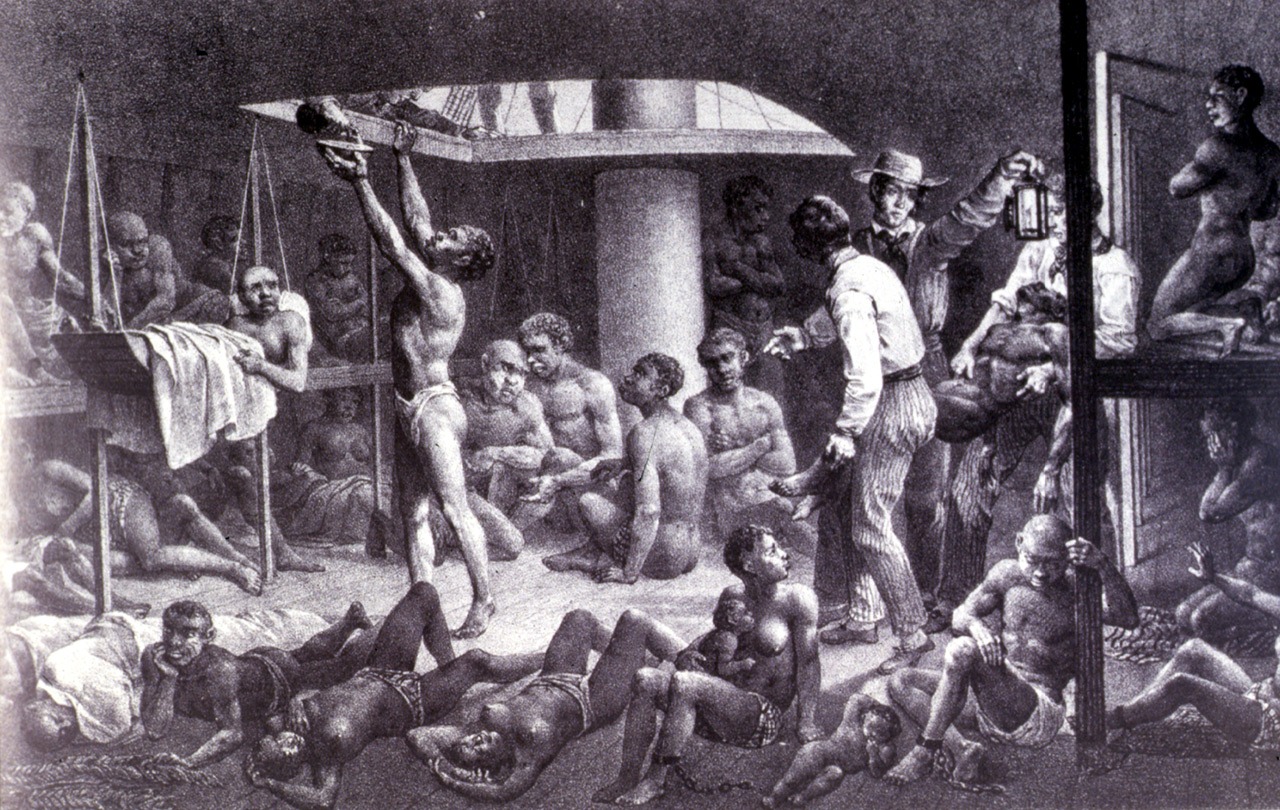
On Bourbon Island, Noël Nativel (1750–1817) purchased Diamfalam and Isaac around 1790. Aged around forty, he owned a medium-sized plantation in Saint-Louis, along the Ravine du Gol. He only owned around ten slaves, but his mother, Henriette Héros (widow of Pierre Nativel), was among the largest slave-owners in Saint-Louis, with 125 slaves recorded in 1789. For slaveowners, the arrival of new captives was a delicate time, as they had to force people (most of whom had been born free and were now encountering the colonial system for the first time) into servitude. The risks of escape or rebellion were high: in fact, Noël Nativel and his wife Marie-Françoise Payet described these two Malagasy slaves in particular as ‘wicked’. Despite their efforts, “these two Blacks never wanted to learn French” and, in order to communicate with them, they had to rely on ‘Malagasy women’ as interpreters. Diamfalam admitted that he began to learn the colonists’ prayers but had since forgotten them. By the end of the 18th century, some colonists continued to impose Christianity upon their slaves. Compulsory Catholic baptism, preceded by lessons in both the language and prayers, constituted a ritual of integration for the new captives, symbolically marking the shift in their status. In this respect, Noël Nativel followed the customs passed down by his parents, who were responsible for nearly 10 per cent of slave baptisms and marriages in Saint-Louis between 1748 and 1769. Because of their resistance to learning the colonists’ language, Diamfalam and Isaac were not baptised. However, as was the case for the vast majority of captives who set foot on the island of Bourbon, their master nevertheless gave them a new name: Diamfalam was named Athanase. The rejection of his original name constituted a further act of symbolic violence, sealing the loss of his former identity and marking the beginning of his life in servitude.
The first place where power is exerted through everyday violence is of course the workplace, or on Bourbon Island, the plantations. They were outnumbered by their slaves, so in order to keep them in servitude their masters had no choice but to resort to extreme violence. Planters were authorised to punish slaves who committed minor offences. They could beat and chain them, but did not have legal authorisation to maim or kill them.
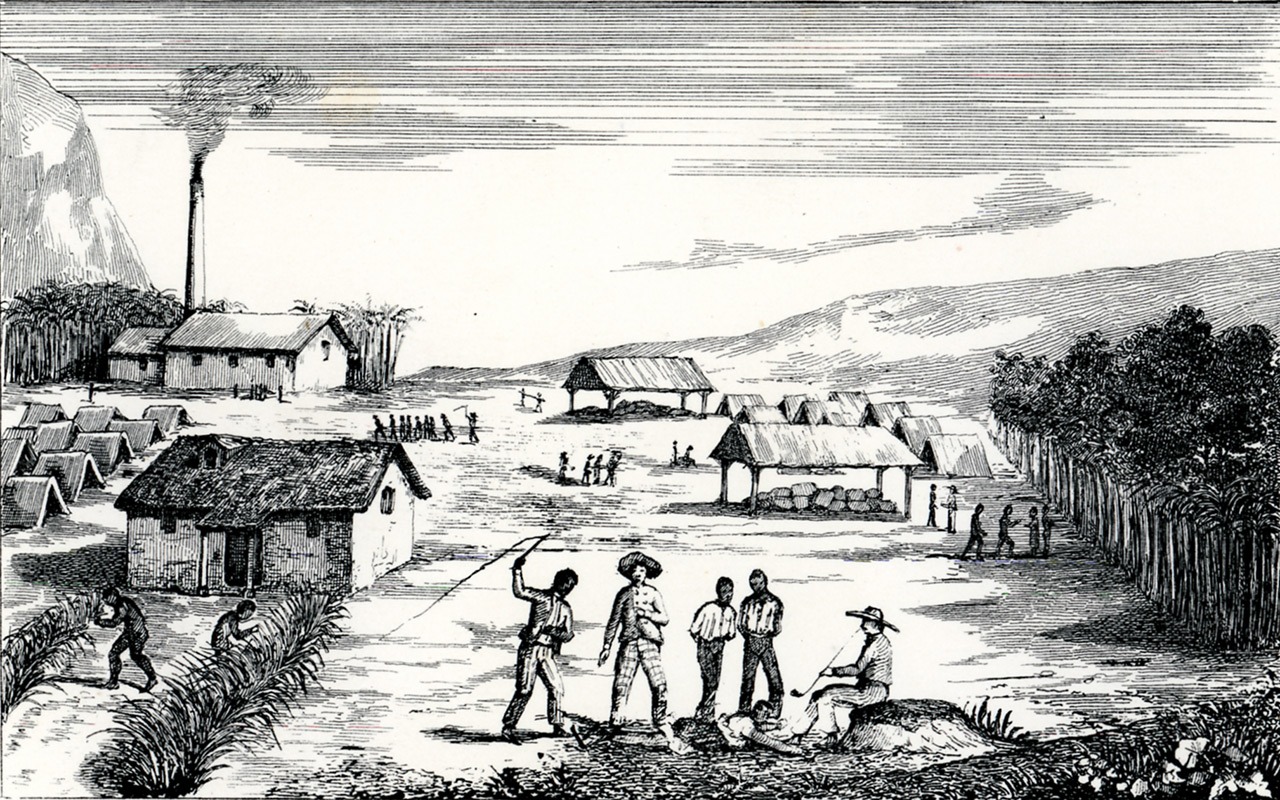
Two years after their arrival on the plantation, Isaac and Diamfalam were set apart from the other slaves: they did not live in the thatched huts built close to the masters’ house. Aged around fifty, Diamfalam was employed as courtyard watchman (in the upper part of the estate), where he shared a hut with Isaac. During the day, the two men looked after the animals, specifically chickens and pigs. They also took part in farm work as part of a team of slave labourers led by another slave, known as the ‘commandeur’. At night, they were responsible for guarding the courtyard to prevent theft.
On the morning of 30th October 1792, Noël Nativel visited the higher grounds of his estate, accompanied by his steward Hyacinthe, an African slave aged around 25. He was surprised to find the two Malagasy men in their hut and asked them why they had not gone to work with the rest of the group. As the two men “replied impertinently that they did not want to go”, Noël Nativel ordered Hyacinthe to take them to work. Armed with a stick, the commandeur entered the hut and seized Isaac by the arm to drag him out. But Diamfalam came to his friend’s aid, and the situation escalated into a general brawl. Hyacinthe struck Diamfalam repeatedly with his stick, who started to bleed profusely from the head. Noël Nativel tried to intervene, but Isaac stabbed him twice with a spear – in the neck and chest – then attempted to grab his rifle. Alerted by the noise and shouting, Madame Nativel grabbed Isaac from behind, squeezing his neck with all her might and managed to make him let go. At that moment, hearing other white men approaching accompanied by a few slaves, the two Malagasy men fled.
Isaac and Diamfalam never resigned themselves to suffering this oppression. Since their arrival, they carried out numerous acts of non-violent resistance: refusing to go to work, learn the language or obey orders. On this day in October, however, a line was crossed: the two men rebelled openly and, in turn, resorted to violence. Perhaps this was initially because Hyacinthe invaded their privacy by entering their hut. Diamfalam was, moreover, growing increasingly hostile towards the commandeur, whose authority he did not recognise. Both had accused the other of stealing a hen from their master. But Hyacinthe was nothing more than a pawn, manipulated by his master into carrying out violence on his behalf. Isaac was under no illusion and dealt the final blows to Noël Nativel. In doing so, he committed what constituted the gravest crime in a colonial society: an assault by a slave on a white freeman.
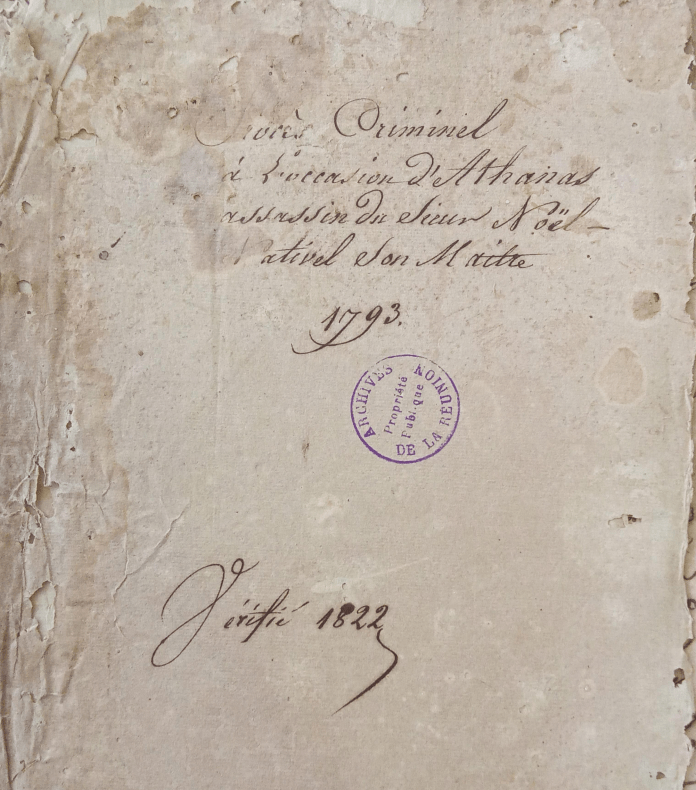
The two fugitives were quickly captured by Pierre Nativel’s widow’s slaves, in the upper reaches of the plantation. They were brought before an extraordinary municipal council, chaired by the mayor of Saint-Louis: Antoine François Pascalis (1744–1802). For the most serious offences, the colonial justice system effectively superseded domestic authority, and in 1792, the municipalities retained the police powers they had held under the Ancien Régime. Isaac et Diamfalam sont dénoncés à la juridiction royale, puis transférés à la prison criminelle de Saint-Denis.
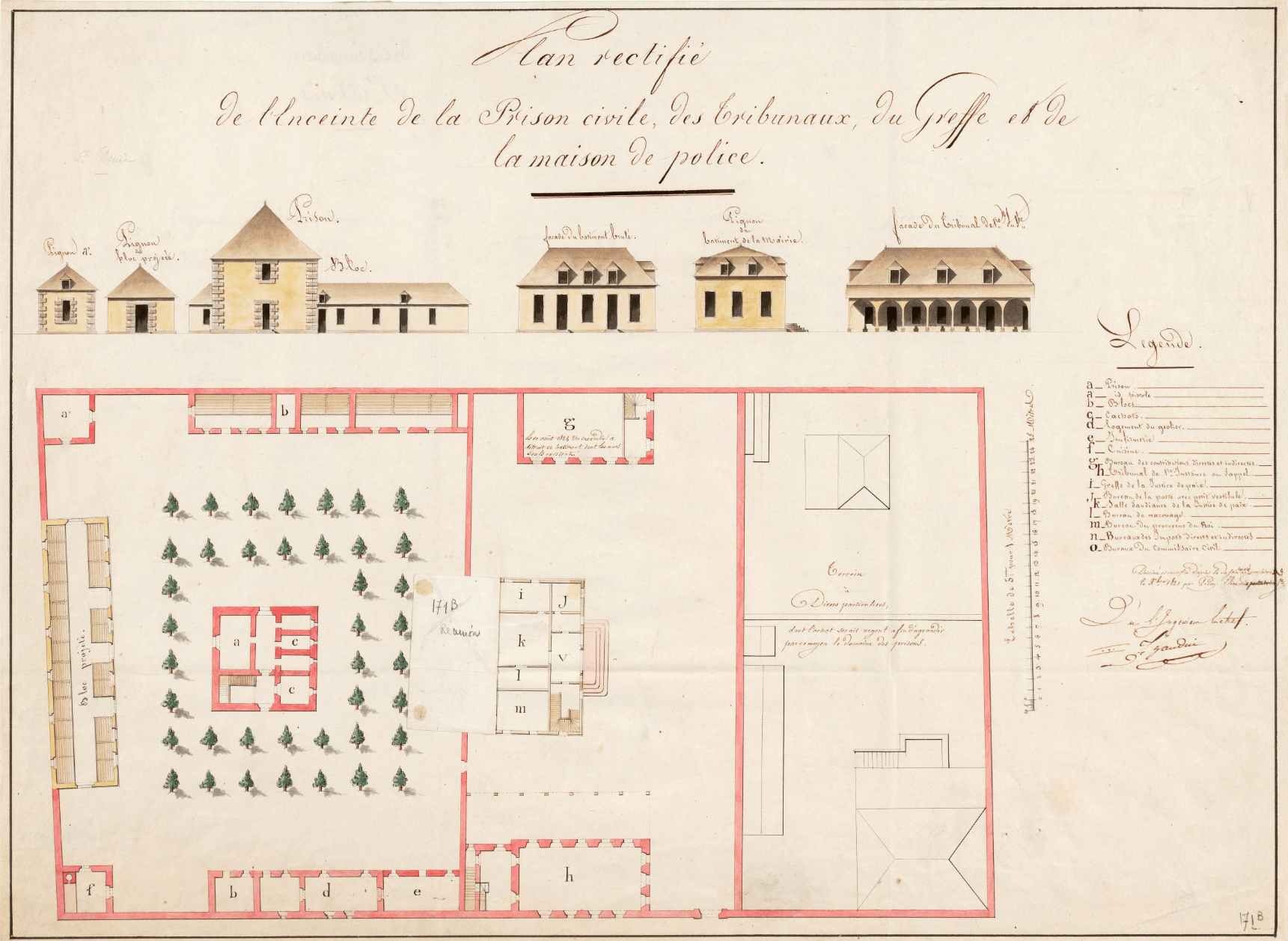
Even after being arrested and imprisoned, the two men continued to refuse their status as slaves. When the mayor asked Diamfalam to state his name and status, he courageously declared that “my name is Diamfalam and I am Malagasy, but today I am called Athanase and my master is Noël Nativel. It was highly unusual for a person held in slavery, summoned before an assembly of dignitaries, to insult them by introducing himself by his real name. Diamfalam thus asserted his status as a free man, challenging the legitimacy of his servitude. Similarly, when the investigating judge asked Isaac whether he understood that he was to be tried for the murder of his master, he replied “I do not know the law of the white men – I request to be tried by a ‘cabare’”. As a Malagasy, Isaac considered that he should not be subject to colonial institutions, but should be heard by a ‘kabary’, in accordance with the customs of his country.
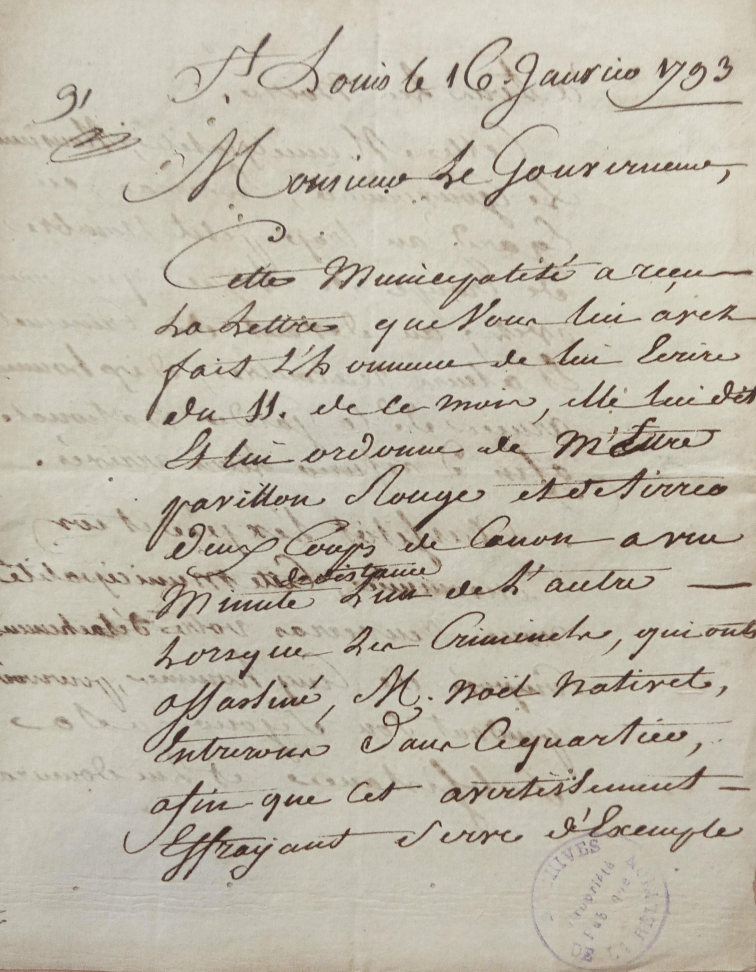
Isaac and Athanase were tried on 11th January 1793 by the Bourbon High Council. Found guilty of attempting to murder his master, Isaac was sentenced to death. His execution was a grim spectacle, for whether meted out by masters or by the colonial administration, punishments were designed to terrorise and humiliate those held in slavery. IIsaac and his accomplice Diamfalam were escorted from Saint-Denis to Saint-Louis by a corporal and four fusiliers from a brigade of the Île-de-France Regiment. When the two condemned men arrived in Saint-Louis, two cannon shots were fired one minute apart “so that this terrifying warning might serve as an example to all Black people”. Isaac was then executed in the public square in Saint-Louis, probably in the presence of slaves gathered for the occasion. By virtue of the right of ownership, his master was compensated by the Bourbon authorities for the loss of his slave. Noël Nativel’s domestic authority, which had been challenged by the two rebels, was henceforth restored and legitimised by the colonial institutions.
The life stories of Diamfalam and Isaac, like the journey of the Nairac family themselves, both illustrate the tragic links between the strategies implemented by local actors and the establishment of a globalised, colonialist and slave-based system. To justify their domination, the colonists appropriated imperial logic and, in turn, colonial institutions reinforced and legitimised their power. The violence of the abduction and deportation of African captives constitutes the economic and symbolic foundation of plantation societies. And this was constantly renewed, both to maintain the colonial order and to justify it. Forms of violence may evolve and be renewed, but they preserve the fundamental oppositions and can therefore be analysed as ‘modifications of the initial situation’.
This research formed the basis of a Master’s thesis entitled The Sound and Fury of Slavery in Saint-Louis, 1870–1848. We are currently continuing our study of forced labour in the Saint-Louis region as part of a doctoral thesis. The period under investigation has been extended to cover the era of indentured labour, in order to situate slavery within a broader colonial dynamic: the imposition of forced labour on certain sections of the population.


Domaine Panon-Desbassyns
Saint-Gilles-Les-Hauts
Tel. : 0262 55 64 10
Email: musee.villele@cg974.fr
Get there
Open from Tuesdays to Sundays 9.30am to 12.30pm and 1.30pm to 5.30pm
Closed on Mondays
Closed 1st May / 1st January / 25th December
Scientific committee
Legal notice